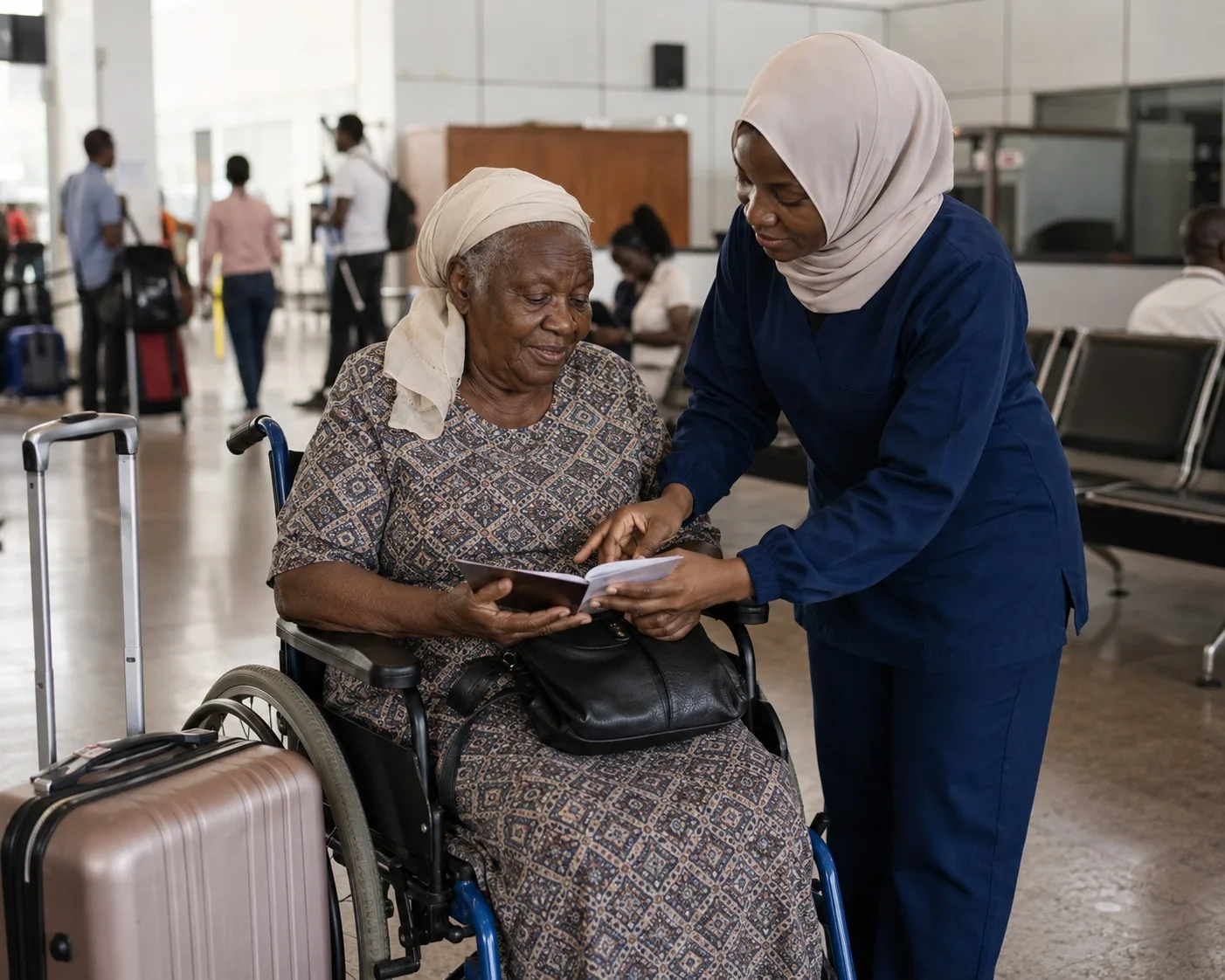
Travel and Mobility Support in Uganda: Making the Journey Part of the Care Plan
Getting to an appointment, hospital, family event or essential activity can sometimes be just as important as arranging the destination itself.
For an older person, the difficulty may be getting safely from the home to the vehicle.
For a person living with a disability, the challenge may involve accessibility, mobility equipment, communication or the need for an accompanying person.
For someone attending a specialist appointment, the family may need to coordinate transport, timing and documents.
For a relative living abroad, the biggest concern may be knowing whether their parent or family member has a practical plan for getting there and returning home.
This is where travel and mobility support can become part of a wider care plan.
Aethla Care Uganda currently describes travel and mobility support as a route for exploring transport and accompanying person needs, coordinating journeys around appointments or essential activities, planning around mobility and communication needs, and clarifying the role of any partner or independent transport provider.
The important point is that travel support is not necessarily just about finding a vehicle.
It is about understanding the person, the journey and the support required along the way.
What Is Travel and Mobility Support?
Travel and mobility support refers to practical assistance that helps a person get from one place to another when ordinary transport arrangements may not be sufficient.
Depending on the situation, it may involve:
- Transport planning - Appointment travel - Accompanying-person support - Mobility planning - Journey timing - Communication between family members - Coordination with a transport provider - Planning return journeys - Accessibility considerations - Travel support for elderly people - Travel support for people with disabilities - Family coordination when relatives live abroad
The precise service depends on the person's needs.
Aethla Care does not describe itself as simply a transport company.
Its current model is to understand the journey first and then clarify whether Aethla, a partner or an independent transport provider has a role.
Why Mobility Can Become a Care Issue
Transport is often treated as a separate issue from healthcare and family care.
For many people, it is not.
If someone cannot easily travel to an appointment, then access to that appointment becomes a practical problem.
If an older person cannot comfortably leave home, family members may have difficulty maintaining routines.
If a person with a disability encounters accessibility barriers, a journey may require additional planning.
If someone has recently returned from hospital, transport arrangements may need to take their changing mobility into account.
The journey itself can therefore become part of the care plan.
Travel Support for Elderly People in Uganda
Older adults may have changing mobility needs.
An elderly person may still want to:
- Attend appointments - Visit family - Attend religious or community activities - Shop - Attend important events - Maintain familiar routines - Remain involved in family life
The appropriate travel arrangement depends on the individual.
Some people may only need ordinary transport.
Others may benefit from an accompanying person.
Some may need help getting between their home, vehicle and destination.
The key is to avoid assuming that every older person needs the same level of support.
Aethla's elderly-care approach starts with the person's routines, preferences and circumstances, and can include exploring mobility, appointment and post-discharge support routes.
Transport for Elderly People Attending Medical Appointments
Medical appointments are a common reason families consider mobility support.
An appointment may require:
- Transport to the facility - Someone to accompany the person - Assistance with timing - Help communicating with family - A return journey - Coordination with other appointments
A family member may normally handle this.
But that can become difficult when relatives:
- Work full-time - Live in another city - Have childcare responsibilities - Are travelling - Live outside Uganda
A practical travel-support route can help the family think through the entire journey rather than only the vehicle.
Hospital Transport in Uganda
The term "hospital transport" can mean different things.
It is important to distinguish ordinary appointment transport from emergency medical transportation.
Ordinary Appointment Transport
This may involve helping a person travel to:
- A specialist appointment - Hospital follow-up - Clinic consultation - Diagnostic appointment - Rehabilitation session
Emergency Medical Transport
An emergency situation may require emergency medical services or appropriately equipped medical transport.
A normal private vehicle or ordinary transport arrangement should not automatically be treated as an ambulance or emergency medical service.
Families should seek appropriate emergency assistance when a situation is urgent.
This distinction is particularly important for healthcare-related content because a page targeting "medical transport Uganda" should not imply that every ordinary transport provider provides emergency medical transportation.
Transport for Specialist Appointments
Specialist appointments often require planning.
A person may need to travel to a particular hospital or clinic at a particular time.
The family may need to consider:
- Where the appointment is - How long the journey may take - Whether the patient needs assistance - Who will accompany them - What documents are required - How the return journey will work - Whether another family member needs updates
Aethla's healthcare-navigation service and travel/mobility service can therefore overlap.
One help clarify the healthcare journey.
The other helps explore the practical journey required to reach it.
Disability Mobility Support in Uganda
Mobility support is particularly important for some people living with disabilities.
However, disability is not synonymous with inability to travel.
The appropriate support depends on the individual.
A person may need:
- Accessible transport - Help entering or leaving a vehicle - An accompanying person - Extra travel time - Assistance with mobility equipment - Communication support - Planning around accessibility - Support reaching a building or destination
Uganda's Persons with Disabilities Act, 2020 includes provisions addressing accessibility and transport. The Act includes requirements related to transport access, assistive devices and accessibility in public buildings.
These principles reinforce an important idea:
Mobility and accessibility should be considered as part of participation, not treated as an afterthought.
Wheelchair and Assistive-Device Travel
Families arranging travel for someone who uses a wheelchair or another assistive device should clarify practical requirements before the journey.
Questions can include:
- Can the vehicle accommodate the equipment? - Does the person need help transferring? - Can the mobility device travel safely? - Is assistance needed at the destination? - Is the return journey arranged? - Does the building have suitable access?
Accessibility requirements may exist, but every individual vehicle, building or route may not meet every person's practical needs.
Families should still confirm the specific arrangements before travelling.
Accessibility: More Than Getting into a Vehicle
Accessibility is broader than transport.
A journey can fail at several points.
For example:
Home → driveway → vehicle → road → destination entrance → reception → lift/stairs → appointment room.
A person may be able to travel in the vehicle but still encounter a barrier at the destination.
Families should therefore consider the complete journey.
Questions include:
- Is the entrance accessible? - Is there accessible parking? - Is there a lift if required? - Are pathways manageable? - Is there an accessible toilet? - Can the person reach the consultation room? - Is an accompanying person permitted?
Accessibility should be considered from the beginning of the journey rather than after a problem occurs.
Travel Support After Hospital Discharge
Returning home after a hospital stay can create practical challenges.
A person may have changed mobility needs or require additional support.
The family may need to think about:
- How the person will leave the facility - How they will enter the vehicle - Who accompanies them - Whether equipment needs to travel with them - How they will enter the home - What support is available once home - Whether follow-up appointments have been arranged
Aethla's elderly-care service identifies post-discharge support as one situation in which mobility and appointment coordination may become relevant.
Travel should therefore be considered as one part of the transition from hospital to home.
Accompanied Travel in Uganda
Sometimes the person does not simply need transport.
They need someone to accompany them.
An accompanying person may be useful when someone:
- Is elderly - Has difficulty navigating unfamiliar environments - Has mobility limitations - Needs communication support - Is attending an important appointment - Is travelling without their usual family member - Needs practical reassurance during the journey
The exact role should be defined beforehand.
For example, does the accompanying person:
- Meet the client at home? - Travel with them? - Enter the appointment? - Wait outside? - Help with communication? - Return with them? - Provide family updates?
Clear responsibilities prevent misunderstandings.
Travel Support for People Living Alone
A person living alone may have particular travel needs.
An appointment may be straightforward for someone with a nearby family member but much harder for someone without local support.
The person may need:
- Transport - An accompanying person - Appointment reminders - Help planning the route - Family communication - Return-journey planning
This is especially relevant for older adults who want to remain independent while needing occasional practical assistance.
Mobility support should ideally support independence rather than unnecessarily remove it.
Mobility and Independence
A good mobility-support plan asks:
What can the person do themselves?
and:
What assistance would make the remaining part of the journey manageable?
This approach focuses on the person's strengths, routines, goals, communication preferences and independence rather than starting with a generic package.
For one person, the answer may be a vehicle.
For another, it may be an accompanying person.
For another, it may simply be help coordinating the timing of several activities.
The right support depends on the person.
Travel Support for Families Living Abroad
A relative overseas may be able to organize a journey financially but still worry about what happens on the ground.
For example:
A daughter in Australia may need to arrange for her elderly parent in Kampala to attend a specialist appointment.
She may need to know:
- Who will help the parent leave home? - Who will accompany them? - How will transport be arranged? - Who will remain informed? - What happens if the appointment changes? - How will the parent return home?
Aethla Care's diaspora-care pathway is designed to help people abroad explain a care need in Uganda, coordinate the next practical step and remain informed as support is arranged.
This is an important distinction:
Remote family members should not have to guess whether a journey has been arranged.
A clear communication route can reduce uncertainty.
Travel Support for Families with Children
Travel can also become complicated when children are involved.
Families may need support around:
- Medical appointments - Specialist visits - School-related activities - Family events - Airport journeys - Local travel - Childcare and transport coordination
Childcare and mobility can sometimes overlap.
For example, one parent may need to take a child to an appointment while another child needs supervision.
A wider family-support approach can help identify those overlapping needs.
Travel Support During Pregnancy
Pregnancy may create additional practical transport requirements.
A family may need to coordinate:
- Antenatal appointments - Specialist consultations - Hospital visits - Transport - Accompanying support - Childcare for older children
Travel support does not replace maternity care.
The healthcare professional remains responsible for clinical assessment and advice.
The practical role is helping the family organize the journey surrounding that care.
This connects directly with Aethla's maternity and family-support pathway.
Travel and Mobility Support for Rehabilitation
Rehabilitation may involve multiple visits over time.
Depending on the individual's situation, this could include appointments with:
- Physiotherapists - Occupational therapists - Rehabilitation professionals - Specialists - Other qualified healthcare professionals
The practical challenge can become repetitive transport.
A family may need a consistent arrangement that considers:
- Appointment frequency - Travel distance - Mobility - Timing - Accompanying support - Return journeys
A mobility plan should be designed around the individual's needs rather than assuming every rehabilitation journey requires the same arrangement.
What Is the Difference Between Transport and Mobility Support?
This distinction is useful for families.
Transport
Transport primarily means getting from one location to another.
Mobility Support
Mobility support considers the person's ability to complete the journey and participate in the destination.
It can involve:
- Transport - Accessibility - Assistance - Communication - Timing - Accompanying support - Equipment - Destination access
This is why Aethla describes its service as travel and mobility support, rather than simply "transport."
What Is Assisted Travel?
Assisted travel generally means providing additional practical support during a journey.
The precise meaning varies between providers.
It might include:
- A travel companion - Help navigating a journey - Support entering or leaving transport - Appointment accompaniment - Communication assistance - Journey coordination
Families should always ask what "assisted travel" actually includes before booking or agreeing to a service.
Aethla's approach is to clarify the role of the accompanying person, partner or transport provider before a family proceeds.
How to Plan a Safe and Practical Journey
A useful travel-planning checklist can begin with six questions.
1. Who Is Travelling?
Understand the person's age, mobility and communication preferences.
2. Where Are They Starting?
Consider the home environment and how the person reaches the vehicle.
3. Where Are They Going?
Consider the destination's accessibility and practical requirements.
4. What Support Is Required?
Determine whether the person needs:
- Transport - An accompanying person - Mobility assistance - Equipment - Communication support
5. What Happens If Something Changes?
Have a clear communication route.
6. How Does the Person Get Home?
The return journey should be considered before the outbound journey begins.
Questions to Ask a Transport or Mobility Provider
Before arranging a journey, families can ask:
- What type of vehicle is being provided? - Who is driving? - Is an accompanying person included? - Can mobility equipment be accommodated? - Where does the driver meet the passenger? - Is door-to-door assistance included? - Can the accompanying person enter the destination? - What happens if the appointment is delayed? - Is the return journey included? - Who should the family contact if plans change? - What availability has actually been confirmed?
These questions are particularly important when a family member is arranging support from abroad.
How Much Does Mobility Support Cost in Uganda?
There is no single price for travel or mobility support.
The cost can depend on:
- Distance - Location - Journey duration - Vehicle type - Number of passengers - Accompanying-person requirements - Mobility equipment - Waiting time - Return journey - Frequency of travel - Whether the journey is one-off or recurring
Medical transport, ordinary private transport and accompanied travel can also have different pricing structures.
Families should therefore request a specific quote or confirmed arrangement based on the actual journey.
Aethla should not publish an artificial nationwide "medical transport Uganda price" unless it has a genuine, standardized service to which that price applies.
Travel and Mobility Support in Kampala, Wakiso, Entebbe and Mukono
Aethla Care currently identifies Kampala, Wakiso, Entebbe and Mukono as its early service footprint.
Availability depends on the type of support required and is confirmed before a family proceeds.
- Mobility support Kampala - Elderly transport Kampala - Hospital transport Kampala - Medical appointment transport Kampala - Disability transport Kampala - Travel assistance Kampala - Mobility support Wakiso - Elderly transport Entebbe - Hospital transport Entebbe - Mobility support Mukono
Mobility Support Across Uganda
A family outside the current early footprint can provide:
- Location - Type of journey - Person's needs - Preferred timing - Required support
Aethla Care's Role in Travel and Mobility Support
Aethla Care's current travel and mobility service begins with the journey rather than with a fixed transport package.
The organization considers:
- Where the person needs to go - What support they need during the journey - Whether an accompanying person is required - What mobility needs exist - What needs to be confirmed - Which partner or independent transport provider may be involved - How family communication will work
Aethla then explains the proposed route and its role before the family commits to the next step.
The Aethla Travel & Mobility Process
Step 1: Explain the Journey
Tell Aethla:
- Who is travelling - Where they are - Where they need to go - Why they are travelling - When they need to travel
Step 2: Explain the Support Requirement
For example:
- Transport only - Transport plus companion - Mobility assistance - Appointment travel - Family coordination - Recurring journeys
Step 3: Clarify the Route
Aethla identifies what practical pathway may be available.
Step 4: Confirm Roles and Availability
The family is told:
- Who is providing the transport - What Aethla's role is - What needs confirmation - What is included - What is not included
Step 5: Coordinate the Journey
Where an appropriate route is available, the practical arrangements are coordinated.
Step 6: Keep the Right People Informed
Communication remains part of the journey, particularly where relatives are coordinating remotely.
Travel and Mobility Support FAQ
What is travel and mobility support in Uganda?
Travel and mobility support is practical assistance that helps people manage journeys when transport, mobility, accessibility, timing or accompanying support creates an additional challenge.
Can Aethla Care arrange transport?
Aethla Care can help families explore and coordinate an appropriate travel or mobility route where available.
The precise transport provider and Aethla's role are confirmed before proceeding.
Can Aethla provide an accompanying person?
Families can ask about accompanying-person support.
The exact role, provider and availability need to be confirmed for the individual journey.
Can Aethla arrange transport to a hospital appointment?
Aethla can help explore transport and mobility coordination around important appointments where an appropriate route is available.
Does Aethla provide ambulance services?
Aethla's travel and mobility service focuses on practical journey coordination and does not present Aethla as an ambulance or emergency medical transport operator.
Emergency situations should be handled through appropriate emergency medical services.
Can Aethla help an elderly person travel to an appointment?
Families can ask about elderly travel and mobility support, including transport and accompanying person needs.
Can Aethla help someone with a disability travel?
Aethla's disability-support and mobility routes can explore practical needs involving mobility, access, transport and community participation.
The specific arrangement depends on the person's circumstances and confirms availability.
Can Aethla arrange wheelchair transport?
Families can ask about transport requirements involving wheelchairs or other mobility equipment.
The vehicle and provider must be confirmed as suitable for the particular equipment and journey.
Can someone accompany my parent to hospital?
Families can ask about accompanying-person support.
The exact responsibilities, including whether the person enters the facility, waits during the appointment or assists with the return journey, should be agreed beforehand.
Can I arrange travel support for my family from abroad?
Yes.
Aethla's diaspora-care pathway allows people outside Uganda to begin a request for practical support for relatives in Uganda, including travel assistance where an appropriate route exists.
What does mobility support include?
It may include:
- Transport planning - Accessibility considerations - Accompanying support - Journey timing - Communication - Coordination with relevant providers
Is mobility support only for people with disabilities?
No.
Mobility support may also be relevant to elderly people, people recovering after hospitalization, people attending appointments, families coordinating travel remotely and anyone whose circumstances make an ordinary journey more difficult.
How much does travel support cost in Uganda?
There is no universal price.
Cost depends on distance, journey duration, vehicle requirements, accompanying support, waiting time, equipment and other factors.
Where does Aethla Care provide mobility support?
Aethla's early service footprint includes Kampala, Wakiso, Entebbe and Mukono.
Specific availability depends on the journey and support required and is confirmed before proceeding.
Can Aethla help outside Kampala?
Families can provide their location and travel requirement.
Aethla can then clarify whether an appropriate route is available.
Travel Support Is Part of the Care Journey
A medical appointment does not begin when a patient walks into a hospital.
For some people, the journey starts at home.
It may involve:
Getting ready → leaving the house → reaching the vehicle → travelling → entering the destination → attending the appointment → returning home.
Each stage can matter.
For an elderly person, mobility may be the main issue.
For someone with a disability, accessibility may determine whether the journey is practical.
For a family living abroad, communication may be the biggest concern.
For someone attending repeated appointments, reliable coordination may become important.
That is why mobility should be considered alongside the wider care plan.
Looking for Travel or Mobility Support in Uganda?
If you need help planning a journey for yourself or a family member, start by describing the actual situation.
Useful information includes:
- Where the person is located - Where they need to go - Date and approximate time - Reason for the journey - Whether an appointment is involved - Mobility requirements - Whether an accompanying person is needed - Whether mobility equipment is involved - Whether a return journey is required - Whether a family member is coordinating from abroad
Aethla Care can then clarify the practical route and explain how it can be involved.
Aethla Care Uganda
Phone: +256 795896044 WhatsApp/Text: +256 754319227 Email: support@aethlacare.org Office: 4th Floor, AHA Towers, 7 Lourdel Rd, Kampala, Uganda
The journey matters. Start with the person, understand the need, and coordinate the right route.
- Travel Support Uganda - Mobility Support Uganda - Elderly Transport - Disability Mobility - Medical Appointment Transport - Assisted Travel - Hospital Transport - Wheelchair Transport - Family Care Coordination - Diaspora Care Uganda
- Healthcare Navigation in Uganda - Maternity & Family Support in Uganda - Elderly Care in Uganda - Disability Support in Uganda - Home & Family Support - Diaspora Care - Get Care
- healthcare navigation in Uganda - elderly care support - disability mobility support - maternity support in Uganda - coordinate care from abroad