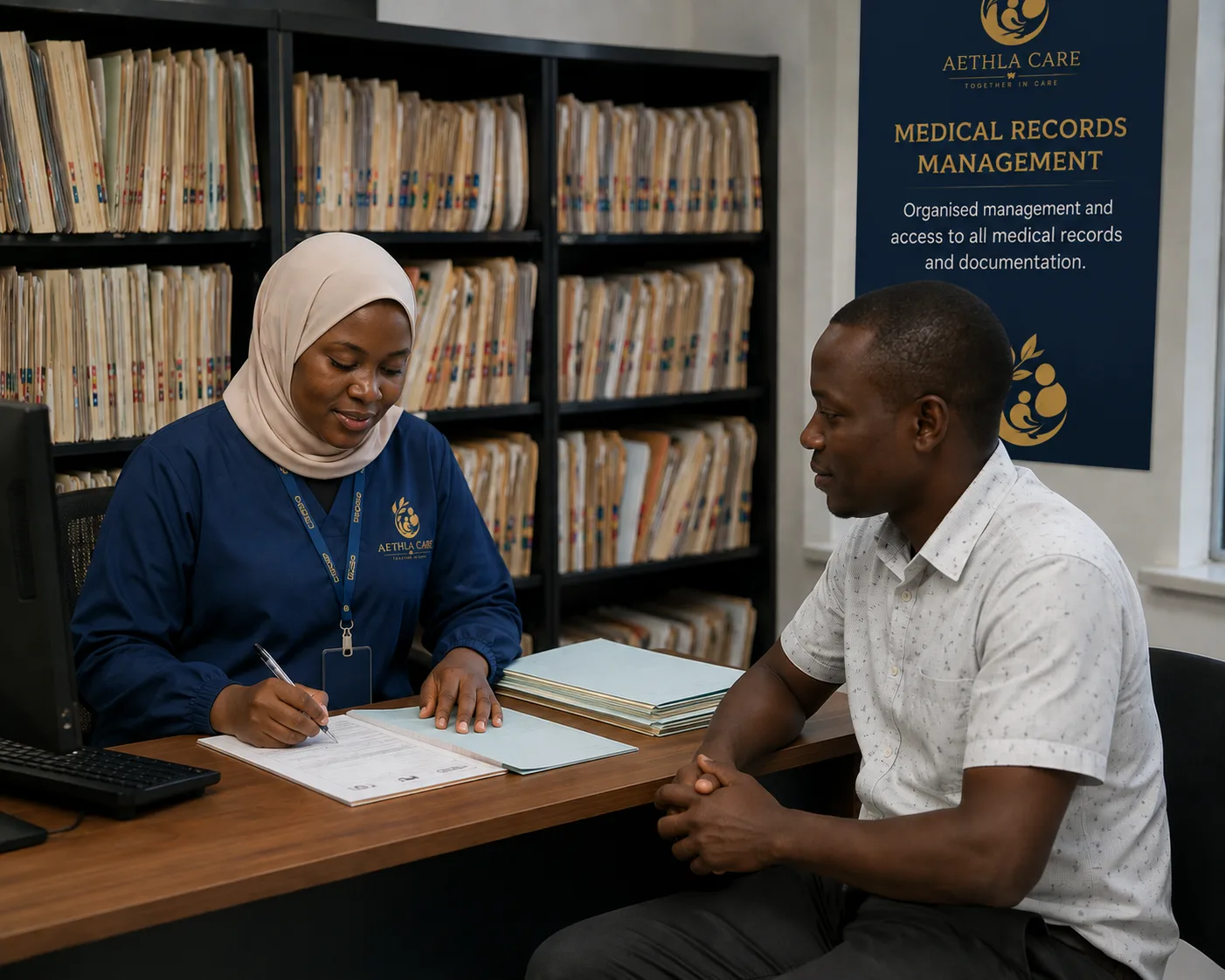
Specialist Appointments & Healthcare Navigation in Uganda
Finding the right specialist can become difficult when a health journey involves multiple appointments, unfamiliar medical terms, referrals, hospitals, test results and several family members.
The challenge is often not simply:
“Which doctor should I see?”
The real questions may be:
- Which type of specialist is needed? - Do we need a referral? - Which hospital or clinic should we approach? - What documents should we prepare? - How do we coordinate the appointment? - What happens after the consultation? - Who should receive updates? - How can a family member abroad help? - What if another medical opinion is needed? - How do we arrange transport for an elderly or disabled relative?
Healthcare navigation helps families manage these practical questions and understand the next steps in a healthcare journey.
Aethla Care is building a Uganda-first care and family-support platform that helps families understand and coordinate practical care routes, including specialist appointments and healthcare navigation.
Aethla Care is **not a hospital or clinic**. Clinical care remains with appropriately qualified healthcare professionals and healthcare facilities. Aethla's role is to help families understand the route, coordinate where an appropriate route exists, and make responsibilities clear before the next step is confirmed.
What Is Healthcare Navigation in Uganda?
Healthcare navigation is the practical process of helping a person or family understand and coordinate their journey through healthcare.
It focuses on the questions around healthcare, such as:
- What type of appointment may be needed? - Which specialist route may be appropriate? - What information should be prepared? - Are referrals required? - How should appointments be organized? - How will family members stay informed? - What practical steps need to happen next?
Healthcare navigation can involve:
- Understanding appointment requirements - Organizing information before consultations - Exploring specialist options - Understanding referral processes - Coordinating appointments - Preparing questions for healthcare professionals - Organizing communication between family members - Connecting related support services
It is important to understand that healthcare navigation is not the same as medical advice.
A healthcare navigator does not diagnose a patient, prescribe treatment or replace the judgement of a qualified healthcare professional.
Instead, navigation helps families manage the practical side of accessing healthcare.
For example:
“We have been told Dad needs to see a heart specialist. What should our family organize before the appointment?”
That is a healthcare-navigation question.
What Is a Specialist Doctor?
A specialist doctor is a medical professional who has completed additional training in a particular area of medicine.
Specialists may work in areas such as:
- Cardiology - Paediatrics - Obstetrics and gynaecology - Orthopaedics - Neurology - Psychiatry - Dermatology - Ophthalmology - General surgery - Internal medicine - Oncology - Urology - Ear, nose and throat (ENT) - Rehabilitation-related specialties - Other clinical fields
The correct specialist depends on the person's healthcare situation.
Families should avoid choosing a specialist only because a particular specialty appears connected to a symptom.
A qualified healthcare professional may need to assess the situation and determine the appropriate clinical pathway.
Why Finding the Right Specialist Can Be Difficult
A family may know that something is wrong but still not know which medical specialty is appropriate.
For example:
“My father has been experiencing dizziness.”
That information alone does not always identify which specialist should be consulted.
Another family may say:
“My child needs to see a specialist.”
However, children may require different types of specialist support depending on the situation.
Some families may already have seen one healthcare professional and been advised to consult another specialist.
At this stage, the challenge often becomes coordination.
Families may need to manage:
- Referrals - Medical records - Previous test results - Appointment dates - Hospital locations - Transport - Payment arrangements - Family communication - Follow-up instructions
This is where healthcare navigation can become valuable.
Copy and paste below into the **Content** box:
How to Find a Specialist in Uganda
Finding a specialist can begin with understanding the person's existing healthcare information and the reason specialist care has been recommended.
A practical process can involve several steps.
Step 1: Understand Why the Specialist Has Been Recommended
Before searching for a specialist, families should understand the reason for the consultation.
Useful questions include:
- What is the healthcare concern? - Who recommended the specialist? - Was a referral provided? - What type of specialist was suggested? - Is the appointment urgent or routine? - Are there existing test results or medical reports?
Existing guidance from a healthcare professional can help families understand the appropriate direction.
Step 2: Identify the Appropriate Specialty
Different health concerns may require different areas of specialist care.
Possible specialties include:
- Cardiology - Paediatrics - Neurology - Orthopaedics - Gynaecology - Oncology - Ophthalmology - Urology - Ear, nose and throat (ENT) - Dermatology - Psychiatry - Surgery - Internal medicine - Rehabilitation
The appropriate specialty should be based on the individual's situation and professional guidance.
Searching online by symptom alone may not always lead to the right specialist.
Step 3: Identify an Appropriate Provider
Once the relevant specialty is understood, families can explore possible healthcare providers.
This may include:
- Hospitals - Clinics - Specialist practices - Healthcare networks - Individual specialists - Relevant partner pathways
When considering a provider, families may look at:
- Specialist area - Professional credentials - Location - Appointment process - Referral requirements - Availability - Facility requirements - Accessibility - Follow-up arrangements - Cost information where available
Families should confirm current information directly with the relevant healthcare provider.
How Do I Book a Specialist Appointment in Uganda?
The exact appointment process depends on the healthcare provider.
A specialist appointment may involve:
1. Contacting a hospital, clinic or specialist practice
2. Providing patient details
3. Sharing referral information where required
4. Confirming the appropriate specialist service
5. Selecting an appointment time if available
6. Confirming the appointment details
7. Preparing medical records and relevant documents
8. Arranging transport if required
Different providers may have different booking requirements.
Families should confirm what information is needed before the appointment.
Can Aethla Care Arrange Specialist Appointments?
Families can request specialist appointment support through Aethla Care.
The process follows a simple approach:
Request → clarification → provider or partner confirmation → next step
Aethla helps families understand the practical route by considering:
- The person's location - The type of specialist needed - Whether a referral exists - The facility options - Practical support requirements - Family communication needs
Aethla does not present a request as a confirmed appointment until the relevant provider or partner route has been confirmed.
This distinction is important.
Submitting a request online does not automatically mean that a specialist appointment has been booked.
Does Aethla Care Provide Medical Advice?
No.
Healthcare navigation is different from medical advice.
Aethla Care does not diagnose conditions, recommend treatments or replace a qualified healthcare professional.
Clinical decisions remain with:
- Doctors - Specialists - Nurses - Healthcare facilities - Other qualified professionals
Aethla can help families organize practical information, prepare questions and understand the steps around a healthcare journey.
The medical assessment and decisions remain with the appropriate healthcare professional.
What Is a Referral?
A referral is generally a recommendation or formal pathway directing a patient to another healthcare professional or service.
A referral may help with:
- Accessing specialist care - Explaining the reason for consultation - Sharing relevant clinical information - Supporting continuity of care
The exact referral requirements can vary between healthcare providers and specialties.
Families should confirm with the relevant provider whether a referral is required before booking.
What Should I Take to a Specialist Appointment?
Preparing properly for a specialist appointment can help families make the consultation more useful.
The exact requirements depend on the healthcare provider and the reason for the appointment.
Where relevant, families may prepare:
- Referral letter or referral information - Previous medical records - Test results - Imaging reports - Medication information - Current medication list - Previous diagnoses - Hospital discharge information - Previous specialist reports - Questions from the patient - Questions from family members - Identification or registration information requested by the provider - Insurance or payment information where applicable
Families should not assume that every specialist requires the same documents.
It is helpful to confirm the requirements with the healthcare provider before attending.
Questions to Ask a Specialist
Medical appointments can sometimes feel short, especially when a family has many concerns.
Preparing questions beforehand can help patients and families make better use of the consultation.
Examples of questions include:
1. What is the main issue being investigated?
2. What information do we still need to understand?
3. Are any tests being recommended?
4. Why is a particular test being recommended?
5. What are the possible next steps?
6. Is another healthcare professional involved?
7. When should the patient return?
8. What changes should the family monitor?
9. What should happen if the situation changes?
10. What information should the family keep for future appointments?
The specialist should provide answers to clinical questions.
A care coordinator can help organize questions, documents and practical information around the appointment.
How Healthcare Navigation Helps When There Are Multiple Specialists
Some healthcare journeys involve more than one specialist or service.
A person may need support involving:
- A primary healthcare provider - A specialist consultation - Diagnostic testing - Rehabilitation - Physiotherapy - Follow-up appointments - Home support - Mobility assistance
For families, the difficult part may not be one appointment.
It may be understanding how all the different parts connect.
Healthcare navigation can help organize the practical side of the journey.
For example:
Specialist appointment
↓
Diagnostic test
↓
Follow-up consultation
↓
Rehabilitation
↓
Home support
↓
Transport and family communication
The clinical team determines the medical pathway.
The family-support side helps organize the practical elements around that pathway.
Healthcare Navigation for Older Adults
Older adults may face additional challenges when attending specialist appointments.
These can include:
- Reduced mobility - Hearing difficulties - Memory concerns - Multiple medications - Several appointments - Transport difficulties - Need for an accompanying family member - Difficulty managing paperwork - Family members living in different locations
For an older person, booking an appointment may only be one part of the process.
The family may also need to coordinate:
- Transport - An accompanying person - Medical records - Appointment details - Family updates - Follow-up arrangements
Aethla's elderly-care and mobility-support pathways may become relevant when these practical needs overlap.
Specialist Appointments for People with Disabilities
People living with disabilities may have additional accessibility or communication requirements when attending healthcare appointments.
Families may need to consider:
- Accessible entrances - Wheelchair requirements - Mobility support - Transport arrangements - Communication needs - An accompanying person - Additional time for the appointment - Assistance navigating the facility
These needs should be discussed with the relevant healthcare provider before the appointment.
The goal should be to make the healthcare journey accessible while respecting the person's independence, preferences and abilities.
Aethla's disability-support approach focuses on the individual rather than assuming that a diagnosis automatically determines the person's support needs.
Specialist Appointments for Children
Parents and guardians may need to coordinate specialist appointments for:
- Infants - Newborns - Children - Teenagers
The type of specialist required depends on the child's healthcare situation.
A child may be referred to:
- A paediatric specialist - A surgeon - An eye specialist - An ear, nose and throat specialist - A rehabilitation professional - Another appropriate healthcare professional
Parents should follow guidance from qualified healthcare professionals when determining the appropriate clinical route.
Before attending an appointment, families may prepare:
- Previous medical records - Referral information where provided - Test results - Medication information - Immunization information where relevant - Developmental information where relevant - Questions about the child's health - Any documents requested by the provider
If a child has an urgent or serious health concern, the family should use the appropriate urgent or emergency healthcare route rather than waiting for a routine appointment.
Specialist Appointments During Pregnancy
Pregnancy may involve different types of healthcare appointments depending on the mother's needs.
These may include:
- Midwife appointments - Obstetric consultations - Gynaecological care - Other specialist appointments when clinically required
Alongside medical care, families may need practical support with:
- Appointment scheduling - Transport - Childcare arrangements - Household responsibilities - Family communication
Aethla's maternity and family-support pathway focuses on helping families organize practical needs around pregnancy and family responsibilities.
Clinical decisions remain with qualified healthcare professionals.
Specialist Appointments After Hospital Discharge
Leaving hospital does not always mean that a healthcare journey has finished.
After discharge, a person may need:
- Specialist review - Diagnostic tests - Medication follow-up - Rehabilitation - Physiotherapy - Mobility support - Home care - Additional appointments
Families may suddenly need to coordinate several responsibilities at the same time.
A healthcare-navigation approach can help organize the practical sequence.
For example:
Discharge information
↓
Identify required follow-up
↓
Confirm specialist
↓
Arrange appointment
↓
Prepare medical records
↓
Arrange transport if needed
↓
Attend consultation
↓
Understand the next practical step
The healthcare team remains responsible for clinical decisions.
The family-support side helps organize the practical journey around that care.
Medical Records and Specialist Appointments
Medical records can help a specialist understand a person's healthcare history.
Depending on the situation, useful information may include:
- Previous diagnoses - Test results - Imaging reports - Hospital discharge notes - Medication history - Previous specialist reports - Allergies - Relevant treatment information
Families should ask the relevant healthcare provider how records should be shared or presented.
Do not assume that a new specialist automatically has access to every previous medical record.
Keeping important documents organized can make future consultations easier.
Medical Second Opinions in Uganda
Some families seek a second medical opinion when dealing with:
- A significant diagnosis - A complex healthcare situation - A major treatment decision - A need for another professional perspective
A second opinion does not automatically mean that the first healthcare professional was wrong.
It can provide another qualified professional view of the situation.
Where an appropriate verified route exists, Aethla's healthcare-navigation service can help coordinate second-opinion conversations.
The clinical opinion itself comes from the qualified healthcare professional.
Families should provide relevant records and previous healthcare information so the professional reviewing the situation has appropriate context.
How to Choose Between Hospitals and Clinics
Families may consider several practical factors when deciding where to seek specialist care.
Location
Is the facility accessible for the patient?
Specialty
Does the facility provide the relevant specialist service?
Referral Requirements
Does the provider require a referral before consultation?
Availability
When can the patient be seen?
Accessibility
Can the patient comfortably access the facility?
Follow-Up
How will future appointments or follow-up care be managed?
Communication
How will appointment information and updates be shared?
Cost
What consultation, test or facility charges apply?
Families should confirm current details directly with the relevant provider.
Specialist Doctors in Kampala
Kampala is an important center for specialist healthcare in Uganda, with many families travelling from surrounding areas for consultations and treatment.
However, searching for a “specialist in Kampala” is only the beginning.
The right specialist depends on the person's healthcare situation.
Families should consider:
- The specialist area - Professional qualifications - Relevant experience - Healthcare facility - Appointment process - Referral requirements - Location - Accessibility - Follow-up arrangements
Families should use appropriately qualified and licensed healthcare professionals for clinical care.
Choosing a specialist should be based on suitability for the person's healthcare needs rather than simply convenience or online search results.
Healthcare Navigation in Wakiso, Entebbe and Mukono
Families outside central Kampala may also need help coordinating specialist appointments.
Aethla Care's current early service footprint includes:
- Kampala - Wakiso - Entebbe - Mukono
Availability depends on the type of support requested and is confirmed before a family proceeds.
For specialist appointments, the healthcare provider may sometimes be located in another area.
A healthcare journey may involve:
Local home
↓
Transport support
↓
Specialist appointment
↓
Return home
↓
Follow-up support
This is why specialist coordination and mobility support can sometimes overlap.
Medical Appointment Transport in Uganda
Getting to a specialist appointment can become a challenge for some families.
This may happen when a patient:
- Uses a wheelchair - Has limited mobility - Is elderly - Has recently left hospital - Needs an accompanying person - Lives outside the main healthcare center - Cannot easily use ordinary transport
Families may need to consider:
- How the person will reach the facility - Whether assistance is needed before leaving home - Whether someone should accompany the patient - How the return journey will happen - How family members will receive updates
Aethla's mobility-support pathway helps families explore practical travel needs, including transport and accompanying-person requirements where an appropriate route exists.
Aethla should not be presented as an emergency ambulance provider unless that capability is specifically available.
For urgent medical situations, families should use the appropriate emergency healthcare route.
Specialist Appointments for Diaspora Families
Healthcare coordination can become more complicated when the person organising care does not live in Uganda.
For example:
A daughter living in Australia may need to help her father in Kampala arrange a specialist consultation.
A son in the United Kingdom may need to coordinate care for his mother in Wakiso.
A relative in the United States may need help organizing an appointment, transport and communication.
The family member abroad may ask:
“Can someone in Uganda help coordinate this?”
This is where healthcare navigation can provide practical support.
Aethla's diaspora-care pathway allows families abroad to explain:
- Where the relative is located - What type of support is needed - What appointment or healthcare issue is involved - How the family prefers to receive updates
Aethla can then clarify whether it can coordinate, operate or refer the relevant support route.
How Diaspora Families Can Prepare for a Specialist Appointment
If you are arranging healthcare for someone in Uganda from another country, prepare useful information before requesting support.
Patient Information
Include:
- Full name - Location - Age - Contact details
Healthcare Information
Include:
- Reason for the appointment - Existing diagnosis if known - Referral information - Previous specialist reports - Test results - Current medication information
Appointment Preferences
Consider:
- Preferred location - Preferred dates - Mobility requirements - Need for an accompanying person
Family Communication
Decide:
- Who should receive updates? - Who should approve practical decisions? - Who should be contacted if plans change? - What information can be shared?
Consent and privacy should remain central throughout the process.
Healthcare Navigation Does Not Mean Making Medical Decisions
This is one of the most important things families should understand.
Healthcare navigation helps organize the journey around healthcare.
It does not replace the healthcare professional responsible for clinical decisions.
A care coordinator can help with:
- Finding a practical route - Organizing questions - Coordinating appointments - Preparing documents - Communicating logistics - Connecting family members - Understanding the next practical step
A healthcare professional is responsible for:
- Diagnosis - Treatment decisions - Medical interpretation - Clinical urgency - Medication changes - Medical investigations - Clinical recommendations
Aethla Care's role is to help families understand and coordinate the practical side of healthcare while leaving medical decisions to qualified professionals.
How Aethla Care's Specialist Appointment Process Works
Aethla's specialist appointment approach follows a simple process.
1. Tell Us What Is Needed
The family explains the situation.
You do not need to know the perfect medical terminology before asking for help.
For example:
“My mother has been told she needs to see a heart specialist in Kampala.”
This is enough information to begin understanding the practical route.
2. Clarify the Healthcare Route
Aethla helps establish practical information such as:
- What type of appointment is being requested - Where the person is located - Whether a referral exists - What support may be needed - Who should receive updates - Whether transport or an accompanying person is required
3. Confirm the Provider Route
Where an appropriate provider or partner route exists, the relevant details and availability are confirmed.
Aethla does not treat a request as a confirmed appointment until the appropriate provider or partner has confirmed the arrangement.
This helps families understand exactly what has been arranged.
4. Prepare for the Appointment
Families can then organize:
- Medical documents - Questions for the specialist - Transport - Companion support - Family communication - Any additional practical requirements
5. Continue the Healthcare Journey
After the consultation, another step may be needed.
This could involve:
- Another specialist - Diagnostic testing - Rehabilitation - Home support - Mobility assistance - Follow-up appointments
The next practical step can then be clarified.
What Information Should I Give Aethla When Requesting a Specialist Appointment?
Providing clear information helps make the coordination process easier.
Useful details include:
Location
Where is the patient located?
Age
How old is the person needing support?
Reason
Why is a specialist appointment being requested?
Specialty
Has a healthcare professional already recommended a particular specialty?
Referral
Is there an existing referral?
Preferred Location
Does the family prefer:
- Kampala - Wakiso - Entebbe - Mukono - Another location?
Timing
Is there a preferred timeframe?
Mobility Needs
Does the patient require:
- Transport assistance? - Wheelchair support? - An accompanying person?
Family Communication
Who should receive updates?
Existing Records
Are there:
- Test results? - Reports? - Previous consultations? - Medical documents?
This information does not need to be a perfect medical summary.
Its purpose is to help establish the practical starting point.
Specialist Appointments and Family Coordination
Healthcare decisions often involve more than the patient and the doctor.
Families may need to coordinate:
- Parents - Children - Siblings - Relatives abroad - Caregivers - Transport providers - Other support services
Clear communication can help avoid confusion.
Families should agree:
- Who receives updates - Who helps with practical arrangements - Who attends appointments - What information can be shared - Who makes decisions when needed
Consent and privacy should always remain important.
Frequently Asked Questions About Specialist Appointments in Uganda
How do I find a specialist doctor in Uganda?
Start by understanding the reason for the consultation and the type of specialist that may be required. Families can then identify an appropriate healthcare provider, confirm appointment requirements and check whether referrals or previous medical records are needed.
How do I book a specialist appointment in Uganda?
The booking process depends on the hospital, clinic or specialist provider.
It may involve:
- Contacting the provider - Sharing patient information - Providing referral details where required - Confirming availability - Preparing medical records - Arranging transport if needed
Families can also request healthcare-navigation support where an appropriate coordination route exists.
Can Aethla Care book specialist appointments?
Families can request specialist appointment support through Aethla Care.
Aethla follows a process of:
Request → clarification → provider or partner confirmation → next step
A specialist appointment is not considered confirmed until the relevant provider or partner has confirmed the arrangement.
Does Aethla Care have doctors?
Aethla Care is a care coordination and family-support platform, not a hospital or clinic.
Clinical consultations and medical decisions are provided by appropriately qualified healthcare professionals and healthcare facilities.
Can Aethla Care diagnose a medical condition?
No.
Healthcare navigation is not diagnosis or medical advice.
Aethla helps families understand practical steps around healthcare coordination, while clinical assessment and treatment decisions remain with qualified healthcare professionals.
Do I need a referral to see a specialist in Uganda?
Referral requirements depend on the healthcare provider, facility and type of specialist service.
Families should confirm with the relevant provider whether a referral is needed before booking.
What should I take to a specialist appointment?
Depending on the situation, families may need:
- Referral information - Medical reports - Test results - Imaging reports - Medication information - Previous diagnoses - Hospital discharge information - Questions for the specialist - Identification or registration details requested by the provider
It is best to confirm requirements before attending.
Can I arrange a specialist appointment for my parent from abroad?
Yes.
Families living outside Uganda can request support coordinating healthcare for relatives in Uganda.
Useful information includes:
- The person's location - The type of appointment needed - Existing referrals or medical information - Mobility requirements - Family communication preferences
The practical route should be confirmed before proceeding.
Can Aethla Care arrange transport to a specialist appointment?
Aethla can help families explore mobility and transport requirements where an appropriate route exists.
Specific transport arrangements, providers and availability must be confirmed before the journey is considered arranged.
Can Aethla Care arrange a second medical opinion?
Where a verified route exists, Aethla can help coordinate a second-opinion conversation.
The medical opinion itself comes from the qualified healthcare professional.
What if I do not know which specialist my relative needs?
Families can explain the situation and share any information already provided by healthcare professionals.
A care-navigation conversation can help clarify practical steps, but the clinical decision about the appropriate specialist remains with qualified healthcare professionals.
Does Aethla Care offer same-day specialist appointments?
Aethla does not present appointments as available unless the relevant provider or partner has confirmed the arrangement.
Availability should always be verified before a family proceeds.
Where does Aethla Care provide specialist appointment coordination?
Aethla's early coordination footprint focuses on:
- Kampala - Wakiso - Entebbe - Mukono
Availability depends on the type of support requested and is confirmed before proceeding.
Internal Linking Structure for This Pillar
This article should connect naturally with other Aethla Care services.
Healthcare Navigation
Suggested anchor text:
- healthcare navigation in Uganda - healthcare coordination - help coordinating healthcare
Elderly Care
Suggested anchor text:
- elderly care in Uganda - support for older adults - care for elderly parents
Disability Support
Suggested anchor text:
- disability support in Uganda - disability care - support for people with disabilities
Childcare and Newborn Support
Suggested anchor text:
- childcare support - newborn support - paediatric family support
Maternity and Family Support
Suggested anchor text:
- maternity support - pregnancy and family support
Travel and Mobility Support
Suggested anchor text:
- medical appointment transport - mobility support in Uganda - assisted travel
Home and Family Support
Suggested anchor text:
- home care in Uganda - home support - family assistance
Diaspora Care
Suggested anchor text:
- diaspora care in Uganda - arranging healthcare for family abroad - supporting relatives in Uganda
Get Care
Suggested anchor text:
- request care support - start a care request - speak with a care advisor
1. How to Find a Specialist Doctor in Uganda
2. How to Book a Specialist Appointment in Kampala
3. Healthcare Navigation in Uganda: What Families Need to Know
4. What Is a Medical Referral and Do You Need One in Uganda?
5. How to Prepare for a Specialist Appointment
6. Questions to Ask Your Specialist Doctor
7. How to Organize Medical Records Before a Specialist Appointment
8. Finding a Cardiologist in Uganda: What Families Should Consider
9. Finding a Paediatric Specialist in Uganda
10. Finding an Orthopaedic Specialist in Uganda
11. Finding a Neurologist in Uganda
12. Finding a Gynaecologist or Obstetric Specialist in Uganda
13. Finding a Specialist for an Elderly Parent in Uganda
14. How to Arrange a Specialist Appointment for a Parent from Abroad
15. Medical Second Opinions in Uganda: What Families Should Know
16. Specialist Appointments After Hospital Discharge
17. Medical Appointment Transport in Kampala
18. How to Prepare an Elderly Parent for a Hospital Appointment
19. Healthcare Navigation for People with Disabilities
20. How Diaspora Families Can Coordinate Healthcare in Uganda
21. Specialist Healthcare in Kampala: A Family Guide
22. How to Choose a hospital or Clinic for Specialist Care
23. What to Take to a Doctor's Appointment in Uganda
24. How Family Members Can Coordinate Care From Different Countries
25. Healthcare Navigation vs Medical Advice: Understanding the Difference
- Specialist doctor Uganda - Specialist appointments Uganda - Specialist doctor Kampala - Specialist consultation Kampala - Healthcare navigation Uganda - Healthcare coordination Kampala - Medical appointment booking Uganda - Specialist appointment Kampala - Medical second opinion Uganda - Elderly specialist appointment Kampala - Hospital appointment coordination Uganda - Healthcare support for diaspora Uganda
Understanding Aethla Care's Healthcare Role
The website should consistently explain the relationship between Aethla Care and healthcare services.
Aethla Care
→ Uganda-first integrated care and family-support platform
Healthcare navigation
→ Practical coordination of healthcare journeys
Specialist appointments
→ Support with understanding and coordinating appointment routes
Clinical care
→ Delivered by qualified healthcare professionals and healthcare facilities
Families
→ The people using the coordination process
Diaspora families
→ Relatives coordinating care for loved ones in Uganda from abroad
Mobility support
→ Practical assistance related to reaching healthcare appointments where appropriate
- “How do I find a specialist doctor in Uganda?” - “How can I book a hospital appointment?” - “How do referrals work in Uganda?” - “Can someone help my parent attend a medical appointment?” - “How can I arrange healthcare for a relative from abroad?”
The situation → the possible route → the practical steps → who is responsible → what happens next
How Healthcare Navigation Supports Different Family Situations
Healthcare navigation can be useful in different circumstances.
A Family Member Needs a Specialist
The family may need help understanding:
- Which specialist route may be relevant - What information is needed - How to prepare - How to coordinate the appointment
An Elderly Parent Needs Support
The family may need to coordinate:
- Specialist consultations - Transport - Appointment reminders - Family communication - Follow-up arrangements
This may connect with elderly-care and mobility-support needs.
A Person Living Abroad Needs to Help from Overseas
A family member abroad may need a clearer local coordination point.
They may need support understanding:
- Who is involved - What has been arranged - What still needs confirmation - How updates will be shared
A Person with a Disability Needs Accessible Care
The family may need to consider:
- Transport access - Facility accessibility - Communication requirements - Appointment preparation - Support during the journey
A Child Needs Specialist Attention
Parents may need help coordinating:
- Referrals - Specialist visits - Medical documents - Transport - Family schedules
Healthcare Navigation and Privacy
Healthcare information is personal.
Families should be careful when sharing:
- Medical reports - Test results - Diagnoses - Prescriptions - Identification documents - Contact details
Before sharing information, families should understand:
- Why the information is needed - Who will receive it - How it will be used - Who should receive updates - What consent is required
A responsible healthcare-navigation process should respect confidentiality and the patient's preferences.
Not every family member automatically needs access to every healthcare detail.
Common Mistakes Families Make When Arranging Specialist Care
Choosing a Specialist Without Understanding the Need
A specialist should match the healthcare situation.
Searching only by a symptom may not always lead to the appropriate pathway.
Assuming an Online Request Is a Confirmed Appointment
A request, enquiry or message does not automatically mean that an appointment exists.
Families should confirm:
- Provider - Date - Time - Location - Requirements
before considering an appointment arranged.
Not Preparing Medical Information
Missing documents can make appointments less effective.
Families should organize relevant information before attending.
Confusing Healthcare Coordination with Medical Advice
A coordinator can help organize the journey.
Healthcare journeys can become complicated when families are trying to coordinate:
- Specialist appointments - Referrals - Hospitals and clinics - Medical records - Transport - Follow-up visits - Family communication - Support from abroad
The challenge is often not a lack of concern.
It is knowing what practical step comes next.
Aethla Care's healthcare-navigation approach begins with understanding the situation.
A family does not need to know every healthcare term before asking for help.
They can start with:
Who needs support?
What is happening?
What healthcare step is required?
What information is already available?
What practical support is needed?
From there, the route can become clearer.
Aethla Care helps families understand and coordinate practical healthcare-support pathways while clinical decisions remain with qualified healthcare professionals.
Need Help With Specialist Appointments or Healthcare Navigation in Uganda?
If you or a relative needs help understanding a specialist appointment, referral pathway or healthcare-support route, start by explaining the situation.
Useful information includes:
- Patient location - Healthcare need - Existing referral information - Preferred healthcare location - Appointment requirements - Mobility or transport needs - Whether a family member is coordinating from abroad - Preferred communication method
Aethla Care can then help clarify the practical route and explain how it can be involved.
Aethla Care Uganda
Phone: +256 795896044 WhatsApp/Text: +256 754319227 Email: support@aethlacare.org Office: 4th Floor, AHA Towers, 7 Lourdel Rd, Kampala, Uganda
Understand the healthcare journey. Coordinate the next step. Support your family with clarity.
Elderly Care in Uganda
- elderly care in Uganda - support for older adults - elderly family support
Disability Support in Uganda
- disability support in Uganda - accessible healthcare support - disability care coordination
Maternity & Family Support
- maternity support in Uganda - family support after childbirth
Childcare & Newborn Support
- newborn support in Uganda - childcare support
Home & Family Support
- home care in Uganda - family assistance
Travel & Mobility Support
- medical appointment transport - mobility support in Uganda
Diaspora Care
- healthcare support for relatives in Uganda - coordinating care from abroad
Get Care
- request care support - start a care request
- Healthcare Navigation Uganda - Specialist Appointments Uganda - Specialist Doctor Uganda - Medical Appointment Uganda - Hospital Coordination Uganda - Healthcare Support Uganda - Medical Referral Uganda - Specialist Consultation Kampala - Family Healthcare Coordination - Diaspora Healthcare Support