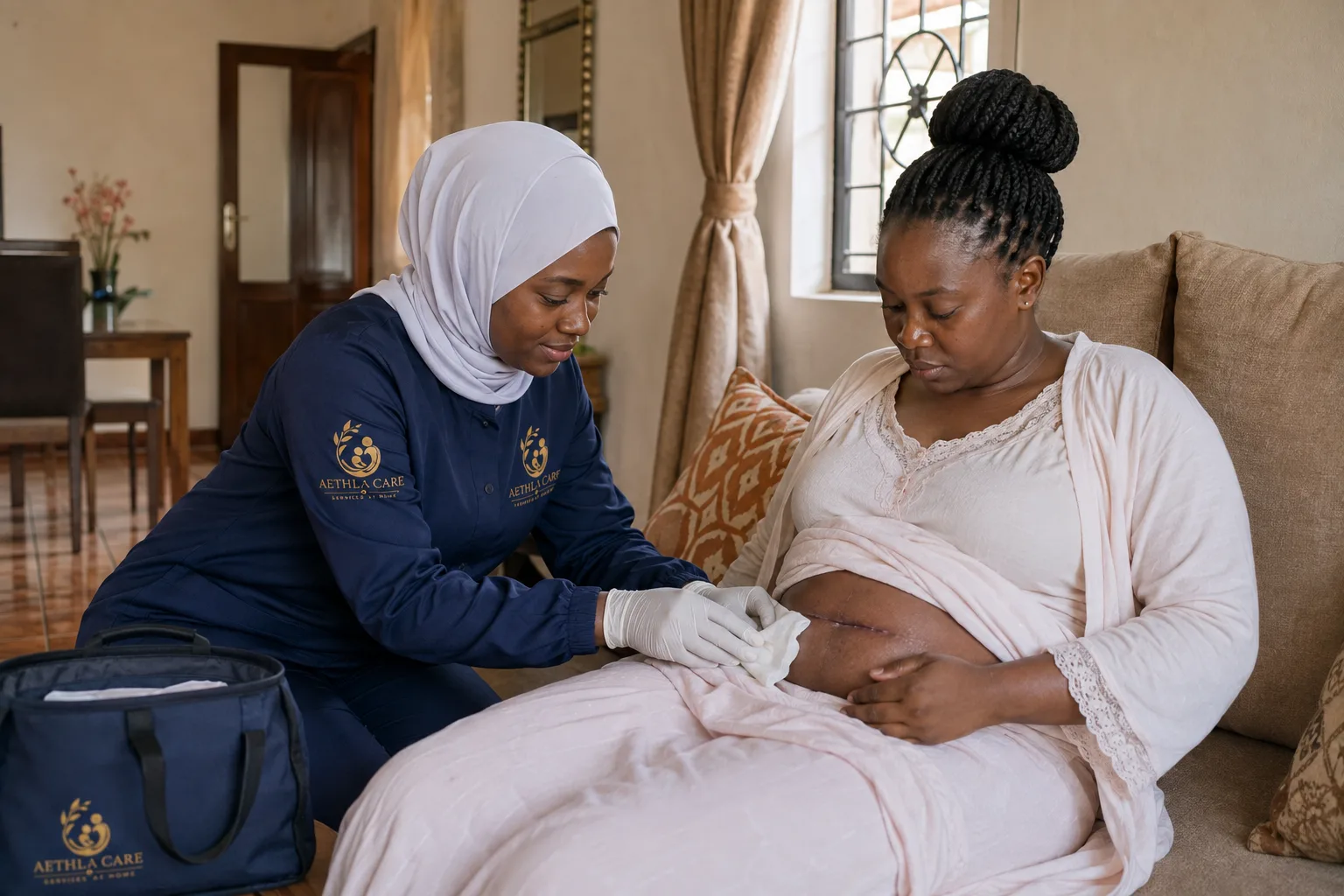
Maternity Support in Uganda: Helping Families Navigate Pregnancy, Birth and Life After Baby
Pregnancy and childbirth are important milestones for individuals and families, but they can also bring significant practical responsibilities.
Families may need to organize antenatal appointments, transportation, household responsibilities, childcare, communication with relatives, preparation for a new baby and support after returning home from hospital.
For some families, the challenge is even greater when relatives live in different cities or countries.
A daughter may be pregnant in Kampala while her parents live in another part of Uganda.
A husband may work away from home.
A family member may be living in Australia, the United Kingdom, the United States, Canada, the UAE or South Africa while a pregnant relative remains in Uganda.
In these situations, families may need more than a single healthcare appointment.
They may need practical maternity and family support coordination.
That is where it is important to understand the difference between clinical maternity care and practical maternity support.
Clinical care is provided by qualified healthcare professionals such as doctors, midwives and nurses.
Practical support can help families organise the surrounding journey, including appointments, transport, household responsibilities, communication, childcare and other practical needs.
Aethla Care Uganda provides a care-coordination and family-support pathway designed to help families understand and organise these different needs.
What Is Maternity Support?
Maternity support refers to practical assistance provided around pregnancy, birth and the transition into life with a new baby.
It can include support with:
- Organising appointments - Coordinating transport - Managing household responsibilities - Preparing for a baby's arrival - Supporting family communication - Coordinating childcare for older children - Helping families understand practical next steps - Organizing post-discharge support - Connecting families with appropriate services or professionals - Supporting relatives who are coordinating care from another location
Maternity support does not automatically mean medical treatment.
This distinction is important.
A person providing practical family support should not be presented as a doctor, midwife, nurse or other clinical professional unless they actually hold the relevant qualifications and are acting within their professional role.
Aethla Care's maternity-support service is positioned around practical assistance during pregnancy, birth and the transition home, while clinical questions are directed toward appropriate qualified professionals.
Maternity Care vs Maternity Support: What Is the Difference?
These terms can sound similar, but they can describe different responsibilities.
Maternity Care
Maternity care may involve qualified healthcare professionals providing clinical services throughout pregnancy, childbirth and the postnatal period.
Depending on the individual's circumstances, this may involve:
- Antenatal assessment - Monitoring pregnancy - Clinical examinations - Medical advice - Midwifery care - Labour and delivery care - Postnatal assessment - Newborn healthcare
The appropriate professional and healthcare facility depend on the individual's circumstances.
Maternity Support
Maternity support focuses on practical needs surrounding the family's healthcare journey.
For example:
- Getting to appointments - Coordinating schedules - Arranging practical household assistance - Supporting family communication - Organising childcare for older children - Coordinating transport - Preparing for discharge and the return home - Helping family members understand who is responsible for different parts of the care journey
The two can work together.
A family may receive clinical maternity care from a hospital or qualified professional while receiving practical family support from another organization.
Why Maternity Support Matters for Families in Uganda
Pregnancy affects more than one person.
It can affect the entire household.
Parents may need to reorganise:
- Work - Transport - Household responsibilities - Finances - Childcare - Appointments - Family visits - Baby preparations
For families with strong local support networks, relatives may naturally help with these responsibilities.
For others, practical support may be more difficult to organize.
This can be particularly relevant when:
- Both parents work - The family lives away from relatives - The mother is caring for other children - A partner travels for work - The family is new to a particular area - A relative is coordinating support from abroad - Transport is difficult - The family needs help coordinating several services
The objective of maternity support is therefore not to replace family.
It is to help make the practical side of the family journey more manageable.
Pregnancy Support in Uganda
Pregnancy can involve many appointments and practical decisions.
Families may need to keep track of:
- Antenatal appointments - Hospital or clinic schedules - Transport - Family responsibilities - Work commitments - Childcare - Preparation for birth - Communication between family members
The exact medical schedule should always come from the woman's healthcare professional.
A practical support coordinator can help with the organizational side.
For example, a family may know that an appointment is scheduled but still need to determine:
- Who will accompany the mother? - How will she get there? - Who will look after other children? - Who needs to be informed? - What happens if transport changes? - What needs to be organised afterwards?
These are practical questions rather than clinical decisions.
Antenatal Appointment Coordination
Pregnancy appointments can involve several people and multiple schedules.
For some families, organizing the appointment itself is only one part of the process.
They may also need help coordinating:
- Appointment dates - Transport - Accompanying relatives - Childcare - Family communication - Documentation - Follow-up arrangements
Aethla Care's wider healthcare-navigation service can help families identify appropriate specialists, organize appointments and coordinate practical aspects of healthcare journeys where an appropriate route is available.
The actual medical assessment and treatment remain the responsibility of qualified healthcare professionals.
Transport During Pregnancy
Transportation can become an important practical consideration during pregnancy.
Families may need transport for:
- Routine appointments - Specialist consultations - Hospital visits - Investigations - Follow-up appointments - Planned maternity-related journeys
The appropriate transport arrangement depends on the person's circumstances.
Families should distinguish ordinary transport assistance from emergency medical transportation.
If a person has an urgent medical situation, they should seek appropriate emergency medical assistance rather than relying on an ordinary family transport arrangement.
Aethla Care's travel and mobility support is focused on helping families coordinate practical journeys, appointments, mobility and communication where an appropriate route is available.
Preparing the Household for a New Baby
Maternity support does not end with the hospital appointment.
A family also needs to prepare for life at home.
Practical preparation can include:
Household Organization
Families can decide:
- Who will prepare meals? - Who handles household errands? - Who supports older children? - Who manages appointments? - Who helps with shopping?
Childcare
If the family already has children, parents can plan:
- School routines - Babysitting - School transport - Meals - After-school care - Backup childcare
Family Communication
Relatives often want to help.
A clear plan can make that help more useful.
Families can establish:
- Who is available? - When can they help? - What tasks can they handle? - Who should receive updates? - Who should be contacted when something changes?
Postnatal and Postpartum Support in Uganda
The period after childbirth can require substantial practical adjustment.
The mother may be recovering from childbirth while the family learns how to care for a newborn.
Parents may also be managing:
- Sleep disruption - Feeding routines - Household responsibilities - Existing children - Work arrangements - Appointment schedules - Visitors - Transport - Family expectations
Postnatal support can help with the **practical organisation** around these responsibilities.
It should not be confused with professional medical or mental-health care.
If a mother or baby has a health concern, the appropriate healthcare professional should be contacted.
Supporting a New Mother After Birth
One of the most useful forms of family support may be practical rather than complicated.
A new mother may benefit from help with:
- Meals - Household tasks - Shopping - Older children - Appointments - Transport - Communication - Rest periods - Newborn routines
Families should ask the mother what support she actually wants.
Not every family has the same preferences.
Some mothers may want relatives nearby.
Others may prefer privacy and limited visitors.
Some families may need practical household help more than social support.
A respectful approach begins with listening.
Maternity Support for First-Time Parents
First-time parents may have many questions about organising life with a newborn.
They may need to establish:
- Feeding routines - Sleep routines - Household responsibilities - Childcare arrangements - Appointment schedules - Transport plans - Family communication
Clinical questions should be discussed with the appropriate healthcare professional.
Practical questions can be addressed through family planning and support coordination.
The goal is not to overwhelm parents with information.
It is to help them identify what needs to happen, who is responsible and when it needs to happen.
Maternity Support for Working Parents
Working parents may need to plan maternity support before the baby arrives.
Important questions include:
- When will work responsibilities change? - Who will provide support during the day? - Who will handle appointments? - Who will look after older children? - What happens when a parent returns to work? - What happens if childcare arrangements change? - Is there a backup caregiver?
These questions can be discussed before the baby arrives.
Advance planning can make the transition more organized.
Maternity and Family Support for Single Parents
Single parents may have additional practical responsibilities because fewer adults are available to share them.
Support needs might include:
- Childcare - Household assistance - Transport - Appointment coordination - Newborn support - Family communication - Backup arrangements
The appropriate support will depend on the parent's circumstances.
A practical support plan should focus on what the parent actually needs rather than assuming that every family requires the same service.
Maternity Support for Families with Older Children
A new baby changes the household for everyone.
Older children may still need:
- School transportation - Meals - Homework support - Activities - Supervision - Emotional attention - Normal household routines
Parents can therefore consider maternity support as a whole-family planning exercise.
Rather than asking only:
"Who will help with the baby?"
The family can ask:
"What needs to happen across the household after the baby arrives?"
That broader question can reveal support needs that might otherwise be overlooked.
Maternity Support for Diaspora Families
For Ugandans living abroad, supporting a pregnant relative from another country can be difficult.
A family member overseas may want to help with:
- Appointment coordination - Transport - Household support - Childcare - Newborn preparation - Post-discharge support - Communication with relatives - Practical assistance after birth
But remote family members cannot physically handle every responsibility.
A coordination service can provide a local point of communication where an appropriate service route exists.
Aethla Care's diaspora-care approach is designed for families abroad who need to coordinate support for relatives in Uganda.
The organisation currently describes support routes that can include home and family support, appointments and hospital support, travel-related assistance and family communication, depending on availability and the specific need.
Maternity Support in Kampala, Wakiso, Entebbe and Mukono
Families searching online may use location-specific searches such as:
- Maternity support Kampala - Pregnancy support Kampala - Postnatal support Kampala - Maternity services Kampala - Pregnancy support Wakiso - Postnatal support Wakiso - Maternity support Entebbe - Family support Entebbe - Maternity support Mukono - Postnatal support Mukono
Location matters because the availability of a particular service can depend on the type of support required.
Aethla Care currently identifies **Kampala, Wakiso, Entebbe and Mukono** as its early service footprint.
Availability should be confirmed for the specific support request before a family proceeds.
Families elsewhere in Uganda can provide their location and requirements so that a suitable route can be assessed.
What Does Maternity Support Cost in Uganda?
There is no single price for maternity or family support.
The cost can depend on:
- Type of support - Number of hours - Location - Frequency - Transport - Childcare requirements - Household responsibilities - Appointment coordination - Specialist requirements - Whether support is occasional or ongoing
Clinical healthcare costs are separate from practical support costs and depend on the healthcare provider, facility and services required.
Families should therefore describe their actual needs before expecting a meaningful cost estimate.
A transparent support provider should explain what is included and what is not.
How to Choose Maternity and Family Support
Before arranging support, families should ask several questions.
Is the Role Clearly Defined?
Understand exactly what the person or organization will do.
Families should know:
- What support is included - What responsibilities are covered - What is outside the agreed role
Clear expectations help prevent confusion.
Is It Clinical or Practical?
Know whether the service involves healthcare or practical coordination.
Medical assessment, diagnosis and treatment should always remain with qualified healthcare professionals.
Who Actually Provides the Service?
If another professional or partner is involved, families should understand that relationship.
Knowing who is responsible for each part of the support journey helps families make informed decisions.
Is Availability Confirmed?
Do not assume that a service is available simply because it appears on a website.
Families should confirm:
- Location - Type of support required - Timing - Availability
How Will Communication Work?
Families should decide:
- Who is the primary contact? - How will updates be provided? - Who can make decisions? - What happens if circumstances change?
What Happens If Additional Help Is Required?
Families should know how additional needs will be handled if the situation changes.
A flexible support plan can help families respond to new circumstances.
Copy and paste below into the **Content** box:
---
# Aethla Care's Role in Maternity and Family Support
Aethla Care Uganda is positioned as a **care coordination and family-support platform**, rather than simply a maternity clinic or hospital.
Its maternity-support service is focused on practical assistance around pregnancy, birth and the transition home.
Depending on the situation, this may include:
- Appointment coordination - Transport planning - Household support - Childcare coordination - Family communication - Practical support after discharge - Connecting families with appropriate professional routes
Aethla does not make medical decisions on behalf of families.
Clinical decisions remain with appropriately qualified healthcare professionals and the family.
Why Care Coordination Matters
Families can sometimes face a confusing collection of separate services.
One organization may handle transport.
Another may provide healthcare.
A relative may coordinate childcare.
Someone else may manage household responsibilities.
The family can end up becoming the project manager for all of it.
Care coordination attempts to make that process easier to understand.
The basic process can be:
Tell us what is happening → clarify the need → identify the appropriate route → coordinate support → keep the family informed.
That model is particularly relevant when family members live in different locations or when several types of support need to work together.
Maternity & Family Support FAQ
What is maternity support in Uganda?
Maternity support is practical assistance around pregnancy, childbirth and the transition home. It may include appointment coordination, transport, household assistance, childcare and family communication. It is different from clinical maternity care.
What is postnatal support?
Postnatal support refers to practical assistance for a family after childbirth. It can include household organisation, childcare, transport, appointments and family coordination.
What is the difference between maternity care and maternity support?
Maternity care involves qualified healthcare professionals providing clinical services. Maternity support focuses on practical assistance surrounding the family's pregnancy, birth and postnatal journey.
Can Aethla Care help coordinate maternity appointments?
Aethla Care can help families explore appointment and healthcare-navigation routes where an appropriate service is available. Clinical assessment and treatment remain the responsibility of qualified healthcare professionals.
Can Aethla Care provide medical maternity care?
Aethla Care should not be treated as a hospital or clinic. Its role is care coordination and family support, while clinical services are provided by appropriately qualified professionals or partner facilities where applicable.
Can I arrange maternity support in Uganda from another country?
Families living abroad can contact Aethla Care about coordinating support for relatives in Uganda. The specific route depends on the location, type of support and confirmed availability.
What practical support does a new mother need?
It depends on the family. Practical needs may include meals, household assistance, childcare for older children, transport, appointment coordination, newborn routines and family communication.
Can maternity support include transport?
Depending on the arrangement and availability, practical transport or mobility support may be coordinated. Emergency medical transportation should be handled through appropriate emergency services.
Can maternity support include childcare?
It can, depending on the family's requirements and the available support route. Childcare may be particularly useful for families who already have older children.
Where does Aethla Care provide maternity support?
Aethla Care's early service footprint includes Kampala, Wakiso, Entebbe and Mukono. Specific availability depends on the support required and should be confirmed before proceeding.
Can Aethla Care support families outside Kampala?
Families outside the early service footprint can provide their location and care requirements so Aethla can determine whether an appropriate route is available.
Can Aethla Care help diaspora families?
Yes. Aethla Care has a dedicated diaspora-care pathway intended to help people living abroad coordinate support for relatives in Uganda.
When should I speak to a healthcare professional?
Any clinical concern involving pregnancy, childbirth, a mother or a newborn should be discussed with an appropriately qualified healthcare professional. Practical support should not be used as a substitute for medical assessment or treatment.
Maternity Support in Uganda Is About More Than Pregnancy
Pregnancy affects the whole family.
A successful maternity-support plan therefore considers the practical environment surrounding the mother and baby.
That may include:
- Healthcare appointments - Transport - Household responsibilities - Childcare - Newborn support - Family communication - Work - Post-discharge planning - Support from relatives abroad
The right support will differ from family to family.
For one family, the priority may be transport.
For another, it may be childcare.
For another, it may be coordinating several services while a family member overseas remains informed.
Aethla Care's role is to help families understand those needs, identify the appropriate route and coordinate practical support where available.
Looking for Maternity or Family Support in Uganda?
If you or a family member needs practical support around pregnancy, childbirth, newborn care or family responsibilities, start by explaining the situation.
Useful information includes:
- Your location - Stage of pregnancy or postnatal period - Type of support required - Preferred dates and times - Whether transport is required - Whether there are other children in the household - Whether a family member is coordinating from abroad - Any relevant non-clinical practical requirements
Aethla Care can then help clarify the available route and the organization's role.
Aethla Care Uganda
Phone: +256 795896044 WhatsApp/Text: +256 754319227 Email: support@aethlacare.org Office: 4th Floor, AHA Towers, 7 Lourdel Rd, Kampala, Uganda
Understand the need. Coordinate the support. Keep the family connected.