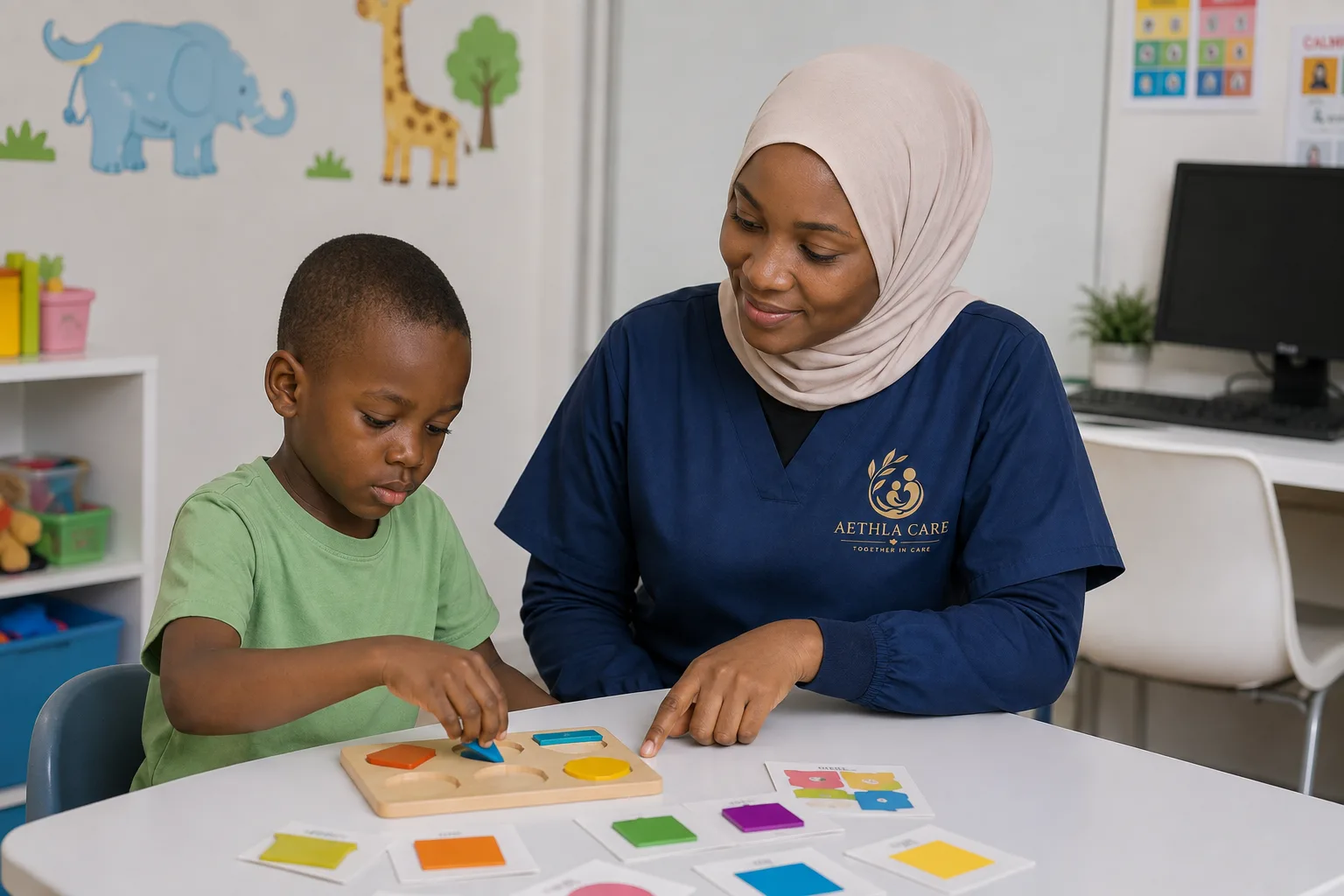
# How to Find a Babysitter in Uganda: A Complete Guide for Parents
Finding a babysitter in Uganda can look simple at first.
You may need someone to watch your child while you are working, attending an event, travelling, running errands, going to an appointment or managing other family responsibilities.
You might search for:
**“Babysitter near me.”**
**“Babysitter in Kampala.”**
**“Reliable babysitter in Uganda.”**
**“Childcare at home Kampala.”**
**“Nanny or babysitter Uganda.”**
But finding someone who is available is not necessarily the same as finding someone who is appropriate for your family.
Parents need to think about much more than availability.
A good childcare arrangement should consider:
* The child's age * The child's routine * Feeding requirements * Sleeping arrangements * School or nursery schedules * Transport * Communication * Safety * Emergency procedures * The caregiver's experience * References * Reliability * Household expectations * Child protection * Privacy * Special needs * Family preferences
Uganda's Children Act places the welfare of the child at the centre of decisions affecting children and states that a person who has custody of a child has a duty to protect the child from discrimination, violence, abuse and neglect.
This means choosing childcare should be approached as a **child-safety and family-support decision**, not simply a search for someone who can be present in the house.
This guide explains how to find a babysitter in Uganda, what parents should check before hiring one, questions to ask, how to structure a childcare arrangement, what families in Kampala and surrounding areas should consider, and how parents living abroad can arrange childcare for children in Uganda.
---
# Quick answer: How do I find a babysitter in Uganda?
Start by identifying exactly what childcare support your family needs.
Then:
1. Decide the child's age and care requirements. 2. Determine the days and hours required. 3. Decide whether you need a babysitter, nanny, childminder or another form of childcare. 4. Identify the child's routine. 5. Define the responsibilities. 6. Check the caregiver's experience. 7. Ask for appropriate references. 8. Discuss child-safety expectations. 9. Establish emergency procedures. 10. Clarify transport responsibilities. 11. Discuss meals, naps, school and activities. 12. Agree on communication with parents. 13. Clarify payment and working arrangements. 14. Consider a trial period where appropriate. 15. Review the arrangement after the first few weeks.
The most important question is not:
**“Can this person look after my child?”**
It is:
**“Is this person suitable for this particular child, family and care arrangement?”**
---
# 1. What is a babysitter?
A babysitter is generally someone who provides temporary childcare while parents or guardians are unavailable.
Babysitting may involve:
* Supervising children * Preparing or serving meals * Helping with routines * Playing with children * Supporting bedtime * Helping with homework * Accompanying children to agreed activities * Maintaining a safe environment * Communicating important information to parents
The exact role depends on the agreement between the family and the caregiver.
Babysitting should not automatically be treated as professional nursing or medical care.
If a child has complex medical needs, parents should ensure that the person providing care has the appropriate qualifications and experience for those needs.
---
# 2. Babysitter vs nanny: What is the difference?
The terms can overlap, but families often use them differently.
### Babysitter
Usually provides shorter-term or occasional childcare.
For example:
* Evening childcare * Weekend childcare * A few hours during the day * Childcare while parents attend an event * Temporary childcare during an appointment
### Nanny
Usually provides more regular childcare and may have broader responsibilities.
For example:
* Daily childcare * School preparation * School pickup * Meals * Homework * Children's routines * Activities * Household tasks directly related to children
There is no single arrangement that works for every family.
The important thing is to define the role clearly.
---
# 3. Why choosing the right babysitter matters
Children depend on adults for supervision, protection and care.
A babysitter may spend several hours with a child and can become an important part of the child's daily environment.
The caregiver therefore needs to understand:
* The child's personality * The child's routine * Household rules * Safety expectations * Communication preferences * Emergency contacts * Food requirements * Sleeping arrangements * School or nursery arrangements
Parents should not assume that childcare experience alone means someone will automatically understand their family's expectations.
Communication matters.
---
# 4. Uganda's child-protection framework
Uganda has a legal framework specifically addressing the care and protection of children.
The Children Act defines a child as a person below 18 years and establishes the welfare of the child as a central consideration in decisions concerning upbringing and care.
The Act also states that a parent, guardian or person with custody has responsibilities including maintaining the child and protecting the child from discrimination, violence, abuse and neglect.
For families, the practical lesson is simple:
**Childcare arrangements should be designed around the child's welfare and safety.**
---
# 5. What should parents look for in a babysitter?
A suitable babysitter may demonstrate:
* Reliability * Patience * Good communication * Appropriate childcare experience * Respect for children * Ability to follow instructions * Good judgement * Calmness * Punctuality * Respect for household boundaries * Understanding of safety * Willingness to communicate concerns
The ideal characteristics may differ depending on the child's age.
Looking after a newborn is different from caring for a school-age child.
Looking after one child is different from caring for three children.
Looking after a child with additional needs may require specific experience.
---
# 6. Consider the age of your child
Age changes the type of childcare required.
## Babies
Babies may require attention to:
* Feeding * Sleep * Nappy changes * Safe positioning * Hygiene * Soothing * Close supervision
Parents should make the baby's routine and safety requirements very clear.
## Toddlers
Toddlers require close supervision because they may move quickly and have limited understanding of danger.
## Preschool children
Children may require:
* Play * Early learning activities * Meals * Rest * Supervision * Preparation for nursery
## School-age children
They may need:
* School pickup * Homework support * Meals * Activities * Supervision * Bedtime routines
The babysitter's experience should match the child's needs.
---
# 7. Babysitting newborns in Uganda
Newborn childcare requires particular attention.
Parents should explain:
* Feeding arrangements * Sleep routines * Hygiene requirements * Nappy changing * Safe sleep expectations * Who to contact if the baby becomes unwell * Medical information relevant to emergency situations * When parents should be contacted
A babysitter should not be expected to make medical decisions beyond their training.
If the baby becomes acutely unwell, the appropriate healthcare pathway should be followed.
---
# 8. Babysitting toddlers
Toddlers need active supervision.
They may:
* Climb furniture * Open doors * Touch dangerous objects * Put objects in their mouths * Move unexpectedly * Run toward roads * Pull objects down * Explore unfamiliar spaces
Parents should therefore explain potential hazards in the home.
This may include:
* Stairs * Balconies * Swimming pools * Cooking areas * Electrical outlets * Medicines * Cleaning chemicals * Sharp objects * Open windows * Vehicles * Water containers
The safest childcare arrangement is one where the caregiver understands the child's environment before the parent leaves.
---
# 9. Babysitting school-age children
Older children generally have more independence, but supervision is still important.
A babysitter may need to manage:
* School pickup * Homework * Meals * Screen time * Play * Outdoor activities * Bedtime * Household rules
Parents should establish which decisions the babysitter can make independently and which require parental approval.
---
# 10. Babysitting children with disabilities
Children with disabilities may require additional support.
The family should explain:
* Mobility needs * Communication methods * Feeding requirements * Assistive devices * Toileting * Sensory needs * Medical requirements * Emergency procedures
A babysitter should not be expected to perform clinical tasks unless appropriately trained and engaged for that role.
If specialist care is required, parents should involve the appropriate healthcare or rehabilitation professional.
---
# 11. Children with medical conditions
Some children require additional care because of medical conditions.
Before arranging childcare, parents should consider:
* Does the child need medication? * Does medication require professional administration? * Does the child have allergies? * Does the child have an emergency plan? * Does the child use medical equipment? * Does the child have dietary restrictions? * Does the caregiver know what to do in an emergency?
The more complex the child's medical needs, the more important it becomes to match the caregiver's qualifications and experience to those needs.
---
# 12. What questions should I ask a babysitter?
Parents can ask:
### Experience
* How long have you worked with children? * What ages have you cared for? * How many children have you cared for at once? * Have you cared for babies? * Have you cared for children with additional needs?
### Practical childcare
* Are you comfortable preparing children's meals? * Are you comfortable with bedtime routines? * Can you help with homework? * Are you comfortable accompanying children to activities?
### Safety
* What would you do if a child was injured? * What would you do if a child became unwell? * How would you respond if a child left the house unexpectedly? * What would you do in a household emergency?
### Communication
* How would you update parents? * What information would you report immediately? * Are you comfortable following a written routine?
The purpose is not to conduct a complicated examination.
It is to understand how the person thinks about childcare.
---
# 13. Check references
Where appropriate, ask for references from previous childcare employers.
Ask previous employers about:
* Reliability * Punctuality * Childcare quality * Communication * Trustworthiness * Reasons for leaving * Ability to follow instructions * How they handled difficult situations
References are only one part of screening.
A reference should not be treated as proof that someone is automatically suitable.
---
# 14. Verify identity and background information
Parents should take reasonable steps to establish who they are hiring.
Depending on the circumstances, this may include verifying:
* Full name * Contact information * Identification * Previous employment * References * Relevant qualifications * Relevant training
Where formal background checks are available and appropriate, families may consider them.
Do not rely solely on social-media profiles.
---
# 15. Childcare experience versus childcare training
These are not identical.
Someone may have years of experience caring for younger siblings or children in their community.
Another person may have formal childcare training.
Both forms of experience can be relevant.
The right choice depends on:
* Child's age * Complexity of care * Family expectations * Hours required * Special needs * Medical requirements
For complex childcare, qualifications and relevant professional experience become particularly important.
---
# 16. First aid and emergency preparedness
Parents may want a babysitter to have basic first-aid knowledge, particularly when caring for children regularly.
Ask:
* Have you completed first-aid training? * When was it completed? * Do you know what to do if a child is injured? * Do you know who to contact during an emergency?
Families should also provide:
* Parent contact numbers * Backup contact * Emergency healthcare contact * Child's relevant medical information * Home address * Important instructions
Do not assume the babysitter will know what to do simply because they have looked after children before.
---
# 17. Create a written childcare routine
A written routine can be extremely useful.
For example:
**7:00 a.m.** — Wake up
**7:30 a.m.** — Breakfast
**8:00 a.m.** — Get ready for school
**8:30 a.m.** — School transport
**3:30 p.m.** — Return home
**4:00 p.m.** — Snack
**4:30 p.m.** — Homework/play
**6:30 p.m.** — Dinner
**7:30 p.m.** — Bath/bedtime routine
The actual schedule will differ by family.
The benefit is clarity.
---
# 18. Explain the child's normal routine
Children often respond better when their normal routine is maintained.
Tell the babysitter:
* What time the child usually sleeps * What foods they eat * What activities they enjoy * What they dislike * How they communicate * What helps them settle * What household rules apply
A babysitter should not have to guess.
---
# 19. Food and allergies
Parents should provide clear instructions about food.
Tell the caregiver:
* What the child normally eats * What foods should be avoided * Known allergies * Dietary restrictions * Mealtimes * Snacks * Drinks
If a child has a serious allergy, parents should provide clear emergency instructions and ensure the caregiver understands them.
For medically significant dietary requirements, follow the advice of the child's healthcare professional.
---
# 20. Sleep and bedtime
Bedtime can be one of the most challenging parts of babysitting.
Parents should explain:
* Normal bedtime * Bathing routine * Clothing * Reading * Comfort objects * Lighting * Room temperature preferences * Night-time waking * What the caregiver should do if the child wakes
Consistency can make childcare easier for both the child and caregiver.
---
# 21. Screen time and technology
Parents should decide their expectations before the babysitter begins.
Clarify:
* Whether television is allowed * Which programmes are appropriate * Whether YouTube is allowed * Whether the child can use a phone or tablet * How long screens can be used * Whether the babysitter can use their own phone while supervising
The caregiver should never use a phone in a way that compromises supervision.
---
# 22. Outdoor play and activities
Outdoor activities can be valuable for children.
But parents should establish boundaries.
For example:
* Which areas are allowed? * Can the child leave the compound? * Can the child visit neighbours? * Can the babysitter take the child to a playground? * Can the child use a swimming pool? * Can the child ride a bicycle? * Who can accompany the child?
The babysitter should understand exactly what permission has been given.
---
# 23. Transporting children
Transport is another area where expectations should be clear.
If a babysitter is expected to take a child somewhere, establish:
* Destination * Transport method * Who is authorized to drive * Whether a driver is provided * Pickup and drop-off arrangements * Emergency contact * What happens if plans change
Do not assume that a babysitter is automatically authorized to drive your child.
If transportation is required, make the arrangement explicit.
---
# 24. Babysitting and school pickup
School pickup can be a major responsibility.
Parents should clarify:
* School name * Pickup time * Authorized pickup person * School contact * Transport arrangement * What happens if the child is not ready * What happens if the school closes unexpectedly
Where a school requires an authorized pickup list, parents should follow the school's procedures.
---
# 25. Babysitting during evenings
Evening babysitting may involve:
* Dinner * Bath * Play * Homework * Bedtime * Night-time supervision
Parents should explain what should happen if they are delayed.
For example:
**“If we are more than 30 minutes late, call us.”**
Clear expectations prevent uncertainty.
---
# 26. Babysitting during weekends
Weekend childcare may involve a different routine.
Children may want:
* Outdoor activities * Play dates * Family events * Shopping trips * Sports * Religious activities
Parents should establish which activities are permitted.
The babysitter should not assume that normal weekday permissions apply automatically.
---
# 27. Finding a babysitter in Kampala
Kampala families may have access to many informal childcare networks.
Parents may hear about babysitters through:
* Family * Friends * Neighbours * Community networks * Schools * Churches * Professional childcare services * Care agencies * Online platforms
Availability does not guarantee suitability.
Families should still conduct appropriate screening.
---
# 28. Finding a babysitter in Wakiso
Families in Wakiso may need childcare support connected with:
* Kampala work schedules * School runs * Home-based childcare * Evening work * Family responsibilities * Commuting
When choosing a babysitter, consider the actual location and transport requirements.
A caregiver who lives very far away may have difficulty maintaining reliable hours.
---
# 29. Finding a babysitter in Entebbe
Families in Entebbe may need childcare because of:
* Work * Airport-related schedules * Travel * Hospitality or service-industry work * Family events * School routines
The same principles apply:
**Availability + reliability + suitability + safety.**
---
# 30. Finding a babysitter in Mukono
Families in Mukono may need regular or occasional home childcare.
Consider:
* Distance * Working hours * School schedules * Transport * Evening requirements * Weekend requirements * Emergency arrangements
The best childcare arrangement is not necessarily the one with the shortest search process.
It is the one that works reliably for the child and family.
---
# 31. Babysitting for working parents in Uganda
Working parents may require childcare before, during or after normal working hours.
For example:
**Early morning:** childcare before school.
**Daytime:** childcare while parents work.
**Afternoon:** school pickup.
**Evening:** meals and bedtime.
Some families may therefore need a nanny or regular childcare arrangement rather than occasional babysitting.
Define the hours before recruiting.
---
# 32. Babysitting for single parents
Single parents may need additional flexibility.
Childcare requirements can change because of:
* Work schedules * School closures * Appointments * Travel * Family emergencies * Illness
A reliable childcare arrangement can provide practical support.
However, parents should avoid relying on a single person without a backup plan.
Consider:
**Primary caregiver + backup contact + emergency plan.**
---
# 33. Babysitting for families with multiple children
Caring for two or more children can be substantially different from caring for one.
Consider:
* Ages * Personalities * Feeding * School schedules * Sleeping arrangements * Mobility * Behaviour * Activities
A caregiver should understand how many children they are expected to supervise at the same time.
The more complex the household, the more important clear responsibilities become.
---
# 34. Babysitting and household chores
Parents should define whether the babysitter is expected to perform household tasks.
There is an important distinction between:
**Child-related tasks**
such as preparing a child's meal or cleaning up after a child,
and
**General domestic work**
such as cleaning the entire house.
These responsibilities should not be assumed.
If a family needs both childcare and domestic support, consider defining them as separate responsibilities.
---
# 35. Babysitter versus maid
A babysitter's primary responsibility is childcare.
A maid or domestic worker may primarily provide household assistance.
Some families may require both.
For example:
**Babysitter:** child supervision, meals, routines and school-related support.
**Domestic support:** cleaning, laundry and household tasks.
Combining roles can work in some households, but responsibilities should be clear.
Aethla Care's broader home and family support model can help families clarify which type of support they actually need rather than simply asking for “someone to help at home.”
---
# 36. Childcare for diaspora families
Many Ugandans living overseas help support children and relatives in Uganda.
A parent may live in:
* Australia * United Kingdom * United States * Canada * United Arab Emirates * South Africa * Another country
while their child lives with grandparents or other relatives in Uganda.
This can create practical challenges.
The parent may want to know:
* Who is caring for the child? * What is the child's routine? * Who takes the child to school? * Who is available in an emergency? * Who communicates with the parent? * Who can help when the family caregiver is unavailable?
A local childcare arrangement can help fill the practical gap.
---
# 37. How to arrange a babysitter in Uganda from Australia
If you live in Australia and need childcare support for your child or family member in Uganda, start by creating a clear care brief.
Include:
**Child**
Age and relevant needs.
**Location**
Where the child lives.
**Schedule**
Days and hours.
**Routine**
School, meals, naps and activities.
**Support**
What the babysitter needs to do.
**Safety**
Important household and child-safety instructions.
**Communication**
How often you want updates.
**Emergency**
Who should be contacted locally.
This information can help a childcare coordinator understand what the family needs.
---
# 38. Arranging childcare from the UK, USA or Canada
The same approach applies to families living overseas.
The biggest mistake is to assume that someone nearby is automatically able to provide the right care.
Distance means the overseas parent needs particularly clear communication.
A useful arrangement can include:
* A named caregiver * A backup contact * A written routine * Regular parent updates * Emergency contacts * School information * Healthcare information * Clear boundaries
This gives the overseas parent a better understanding of the childcare arrangement.
---
# 39. Communication with parents
Parents should decide how communication will work.
For example:
### Routine updates
“Breakfast completed.”
“School pickup completed.”
“Child is resting.”
### Important updates
“Child has developed a fever.”
“School has called.”
“Child fell and appears injured.”
### Emergency
Immediate contact and appropriate emergency action.
Not every small event needs a phone call.
But caregivers should know what parents consider important.
---
# 40. Privacy and children's information
Childcare providers may have access to sensitive information.
Families should be careful about:
* Medical information * School information * Family addresses * Passwords * Photos * Personal documents * Family schedules
Only necessary information should be shared.
Parents should also establish whether the babysitter is allowed to take or post photos of the child.
Do not assume that permission is automatic.
---
# 41. Social media and babysitting
Parents should decide whether:
* The babysitter can photograph the child * Photos can be stored on a personal phone * Photos can be shared with relatives * Photos can be posted online
A clear household policy can prevent misunderstandings.
The child's privacy should be treated seriously.
---
# 42. Safeguarding expectations
A childcare arrangement should include clear safeguarding expectations.
Parents should explain:
* No physical punishment * No inappropriate behaviour * No unauthorized visitors * No leaving the child unsupervised * No taking the child somewhere without permission * No sharing private family information * No posting children's photos without permission
Uganda's National Child Policy emphasizes protecting children from violence, exploitation, abuse and neglect and strengthening families' ability to provide safe care.
These principles should inform everyday childcare arrangements.
---
# 43. Physical punishment
Parents should clearly communicate their approach to discipline.
The caregiver should know what is and is not acceptable.
A childcare provider should not assume that physical punishment is acceptable simply because it may have been used in another household.
Families should agree on appropriate discipline methods before childcare begins.
If there is disagreement, the child's welfare should remain central.
---
# 44. What should a babysitter do if a child misbehaves?
Parents should establish expectations.
Possible approaches can include:
* Calm communication * Redirection * Clear boundaries * Age-appropriate consequences * Giving the child time to settle * Contacting parents when necessary
The caregiver should never improvise severe punishment.
---
# 45. What should a babysitter do if the child becomes sick?
Parents should provide an emergency plan.
The plan can identify:
* Parent contact * Backup contact * Healthcare provider * Preferred facility * Relevant medical information * Allergies * Medication information
If the child appears seriously unwell, the caregiver should seek appropriate urgent medical assistance rather than waiting for a parent who is unavailable.
---
# 46. What should a babysitter do in an emergency?
A babysitter should know:
* Home address * Parent's number * Backup contact * Emergency services contact * Nearest appropriate healthcare facility * What information to take with the child
The family should also tell the caregiver who is authorized to make decisions when the parent cannot immediately be reached.
For children with complex medical needs, follow the child's existing healthcare emergency plan.
---
# 47. Babysitting and early childhood development
Childcare is not only about supervision.
The early years are important for children's development.
Uganda's National Integrated Early Childhood Development Policy covers children from conception to eight years and takes an integrated approach involving health, nutrition, education, protection and parenting support.
UNICEF's Uganda material also emphasizes nurturing care and responsive interactions between children and caregivers.
This means everyday childcare can include opportunities for:
* Talking * Reading * Playing * Singing * Exploring * Social interaction * Age-appropriate learning
A babysitter does not need to become a teacher.
But quality childcare should provide more than simply keeping a child occupied.
---
# 48. Play matters
Children learn through play.
Depending on age, play may involve:
* Building * Drawing * Reading * Singing * Pretend play * Outdoor activities * Puzzles * Conversation
Parents can explain which activities their child enjoys.
The babysitter can then support the child's routine without requiring expensive toys or elaborate activities.
---
# 49. Babysitting and learning
Parents may want a babysitter to help with:
* Reading * Homework * School preparation * Educational games * Language development * Basic routines
The caregiver should support learning at an age-appropriate level.
They should not be expected to replace a qualified teacher.
---
# 50. What makes a reliable babysitter?
Reliability is more than arriving on time once.
Look for:
* Consistent attendance * Good communication * Respect for agreed hours * Early notice when unavailable * Appropriate behaviour * Following family instructions * Clear communication when something changes
Parents should also be realistic about the caregiver's working conditions.
Reliable childcare requires clear expectations on both sides.
---
# 51. Agree on working hours
Before the arrangement begins, establish:
* Start time * End time * Days * Weekend expectations * Overnight expectations * Holiday arrangements * Overtime expectations * Emergency changes
Avoid arrangements such as:
**“Come whenever we need you.”**
Clear schedules are easier for everyone.
---
# 52. Discuss payment clearly
Parents and caregivers should agree on:
* Rate or salary * Payment frequency * Working hours * Overtime * Transport arrangements * Additional expenses * Holiday arrangements * Notice periods
The exact arrangement depends on the employment relationship and applicable Ugandan requirements.
Families should not rely on assumptions.
Put important terms in writing.
---
# 53. Trial periods
A trial period can allow both sides to see whether the arrangement works.
During the trial, parents can observe:
* How the child responds * How the caregiver communicates * Whether routines are followed * Whether the caregiver is reliable * Whether responsibilities are understood
A trial should still follow the agreed payment and working terms.
---
# 54. Watch how your child responds
Children may communicate through behaviour.
After childcare begins, parents can observe:
* Mood * Sleep * Eating * Anxiety * Comfort * Communication * Changes in behaviour
A change does not automatically mean something is wrong.
But significant or unexplained changes should not simply be ignored.
Parents should talk to the child in an age-appropriate way and investigate concerns appropriately.
---
# 55. What if your child does not like the babysitter?
A child may initially dislike any new caregiver.
They may be shy or anxious.
Give the relationship time where appropriate.
But parents should take persistent or concerning behaviour seriously.
Ask:
* What is the child saying? * When does the concern occur? * Is there a change in behaviour? * Does the child appear afraid? * Is there a specific incident?
The child's welfare should remain the priority.
---
# 56. Building a relationship between child and caregiver
Children often benefit from predictable relationships.
A caregiver can learn:
* Favourite activities * Comfort strategies * Communication style * Routines * Personality * Interests
The goal is not for the caregiver to replace the parent.
It is to provide consistent, safe support.
---
# 57. Babysitting during school holidays
School holidays can significantly change childcare needs.
Parents may need full-day support instead of school pickup.
Plan:
* Hours * Meals * Activities * Outdoor time * Screen time * Transport * Family events * Emergency arrangements
Do not assume the normal school-term schedule will work during holidays.
---
# 58. Babysitting during family travel
Some families need childcare while travelling.
For example:
* Weddings * Conferences * Holidays * Family events * Business trips
A babysitter may provide support while parents are temporarily away.
If the child travels with the caregiver, additional arrangements may be needed.
Clarify responsibilities before departure.
---
# 59. What if parents work shifts?
Shift workers may need childcare at unusual times.
This could include:
* Early mornings * Evenings * Weekends * Overnight periods
Parents should make the hours explicit and ensure the caregiver is comfortable with the arrangement.
A backup plan is particularly important when parents have unpredictable schedules.
---
# 60. Babysitting for newborn and postnatal families
Families with a new baby may need practical support even when no medical care is required.
A babysitter or family-support worker may assist with:
* Older children * Household routines involving children * Meal preparation for children * Supervision while parents rest * School runs * Practical errands
The role should be clearly defined.
A babysitter should not be presented as a substitute for a midwife, nurse, doctor or other qualified healthcare professional.
---
# 61. When childcare becomes healthcare
Some families may have children with significant medical or developmental needs.
In these situations, parents should determine whether they require:
**babysitting**
or
**specialist healthcare support.**
For example, if a child needs clinical monitoring, complex medication administration or medical equipment management, the appropriate professional should be involved.
A general babysitter may not be suitable.
---
# 62. How Aethla Care can help families find childcare in Uganda
Aethla Care provides home and family support, including babysitting and practical family assistance, depending on the family's needs, location and available service route.
The starting point is understanding:
* The child's age * Location * Schedule * Family routine * Number of children * Childcare requirements * Additional support needs * Transport requirements * Any relevant special considerations
The aim is not simply to place “someone” in the home.
It is to understand the care requirement and clarify the appropriate support route.
Aethla Care's broader model can also help families coordinate childcare alongside other practical services where appropriate.
For example:
**Babysitting + household support + transport + appointment coordination**
may sometimes be more useful than a standalone babysitting arrangement.
---
# 63. Babysitting in Kampala, Wakiso, Entebbe and Mukono
Aethla Care's early service footprint includes:
* Kampala * Wakiso * Entebbe * Mukono
Availability depends on the specific support required.
Families outside these areas can still provide their location and childcare needs so the appropriate route can be clarified.
This is important because childcare availability can vary by location.
Families should not assume that a service available in Kampala is automatically available everywhere in Uganda.
---
# 64. What information should you give Aethla Care?
When asking about babysitting, provide:
### Child
Age and number of children.
### Location
Where childcare is required.
### Schedule
Days and hours.
### Routine
School, nursery, meals and sleep.
### Support
What the caregiver needs to do.
### Additional needs
Disability, communication, mobility or other relevant requirements.
### Transport
Whether school pickup or other travel is required.
### Family
Who is involved in the child's care?
### Communication
How should parents receive updates?
This helps the care route become clearer.
---
# 65. Babysitting for parents living abroad
Aethla Care can also help families who are coordinating practical childcare from outside Uganda, depending on the service route.
For example:
**Parent in Australia**
↓
**Child in Kampala**
↓
**Local childcare support**
↓
**Family updates**
This can be particularly useful where parents cannot physically manage school runs, childcare or household routines themselves.
The overseas parent remains involved.
The local support arrangement handles agreed practical responsibilities.
---
# 66. What parents should not delegate completely
Even when a babysitter is trusted, parents remain the child's parents.
Important decisions concerning:
* Healthcare * Education * Major discipline * Travel * Family relationships * Significant changes to routine
should remain with the parent or legal guardian unless appropriate authority has been given.
A babysitter provides care.
They do not automatically acquire parental authority.
---
# 67. Babysitting and family communication
Good childcare depends on communication in both directions.
Parents should tell the caregiver what they expect.
The caregiver should feel able to tell the parents when:
* The child is unwell * The routine is not working * The child needs something * There is a safety concern * A schedule needs to change
A culture of communication can prevent small problems from becoming bigger ones.
---
# 68. Common mistakes when choosing a babysitter
## Mistake 1: Choosing only based on price
Low cost does not automatically mean good value.
## Mistake 2: Choosing only based on availability
Someone being available today does not mean they are suitable long term.
## Mistake 3: Not checking references
Past childcare experience can provide useful information.
## Mistake 4: Not defining responsibilities
Unclear roles create conflict.
## Mistake 5: Ignoring safeguarding
Child safety should be central.
## Mistake 6: Not discussing emergency procedures
Caregivers need to know what to do when something unexpected happens.
## Mistake 7: Expecting a babysitter to perform medical duties
Clinical responsibilities require appropriate qualifications.
## Mistake 8: Treating childcare and domestic work as the same
Define the role clearly.
## Mistake 9: Not creating a backup plan
People can become unavailable.
## Mistake 10: Not listening to the child
Children's concerns should be taken seriously and investigated appropriately.
---
# 69. Babysitter interview checklist
Before hiring, ask:
### Background
☐ Full name confirmed
☐ Contact information confirmed
☐ Identification checked where appropriate
☐ Previous experience discussed
☐ References requested
### Childcare
☐ Relevant age experience
☐ Comfortable with child's routine
☐ Comfortable with meals
☐ Comfortable with bedtime
☐ Comfortable with activities
### Safety
☐ Emergency plan discussed
☐ Child protection expectations explained
☐ Household safety explained
☐ Visitor policy explained
### Practical
☐ Working hours agreed
☐ Responsibilities agreed
☐ Transport responsibilities agreed
☐ Payment arrangements agreed
☐ Communication arrangements agreed
---
# 70. Babysitter first-day checklist
Before leaving your child with a new caregiver, provide:
☐ Parent contact numbers
☐ Backup contact
☐ Home address
☐ School information
☐ Child's routine
☐ Food information
☐ Allergy information
☐ Medication information where relevant
☐ Emergency instructions
☐ Household rules
☐ Authorized visitors
☐ Transport instructions
☐ Important preferences
A written document can make this much easier.
---
# Frequently Asked Questions
## How do I find a reliable babysitter in Uganda?
Start by defining your childcare needs, then assess candidates based on relevant experience, references, reliability, communication, safety awareness and suitability for your child's age and needs.
## How much does a babysitter cost in Uganda?
There is no single universal babysitting price. Rates vary according to location, hours, experience, number of children, responsibilities, overnight requirements and whether additional services such as transport or household support are included. Families should agree on payment terms before the arrangement begins.
## Where can I find a babysitter in Kampala?
Families may find childcare through personal networks, community contacts, schools, professional childcare services, agencies and care platforms. Regardless of how someone is introduced, parents should still conduct appropriate screening.
## Can Aethla Care provide a babysitter in Kampala?
Aethla Care can help coordinate babysitting and home/family support depending on the child's needs, location and available service route.
## Does Aethla Care provide babysitters in Wakiso?
Aethla Care's early service footprint includes Wakiso. Availability depends on the specific childcare requirement and should be confirmed when making an enquiry.
## Can I arrange a babysitter in Uganda while living in Australia?
Yes. Parents or relatives living in Australia can coordinate local childcare support in Uganda. Clear information about the child's location, routine, schedule and support requirements is important.
## Can someone in the UK arrange childcare for a child in Uganda?
Yes. A local childcare arrangement can be coordinated while the parent or relative remains involved from the UK.
## Can a babysitter look after a newborn?
A babysitter may provide newborn childcare if they have appropriate experience and the responsibilities are within their competence. Families should ensure the caregiver understands the baby's routine and safety requirements.
## Should a babysitter have first-aid training?
First-aid training can be valuable, particularly for regular childcare. Parents should ask about the caregiver's training and ensure they have an appropriate emergency plan.
## Can a babysitter administer medicine?
That depends on the medicine, the child's needs, the caregiver's training and the agreed responsibilities. Complex or clinical medication requirements may require an appropriately qualified healthcare professional.
## Is a babysitter the same as a nanny?
Not necessarily. Babysitting often refers to temporary or occasional childcare, while nanny arrangements are commonly more regular and may involve broader responsibilities. Families should define the actual role rather than relying on the job title.
## Is a babysitter the same as a maid?
No. Babysitting primarily concerns childcare, while domestic work primarily concerns household tasks. Some arrangements combine responsibilities, but they should be clearly agreed.
## Can a babysitter take my child to school?
They may be able to if this is part of the agreed childcare arrangement and appropriate transport and school authorization arrangements are in place.
## Can a babysitter drive my child?
Only where this has been explicitly agreed and the person is legally and practically permitted to drive and transport the child. Families should confirm the transport arrangement rather than assuming it.
## What should I do if my child is uncomfortable with the babysitter?
Listen to the child and consider the circumstances. Some children need time to adjust to a new caregiver, but persistent or serious concerns should be taken seriously and investigated.
## Can a babysitter stay overnight?
Some childcare arrangements may include overnight care, but this should be specifically agreed in advance, including working hours, responsibilities, payment and emergency arrangements.
## Can Aethla Care help with childcare and household support together?
Depending on the family's needs and service availability, Aethla Care can help coordinate childcare alongside broader home and family support.
---
# Final Checklist: Choosing a Babysitter in Uganda
Before engaging a babysitter, ask yourself:
### About the child
* What does my child need? * What is their normal routine? * Are there medical, dietary or developmental considerations?
### About the caregiver
* Do they have relevant experience? * Can I verify their background and references? * Do they communicate clearly? * Do they understand child safety?
### About the arrangement
* What days and hours are required? * What exactly will they do? * What are they not responsible for? * How will payment work? * What happens if they cannot attend?
### About safety
* Who is the emergency contact? * What should happen if the child becomes unwell? * Who is allowed to collect the child? * Can the caregiver take the child outside? * Can they take photographs? * Can visitors enter the home?
### About communication
* How often will parents receive updates? * What requires an immediate call? * What can wait until the end of the day?
A clear childcare arrangement protects everyone.
---
# Final Thoughts
Finding a babysitter in Uganda is not simply about finding someone who likes children.
It is about creating a safe, reliable and clearly defined childcare arrangement that works for the child and the family.
The right questions begin with:
**How old is the child?**
**What does the child need?**
**What is the child's normal routine?**
**What responsibilities will the caregiver have?**
**What happens in an emergency?**
**How will parents stay informed?**
Uganda's child-protection framework places significant emphasis on the welfare, care and protection of children. The Children Act specifically requires people with custody of children to protect them from discrimination, violence, abuse and neglect.
Uganda's wider early-childhood policy framework also recognizes that children's development depends on integrated support involving care, health, nutrition, protection, education and parenting.
For parents, this means childcare should be viewed as part of the wider family-support system.
Sometimes the requirement is simply an occasional babysitter.
Sometimes the family needs a regular nanny.
Sometimes the requirement is childcare combined with school pickup, household assistance, transport or other family support.
And for parents living abroad, the need may be even broader because they are coordinating their children's care from another country.
Aethla Care can help families clarify what type of support they actually need and coordinate an appropriate childcare route based on the child's needs, location and available service.
For families in **Kampala, Wakiso, Entebbe, Mukono and other parts of Uganda**, the starting point remains the same:
**Tell us what you need.**
**Clarify the care route.**
**Coordinate support.**
**Keep the family informed.**
**Aethla Care — Trusted Care for Every Stage of Life.**