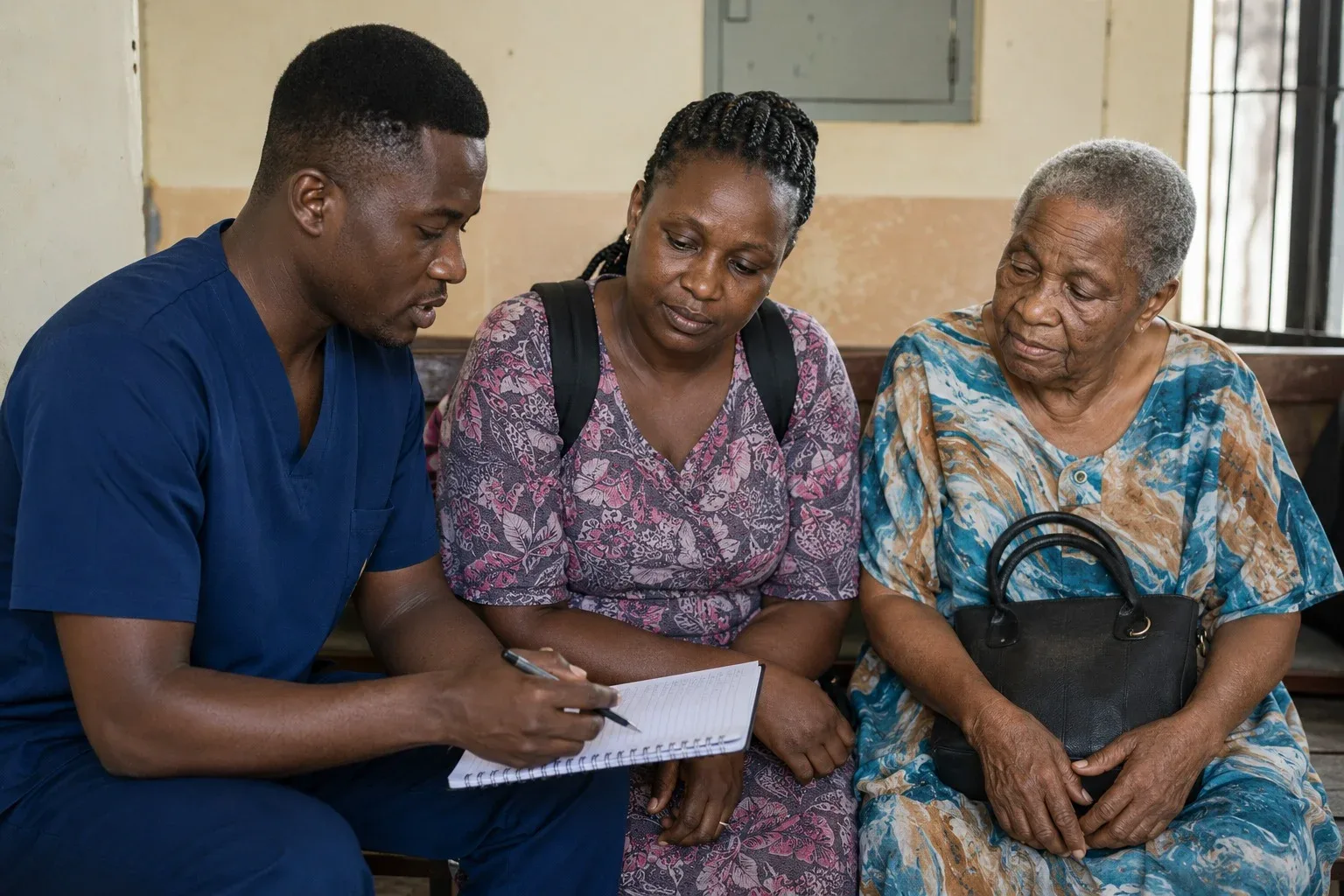
# How to Arrange Specialist Doctor Appointments in Uganda: A Complete Guide for Patients and Families
**Primary Keyword:** specialist doctor appointments in Uganda
**Secondary Keywords:** specialist doctors Uganda, book specialist doctor Uganda, specialist appointment Kampala, how to see a specialist in Uganda, medical specialist Uganda, healthcare navigation Uganda, doctor appointment Uganda, specialist hospitals Uganda, referral doctor Uganda, private specialist Uganda, specialist consultation Kampala, book doctor appointment Kampala, healthcare coordination Uganda
**Search Intent:** Informational + commercial investigation + appointment coordination
---
# How to Arrange Specialist Doctor Appointments in Uganda
Arranging a specialist doctor appointment in Uganda can feel complicated when a patient or family does not know which specialist to see, which facility to approach, whether a referral is needed, what documents to carry, or how to coordinate the appointment.
The situation can become even more difficult when several family members are involved or when the person arranging the appointment lives outside Uganda.
A specialist appointment may involve more than simply finding a doctor's telephone number.
A family may need to coordinate:
- the appropriate type of specialist - the healthcare facility - referral information - previous medical records - laboratory or imaging reports - appointment dates - transport - an accompanying person - payment arrangements - follow-up appointments - communication with relatives
Uganda's healthcare system operates through a tiered referral structure, ranging from community-level services and lower-level health centres through hospitals, regional referral hospitals and national referral hospitals. The Ministry of Health describes regional referral hospitals as providing more advanced and specialised healthcare services.
This means that understanding **what kind of care is required and where it should be accessed** can be just as important as finding an available appointment.
Aethla Care provides a healthcare-navigation and specialist-appointment coordination route designed to help families organise these practical steps while keeping clinical decisions with licensed healthcare professionals.
---
# Quick Answer: How Do You Arrange a Specialist Doctor Appointment in Uganda?
A practical process is:
1. Understand why the specialist is being requested. 2. Determine whether a referral has been recommended. 3. Identify the appropriate specialty. 4. Identify a suitable healthcare facility. 5. Gather medical records and relevant documents. 6. Contact the provider or appointment service. 7. Confirm the appointment date and time. 8. Ask whether any preparation is required. 9. Arrange transport if necessary. 10. Attend the consultation. 11. Keep the doctor's recommendations and follow-up information. 12. Coordinate further tests, referrals or appointments if recommended.
If you are unsure which specialist or facility is appropriate, healthcare navigation can help organise the practical questions before the appointment.
---
# What Is a Specialist Doctor?
A specialist doctor is a medical practitioner with additional training in a particular area of medicine.
Examples of specialties can include:
- cardiology - paediatrics - obstetrics and gynaecology - orthopaedics - ophthalmology - ear, nose and throat medicine - psychiatry - surgery - internal medicine - neurology - dermatology - oncology - rehabilitation-related services
The exact specialty required depends on the patient's situation.
A person experiencing a symptom does not necessarily know which specialist is appropriate.
That is one reason a referral or discussion with a general doctor or qualified healthcare professional can be useful.
---
# Does Everyone Need a Specialist?
No.
A specialist appointment should generally be based on the person's clinical needs and the recommendation of an appropriately qualified healthcare professional where appropriate.
Some health concerns can be assessed and managed at primary-care or general medical level.
Others require specialist assessment.
Uganda's Ministry of Health describes the country's referral system as a tiered structure that includes Health Centre levels, district hospitals, regional referral hospitals and national referral hospitals.
The practical lesson for families is simple:
**Do not start by searching for the most specialised doctor you can find. Start by understanding what care is actually needed.**
---
# What Is a Referral in Uganda?
A referral is the process through which a patient is directed from one level or provider of healthcare to another when additional or more specialised care is needed.
The Ministry of Health describes Uganda's referral structure as including:
- Health Centre I/community health workers - Health Centre II - Health Centre III - Health Centre IV - district hospitals - regional referral hospitals - national referral hospitals.
The referral pathway can help determine where a patient should receive a particular service.
However, the exact process can differ depending on:
- the condition - the healthcare provider - the facility - whether the patient is using public or private care - whether insurance is involved - whether the requested service is available
Therefore, families should confirm the requirements directly with the relevant provider.
---
# Do You Need a Referral to See a Specialist in Uganda?
**It depends.**
Some specialist services or facilities may require or strongly recommend a referral, while others may allow patients to request appointments directly.
The requirement can also vary between public and private facilities.
Before travelling to a hospital or clinic, ask:
> “Do I need a referral to see this specialist?”
Also ask:
> “What documents should I bring?”
This simple step can prevent unnecessary journeys.
---
# Where Are Specialist Services Provided in Uganda?
Specialist services are provided through different levels of the healthcare system.
Uganda's Ministry of Health states that regional referral hospitals provide specialised clinical services and describes services including medicine, surgery, paediatrics, obstetrics and gynaecology, psychiatry, ENT and ophthalmology, alongside laboratory, imaging and pathology services.
National referral hospitals provide a higher level of specialist services.
Private healthcare facilities may also provide specialist consultations.
The appropriate location depends on:
- the specialty - the patient's clinical needs - referral requirements - location - availability - cost - insurance - continuity of care
---
# How to Choose the Right Specialist
Choosing a specialist should not be based only on a name appearing high in an internet search.
Consider:
### Specialty
Does the doctor actually work in the area relevant to the patient's needs?
### Qualifications
Where appropriate, verify professional registration and relevant qualifications.
### Facility
Where does the doctor practise?
### Referral requirements
Does the facility require a referral?
### Location
Can the patient realistically travel there?
### Follow-up
If further appointments are required, will the location be practical?
### Records
Can relevant medical information be transferred or reviewed?
### Communication
Can the patient and family understand the next steps?
The Uganda Medical and Dental Practitioners Council publishes requirements relating to registration and licensing of doctors and dentists, including specialist registration and annual practising licences.
Families can use the relevant professional regulatory information when verifying practitioners.
---
# Why the Specialist's Specialty Matters
Consider a family searching for:
> “best doctor for chest pain Uganda”
That search is too broad to make a reliable clinical decision.
Chest symptoms can have many causes.
A qualified healthcare professional should determine what assessment is appropriate.
Likewise:
- joint pain does not automatically mean orthopaedics - headaches do not automatically mean neurology - a child's symptoms do not automatically identify the appropriate paediatric specialty - vision problems require appropriate eye-care assessment - mental-health concerns require appropriately qualified professionals
Search engines can help locate information.
They should not replace clinical assessment.
---
# How to Book a Specialist Doctor Appointment in Kampala
For families in Kampala, the process can be:
### Step 1: Identify the need
What has prompted the appointment?
### Step 2: Check whether a referral exists
If another doctor has recommended a specialist, review the referral.
### Step 3: Identify the specialty
Determine what specialist or service has been recommended.
### Step 4: Identify the facility
Confirm where that specialist consults.
### Step 5: Contact the facility
Ask about appointment procedures.
### Step 6: Confirm documents
Ask what records, referral letters or identification are required.
### Step 7: Confirm the appointment
Record:
- date - time - location - specialist - department - contact information
### Step 8: Arrange practical support
Consider transport and whether someone should accompany the patient.
---
# What Information Should You Have Before Booking?
Prepare basic information such as:
- patient's full name - age - contact details - reason for consultation - referring provider, if applicable - previous diagnosis, if known - current medications, where relevant - previous investigations - relevant medical records - preferred dates - location
Do not send unnecessary sensitive health information to people who do not need it.
Only share information through appropriate and trusted channels.
---
# What Documents Should You Take to a Specialist Appointment?
Depending on the appointment, useful documents may include:
- referral letter - previous medical reports - laboratory results - imaging reports - imaging discs or digital records where applicable - prescription information - previous specialist reports - identification documents - insurance information - list of questions
Ask the facility beforehand if there are specific requirements.
---
# Why Previous Medical Records Matter
A specialist may need to understand what has already happened.
Previous information can help provide context, particularly when a patient has:
- seen several doctors - undergone investigations - taken different medications - had previous procedures - experienced repeated symptoms - recently been discharged from hospital
Families should not assume that every facility automatically has access to all previous records.
If possible, organise the relevant documents before the appointment.
---
# How to Organise Medical Records for a Specialist
A simple folder can contain:
## Section 1: Referrals
Keep referral letters together.
## Section 2: Investigations
Include relevant laboratory and imaging reports.
## Section 3: Previous consultations
Keep specialist and doctor reports.
## Section 4: Medication information
Keep a current list where appropriate.
## Section 5: Questions
Write down questions before the appointment.
## Section 6: Follow-up
Record recommendations and future appointments.
This is especially useful when a family member is coordinating care from another country.
---
# What Questions Should You Ask the Specialist?
Patients and families can prepare questions in advance.
Examples include:
- What is the main concern being assessed? - What information from previous tests is important? - Are further investigations recommended? - What happens next? - Is another specialist involved? - When should follow-up occur? - What symptoms require urgent attention? - What should the family monitor? - Who should we contact if the situation changes?
The doctor should answer clinical questions.
A care coordinator can help organise the questions and practical information, but should not replace the medical professional.
---
# What Is Healthcare Navigation?
Healthcare navigation means helping a patient or family understand and coordinate the practical journey through healthcare.
This can include:
- identifying the relevant type of service - organising appointments - understanding referral requirements - preparing documents - coordinating family communication - organising transport - keeping track of next steps
It does **not** mean diagnosing the patient.
It does **not** mean choosing medical treatment.
It does **not** mean replacing a doctor.
Aethla Care describes healthcare navigation as support for organising questions, information and practical next steps while explicitly stating that it is not medical advice or a substitute for qualified healthcare professionals.
---
# Specialist Appointment Coordination for Elderly Parents
Older adults may have several healthcare needs at once.
For example, an older person may be managing:
- mobility changes - routine medical reviews - vision concerns - rehabilitation - medication reviews - hospital follow-up
The challenge for the family can become organisational rather than simply medical.
Who booked the appointment?
Who is taking Mum?
Where is the referral?
What time is the appointment?
Who has the previous report?
Who will tell the family what happened?
A clear coordination process can reduce confusion.
Aethla's elderly-care service specifically identifies mobility, appointment and post-discharge support as areas families may need to coordinate.
---
# Specialist Appointments for Children in Uganda
Parents may need specialist assessment when a child is referred for further evaluation.
The practical preparation is similar:
- understand the reason for referral - identify the appropriate specialty - confirm the facility - gather previous records - confirm whether a parent or guardian must attend - prepare questions - arrange transport - record follow-up instructions
Children's healthcare requires particular attention to consent, safeguarding, privacy and age-appropriate communication.
Clinical decisions should remain with qualified healthcare professionals.
---
# Specialist Appointments for People With Disabilities
People with disabilities may face additional practical barriers when attending appointments.
Before booking, ask:
- Is the facility accessible? - Can the person enter the building easily? - Is wheelchair access available where required? - Is there an accessible toilet? - Can transport accommodate the person's mobility needs? - Does the person need an accompanying adult? - Are communication accommodations required?
The appointment itself is only one part of the journey.
Aethla's mobility-support service is designed around the practical journey, including transport and accompanying-person needs where an appropriate route can be confirmed.
---
# Specialist Doctor Appointments for Families Living Abroad
A major challenge for diaspora families is arranging healthcare for someone in Uganda when they cannot attend themselves.
A daughter in Australia may be trying to arrange an appointment for her mother in Kampala.
A son in the United Kingdom may be coordinating follow-up for his father.
A family in Canada may need to understand what happens after a parent receives a referral.
The practical requirements can include:
- identifying the appointment - coordinating transport - helping organise records - arranging an accompanying person - communicating appointment information - helping family members understand the practical next step
Aethla's diaspora-care service specifically allows families outside Uganda to start a care request and ask about specialist appointments, hospital visits and family reporting.
---
# How to Arrange a Specialist Appointment From Australia
If you live in Australia and need to coordinate an appointment for a parent in Uganda, begin with the information you already have.
Record:
- parent's location - reason for appointment - referring provider - recommended specialty - preferred facility - relevant dates - parent's contact information - local family contacts
Then establish who will handle the appointment locally.
This avoids the common problem of an overseas family member trying to coordinate every step remotely without anyone physically present in Uganda.
---
# How to Arrange a Specialist Appointment From the UK
The same approach applies to families in the United Kingdom.
The important principle is to create one clear coordination process.
For example:
**UK family member → Aethla/local coordinator → healthcare provider → appointment → family update**
The exact pathway depends on the service requested and what the provider confirms.
---
# How to Arrange a Specialist Appointment From the USA or Canada
Distance creates the same practical problem regardless of country.
Families in the United States or Canada may need to coordinate:
- specialist appointments - hospital visits - follow-up - transport - documents - communication
Aethla's diaspora pathway states that families in the USA, Canada, Australia, UK, UAE, South Africa and other locations can begin by providing the location and type of support needed.
---
# What If You Do Not Know Which Specialist to See?
This is a common situation.
Do not guess based only on internet searches.
Instead:
1. Describe the problem to an appropriate healthcare professional. 2. Ask whether specialist assessment is required. 3. Ask which specialty is appropriate. 4. Ask whether a referral is needed. 5. Ask which facility is appropriate. 6. Confirm the appointment requirements.
Aethla can help organise the practical navigation around the process, but clinical decisions remain with qualified healthcare professionals.
---
# What If You Need a Second Opinion?
A second opinion means seeking another qualified professional's assessment of a medical issue or proposed approach.
Families may consider this when:
- the situation is complex - they want another professional perspective - the diagnosis or treatment plan is unclear to them - the family has questions that need further professional discussion
A second opinion should come from an appropriately qualified healthcare professional.
Aethla states that where a verified partner route exists, it can help coordinate a second-opinion conversation.
Aethla does not independently provide the clinical second opinion.
---
# How to Prepare for a Specialist Appointment
A few days before the appointment, check:
### Appointment
- Date - Time - Facility - Department - Specialist - Contact number
### Documents
- Referral - Medical reports - Test results - Imaging - Medication information - Identification - Insurance information if applicable
### Practical needs
- Transport - Companion - Accessibility - Payment - Time required
### Questions
Write them down.
Do not rely entirely on memory during a stressful consultation.
---
# The Day Before the Appointment
Confirm:
**Where are we going?**
**How are we getting there?**
**Who is accompanying the patient?**
**What documents are needed?**
**What time should we leave?**
**Does the facility have any preparation instructions?**
**Who will communicate the outcome to the rest of the family?**
This is especially useful for older adults and people with mobility challenges.
---
# What Happens After the Specialist Appointment?
Do not let the care journey end when the consultation ends.
Record:
- recommendations - tests requested - medication instructions - referrals - follow-up dates - warning signs discussed by the clinician - next appointment
If the patient has been referred to another specialist, repeat the process.
This is where healthcare navigation can become particularly useful.
---
# Creating a Family Healthcare Coordination Record
A family can use a simple table:
| Item | Information | |---|---| | Patient | Name | | Specialist | Name | | Specialty | Department | | Facility | Location | | Appointment | Date/time | | Referral | Yes/no | | Documents | Available/missing | | Transport | Arranged/not arranged | | Companion | Name | | Follow-up | Date | | Family contact | Name |
This does not replace the medical record.
It is a family coordination tool.
---
# How Aethla Care Helps With Specialist Appointments
Aethla Care's specialist and healthcare-navigation routes are designed around a simple principle:
**Make a complex health journey easier to follow.**
Its specialist appointment service allows families to request support with:
- finding an appropriate specialist - organising appointments or referrals - understanding facilities - understanding document requirements - diagnostics coordination where a verified route exists - second-opinion coordination where a verified partner route exists - keeping family members informed.
The service also makes an important distinction:
**Aethla is not a hospital or clinic.**
Clinical care is provided by licensed professionals or partner facilities, and Aethla explains its role before the next step is confirmed.
---
# Does Aethla Show Live Specialist Appointment Availability?
Not unless a real scheduling system is connected.
Aethla explicitly states that it does not display live availability unless that availability is connected to a real scheduling system. A coordinator confirms appointment requests with the provider or partner.
This is an important distinction for patients.
An online page saying “book a doctor” should not automatically be interpreted as proof that a particular doctor has a slot available at a particular time.
Always confirm the appointment.
---
# Why Accurate Appointment Information Matters
Healthcare searches can contain outdated information.
A doctor may:
- change facilities - change clinic days - stop consulting at a location - change contact details - have different appointment requirements
Facilities can also change their processes.
That is why appointment information should be confirmed directly with the provider or through a current coordination system.
---
# Specialist Appointments and Healthcare Search in Uganda
People increasingly search online using complete questions rather than short keywords.
Examples include:
- “How do I see a cardiologist in Uganda?” - “Do I need a referral to see a specialist in Kampala?” - “Where can I find a paediatric specialist in Uganda?” - “How can I arrange a specialist appointment for my mother?” - “How do I book a doctor in Kampala from Australia?” - “Who can help coordinate healthcare for my parent in Uganda?”
A useful healthcare website should answer these questions clearly.
That means providing:
- direct answers - clear headings - practical steps - Uganda-specific context - authoritative references - transparent service boundaries - current information - clear contact pathways
This structure also makes the content easier for search engines and AI answer systems to understand.
---
# What Makes Healthcare Information Trustworthy?
Healthcare information requires particular care.
A strong article should:
- identify authoritative sources - distinguish medical information from service information - avoid unsupported claims - avoid diagnosing readers - avoid promising medical outcomes - identify when professional assessment is required - keep information current - explain the source of factual claims
For Uganda-specific information, government and recognised professional bodies should be prioritised where appropriate.
For example, Uganda's Ministry of Health provides information on the national referral structure, while the Uganda Medical and Dental Practitioners Council publishes information relating to registration and licensing of medical and dental practitioners.
---
# How to Choose Between Public and Private Specialist Care
Families may encounter both public and private healthcare options.
The decision can involve:
- location - service availability - referral pathway - cost - insurance - appointment arrangements - continuity - urgency - specialist availability
There is no universal answer for every patient.
The appropriate route depends on the person's healthcare needs and circumstances.
---
# Specialist Appointment Costs in Uganda
There is no single national price that applies to every specialist appointment.
Costs can vary according to:
- specialty - facility - doctor - consultation type - investigations - follow-up - insurance arrangements
A family should ask for the applicable consultation and facility requirements before attending.
Do not assume that the consultation fee covers laboratory tests, imaging, procedures or follow-up.
---
# How to Avoid Common Appointment Problems
### Problem: Wrong specialist
**Solution:** Confirm the required specialty with an appropriate healthcare professional.
### Problem: Missing referral
**Solution:** Ask the facility whether a referral is required before booking.
### Problem: Missing records
**Solution:** Prepare previous reports and investigations.
### Problem: Missed appointment
**Solution:** Record the date, time and location and set a reminder.
### Problem: Transport difficulties
**Solution:** Plan transport based on the person's mobility requirements.
### Problem: Family confusion
**Solution:** Establish one coordination record and one primary family contact.
### Problem: Overseas family member cannot attend
**Solution:** Arrange a local person or appropriate coordinator to assist.
### Problem: Unclear follow-up
**Solution:** Record the clinician's recommended next step before leaving.
---
# Specialist Appointment Checklist for Uganda
Before the appointment:
- [ ] Confirm the specialty - [ ] Confirm the provider - [ ] Confirm the facility - [ ] Confirm date and time - [ ] Confirm referral requirements - [ ] Prepare identification - [ ] Gather relevant medical records - [ ] Gather previous test results - [ ] Prepare questions - [ ] Confirm payment/insurance arrangements - [ ] Arrange transport - [ ] Arrange an accompanying person if needed - [ ] Confirm accessibility requirements - [ ] Save the facility's contact information
After the appointment:
- [ ] Record the next step - [ ] Record follow-up date - [ ] Arrange requested investigations - [ ] Arrange additional referrals - [ ] Update relevant family members - [ ] Keep documents together
---
# Frequently Asked Questions
## How do I book a specialist doctor in Uganda?
Start by identifying the required specialty, then confirm whether a referral is required and contact an appropriate healthcare facility or appointment-coordination service. Aethla Care can help families explore specialist appointment coordination where the relevant provider or partner route can be confirmed.
## Do I need a referral to see a specialist in Uganda?
It depends on the specialist and facility. Confirm the requirement before travelling or booking.
## Can I arrange a specialist appointment for someone else?
Yes, families often coordinate appointments for children, elderly relatives or family members who need assistance. Consent, privacy and the patient's involvement should be handled appropriately.
## Can someone living overseas arrange a specialist appointment in Uganda?
Yes. Aethla's diaspora-care pathway is designed to help families outside Uganda coordinate practical care needs for relatives in Uganda.
## Can Aethla Care book a specialist doctor for me?
You can submit an appointment request through Aethla. A coordinator confirms the request with the provider or partner rather than displaying unverified live availability.
## Does Aethla Care provide medical treatment?
No. Aethla describes itself as a coordination platform rather than a hospital or clinic. Clinical care remains with licensed healthcare professionals or partner facilities.
## Can Aethla help me find the right specialist?
Aethla's healthcare-navigation service can help organise the practical questions around identifying an appropriate route. Clinical decisions about diagnosis and treatment remain with qualified healthcare professionals.
## Can Aethla help with specialist appointments for elderly parents?
Yes, specialist appointments can form part of an elderly-care or healthcare-navigation request, depending on the situation and confirmed provider route.
## Can Aethla coordinate transport to a specialist appointment?
Travel and mobility support can be explored when transport or an accompanying person forms part of the care need. Availability and the precise role must be confirmed.
## Can Aethla arrange a second medical opinion?
Where a verified partner route exists, Aethla states that it can help coordinate a second-opinion conversation. The clinical opinion itself comes from the qualified healthcare professional.
## What should I take to a specialist appointment?
Depending on the appointment, bring identification, referral information, relevant medical reports, previous investigation results, medication information, insurance information where applicable and a written list of questions.
## How do I find a specialist in Kampala?
Start by identifying the required specialty and then check suitable healthcare facilities and practitioner credentials. Uganda's Medical and Dental Practitioners Council provides information concerning registration and licensing of medical and dental practitioners.
## Can I arrange an appointment for a parent in Kampala if I live in Australia?
Yes. Start with the parent's location, the reason for the appointment, the required specialty if known, and any referral or medical information available. A local coordination route can then be explored.
## What if I don't know which specialist my parent needs?
Speak with an appropriately qualified healthcare professional about the symptoms or existing diagnosis. A coordinator can help with the practical organisation, but should not independently diagnose or select medical treatment.
---
# Final Thoughts
Arranging a specialist doctor appointment in Uganda becomes much easier when the process is broken into practical steps.
The goal is not simply to find a doctor's name.
It is to make sure the patient reaches the **appropriate healthcare professional, at the appropriate facility, with the appropriate information, at the appropriate time**.
Uganda's healthcare system uses a tiered referral structure, with regional and national referral hospitals providing progressively more specialised services.
The Uganda Medical and Dental Practitioners Council also provides information concerning registration, specialist registration and practising licences for doctors and dentists.
For families, especially those coordinating care for an elderly parent, child, person with a disability or relative living in Uganda while the rest of the family lives abroad, the practical organisation can be as important as the appointment itself.
Aethla Care provides a healthcare-navigation and specialist-appointment coordination route that focuses on the practical journey while keeping clinical decisions with appropriately qualified healthcare professionals.
The process can be simple:
**Tell us what you need.**
**Clarify the care route.**
**Coordinate the practical next step.**
**Keep the family informed.**
For specialist appointment requests, Aethla can be contacted through its current care-request process, with availability and provider arrangements confirmed before the family proceeds.
**Aethla Care — Trusted Care for Every Stage of Life.**
---
# Factual References
### Uganda Ministry of Health — Frequently Asked Questions
Uganda's Ministry of Health describes the national referral system as a tiered structure from community-level services and Health Centres through district hospitals, regional referral hospitals and national referral hospitals.
### Uganda Ministry of Health — National Healthcare Infrastructure / Referral Structure
Ministry of Health material describes regional referral hospitals as providing higher-level specialised clinical services, with national referral hospitals providing the highest level of specialist services.
### Uganda Ministry of Health — Guidelines for Regional Referral Hospital Management Boards
The guidelines describe specialised services at regional referral hospitals including medicine, surgery, paediatrics, obstetrics and gynaecology, psychiatry, ENT and ophthalmology, as well as laboratory, imaging and pathology services.
### Uganda Medical and Dental Practitioners Council
The UMDPC provides information concerning registration, specialist registration, annual practising licences and professional requirements for medical and dental practitioners in Uganda.
### Aethla Care — Healthcare Navigation
Aethla Care describes healthcare navigation as practical support for organising information, questions, providers, appointments and next steps, while clearly stating that the service is not medical advice or diagnosis.
### Aethla Care — Specialist Appointments
Aethla's specialist-appointment route allows families to request specialist appointments, with provider confirmation rather than unverified claims of live availability.
### Aethla Care — Diaspora Care
Aethla's diaspora service is designed for Ugandans and families living abroad who need to coordinate practical care, specialist appointments, hospital support and family communication in Uganda.
---
## Medical and Care Information Note
This article provides general information about arranging and coordinating specialist healthcare in Uganda. It is not medical advice, diagnosis or treatment.
The appropriate specialist, investigations and treatment pathway must be determined by appropriately qualified healthcare professionals.
Healthcare facility procedures, appointment availability, referral requirements, costs and provider information can change. Families should confirm current requirements directly with the relevant healthcare provider or through an appropriate appointment-coordination route.
For urgent or potentially life-threatening symptoms, seek appropriate emergency medical care rather than waiting for a routine specialist appointment.