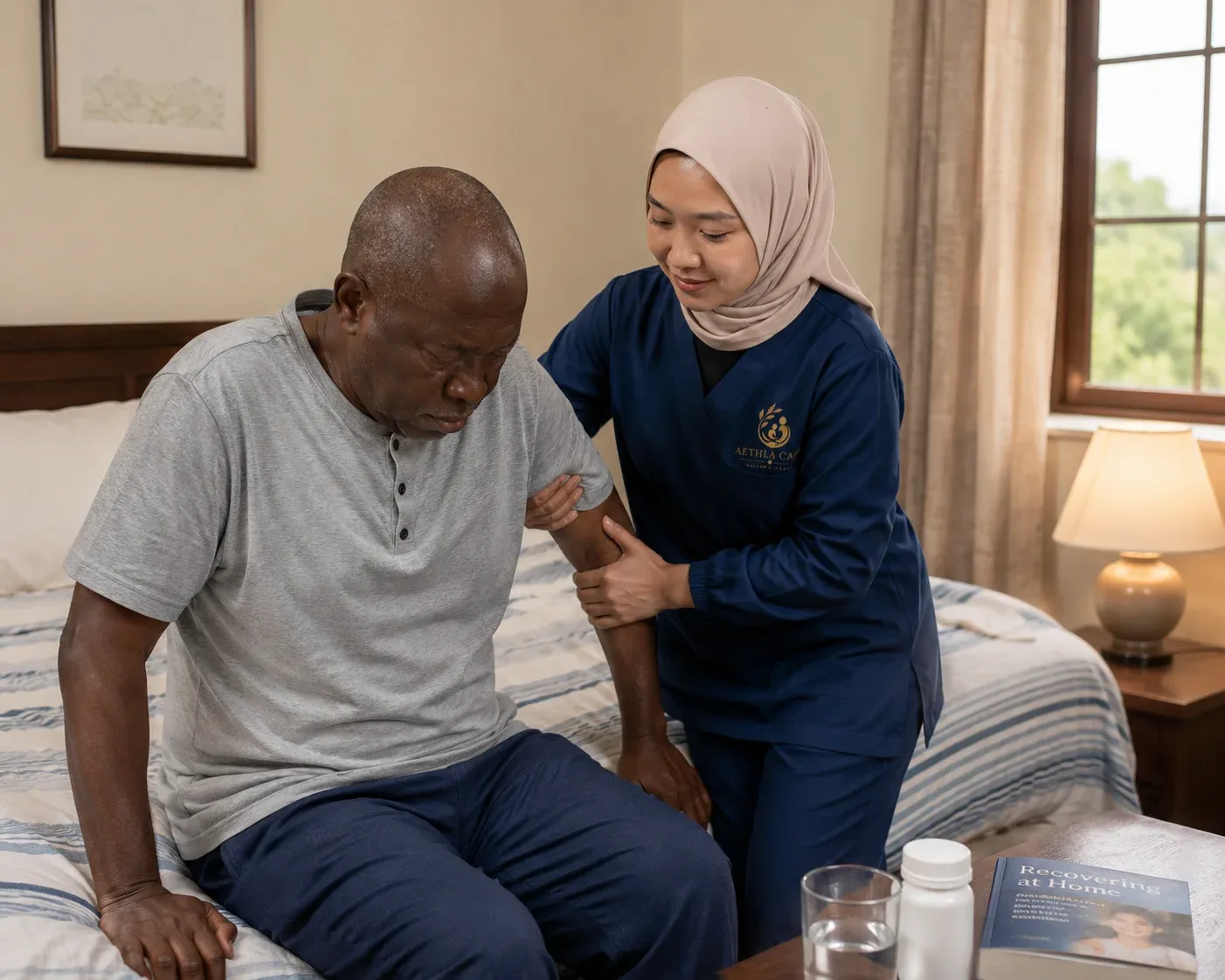
# How to Arrange Home Care for an Elderly Parent in Uganda: A Complete Guide for Families
**Primary Keyword:** home care for elderly parents in Uganda
Secondary Keywords:
- elderly home care Uganda - home care for elderly Uganda - elderly caregiver Uganda - elderly care at home Kampala - caregiver for elderly parent Uganda - home caregiver Kampala - senior care Uganda - elderly support services Uganda - care for ageing parents Uganda - home nursing elderly Uganda - elderly care services Kampala - care for parents in Uganda from abroad - elderly home support Kampala - family caregiver Uganda - elderly care coordination Uganda
**Search Intent:** Informational + service research + family care coordination
---
# How to Arrange Home Care for an Elderly Parent in Uganda
When an elderly parent begins needing more help at home, families often ask the same questions:
**What kind of help do they actually need?**
**Should we employ a caregiver?**
**Do they need nursing care?**
**Can they remain safely at home?**
**How do we arrange appointments and transport?**
**What happens if the main family caregiver lives overseas?**
**How do we find someone trustworthy?**
These questions become particularly important when an older person wants to remain in familiar surroundings while their family is trying to balance work, children, distance and other responsibilities.
Uganda's 2024 National Population and Housing Census recorded **2,290,144 people aged 60 years and above**. The same census recorded a household population of more than 44.3 million and an average household size of 4.2 people.
As families live longer and household responsibilities become more complex, practical arrangements for ageing at home become increasingly important.
Home care does not necessarily mean having a nurse in the house 24 hours a day.
It can mean different things depending on the person's needs.
For one family, it may mean companionship and help with daily routines.
For another, it may involve mobility support, appointments, meals and household organisation.
For someone recovering after hospital discharge, it may involve a more structured care arrangement involving healthcare professionals.
The starting point should therefore be:
> **Understand the person and the actual care need before choosing a service.**
That principle is also consistent with the World Health Organization's Integrated Care for Older People (ICOPE) approach, which emphasises person-centred assessment, identification of social-care and support needs, and personalised care planning.
---
# Quick Answer: How Do You Arrange Home Care for an Elderly Parent in Uganda?
A practical process is:
1. Talk to your parent about what help they want and need. 2. Identify the tasks that are becoming difficult. 3. Separate everyday support from clinical healthcare needs. 4. Consider safety, mobility and accessibility at home. 5. Determine whether professional medical assessment is required. 6. Decide what type of caregiver or support arrangement is appropriate. 7. Check the person or organisation providing the support. 8. Agree responsibilities, working hours and communication. 9. Arrange appointments, transport and other practical needs. 10. Establish how family members will receive updates. 11. Review the arrangement regularly as your parent's needs change.
The most important step is **not hiring someone immediately**.
It is understanding what the person actually needs.
---
# What Is Home Care for an Elderly Person?
Home care is support provided to an older person in or around their home so that everyday needs can be managed more safely and practically.
Depending on the arrangement, it may include:
- companionship - help with everyday routines - meal preparation - errands - household organisation - appointment coordination - mobility assistance - transport coordination - personal-care support - caregiver relief - post-hospital practical support - nursing or clinical services through appropriately qualified professionals
These are not interchangeable services.
A companion is not automatically a nurse.
A domestic worker is not automatically a healthcare professional.
A driver is not automatically trained to provide patient handling.
A care coordinator is not automatically a clinician.
Families should establish exactly **who is doing what** before an arrangement begins.
---
# Why More Families Are Thinking About Elderly Care at Home
For many older people, home represents familiarity.
It may be where they have lived for decades.
It may be close to relatives, neighbours, religious communities, shops or other familiar places.
Moving an older person away from familiar surroundings can therefore be a major decision.
Home-based support can allow families to explore whether additional assistance can be introduced while maintaining familiar routines.
That does not mean that home is always the appropriate option.
Some situations require clinical assessment, rehabilitation, hospital treatment, residential care or another form of support.
The right question is not:
> “Is home care always better?”
The better question is:
> **“What environment and support arrangement are appropriate for this person's current needs and preferences?”**
---
# Step 1: Talk to Your Parent First
One of the biggest mistakes families can make is designing care around an older person without involving them.
Ask your parent:
- What is becoming difficult? - What would you like help with? - What do you still want to do independently? - What would make you uncomfortable? - Would you prefer someone coming for a few hours or staying longer? - Who would you feel comfortable having in your home? - What routines matter most? - What concerns do you have about receiving help?
An older person may want assistance with shopping but not personal care.
They may want someone to accompany them to appointments but not have someone living in the home.
They may want help with meals and errands while continuing to manage other activities independently.
Person-centred care begins by understanding those preferences.
---
# Step 2: Make a List of What Has Changed
Instead of saying:
> “Mum needs elderly care.”
write down what has actually changed.
For example:
### Daily routine
- Is preparing meals becoming difficult? - Is shopping difficult? - Is managing household tasks becoming harder?
### Mobility
- Is walking becoming more difficult? - Does your parent need assistance getting to appointments? - Are stairs becoming problematic?
### Appointments
- Are appointments being missed? - Does someone need to accompany your parent?
### Social connection
- Is your parent spending more time alone? - Would companionship be helpful?
### Family coordination
- Are several relatives involved? - Is nobody sure who is responsible for what?
This list creates a much clearer starting point.
---
# Step 3: Separate Care From Medical Needs
This distinction is essential.
Some needs are primarily practical.
For example:
- meals - errands - companionship - household organisation - transport - appointment reminders
Other needs may require professional healthcare.
For example:
- clinical assessment - wound care - medication-related clinical decisions - rehabilitation - treatment of illness - nursing procedures - management of a medical condition
Do not assume that one caregiver can appropriately perform every task.
If a medical question exists, seek advice from an appropriately qualified healthcare professional.
Aethla Care's model explicitly distinguishes practical coordination from clinical decision-making and does not present itself as a substitute for licensed healthcare professionals.
---
# Step 4: Assess the Home Environment
Home care is not just about the person providing assistance.
The environment matters.
Look at:
- entrances - stairs - bathrooms - bedrooms - lighting - flooring - kitchen access - seating - pathways through the home - access to frequently used items
Ask:
**Could my parent safely move around this space?**
**Are frequently used items easy to reach?**
**Are there obvious obstacles?**
**Does the bathroom create difficulties?**
**Does my parent need mobility equipment or professional assessment?**
Uganda's Ministry of Health service standards include attention to older people's needs, including screening and management of issues affecting older adults and effective discharge planning.
Any significant home modification or mobility intervention should be considered appropriately, especially where falls or medical risks are involved.
---
# Step 5: Decide How Much Support Is Actually Needed
Not every older person needs full-time care.
A support arrangement might involve:
### Occasional assistance
For example:
- errands - shopping - appointment support - household organisation
### Several hours per day
For someone who needs regular help with routines.
### Specific days
For example:
- Monday, Wednesday and Friday - appointment days - weekends
### Overnight support
Only where an appropriate arrangement and qualified support are available.
### Full-time or live-in arrangements
These require particularly careful consideration of roles, accommodation, working arrangements, safeguarding and responsibilities.
The number of hours should follow the actual need rather than a generic package.
---
# What Does an Elderly Caregiver Do?
The answer depends on the caregiver's role and qualifications.
A non-clinical home caregiver may assist with practical everyday activities such as:
- companionship - meal support - errands - household routines - mobility assistance within their agreed role - appointment coordination - communication with family members - reminders
A professionally qualified healthcare worker may provide services within their professional scope.
Families should never assume that the title “caregiver” means the person is qualified to perform clinical tasks.
Ask:
**What are you trained to do?**
**What are you not trained to do?**
**What responsibilities are included in this arrangement?**
**Who should be contacted if a medical issue arises?**
Clear boundaries protect both the older person and the caregiver.
---
# Home Care vs Home Nursing in Uganda
These terms are sometimes used interchangeably, but they should not be.
## Home care
May focus on:
- daily routines - companionship - household assistance - errands - mobility support - family coordination
## Home nursing
Involves nursing care delivered by an appropriately qualified nurse within their professional scope.
Depending on the situation, home nursing may be relevant after:
- hospital discharge - surgery - certain illnesses - injuries - complex care needs
Families should verify the professional qualifications and exact service being provided.
---
# When Should an Older Person Have a Medical Assessment?
A medical assessment may be appropriate when there has been a significant change in health or function.
Examples may include:
- repeated falls - sudden confusion - unexplained weakness - significant changes in mobility - difficulty managing daily activities - repeated hospital visits - concerns about medication - unexplained weight change - persistent or worsening symptoms
This list is not a diagnosis.
If there is an urgent or potentially life-threatening problem, seek appropriate medical attention rather than waiting for routine home-care arrangements.
---
# Post-Hospital Home Care for an Elderly Parent
Hospital discharge can create a sudden change in family responsibilities.
An older person may return home needing:
- transport - assistance settling back in - help with appointments - family coordination - practical household support - follow-up care - rehabilitation or professional healthcare - medication organisation within an appropriate role
Uganda's Ministry of Health service standards state that discharge planning should begin early and emphasise communication and transfer of information between healthcare and social-care professionals for smoother transitions.
This means families should not wait until the day of discharge to ask:
> “Who is going to look after Mum when she gets home?”
Planning should begin as early as possible.
---
# How to Arrange Home Care After Hospital Discharge
Before discharge, ask the healthcare team:
- What support will be required at home? - Is follow-up required? - Is another appointment needed? - Are there mobility restrictions? - Does the patient require professional nursing or rehabilitation? - What warning signs should the family understand? - Who should the family contact with clinical questions?
Then organise the practical side:
- transport - home preparation - family responsibilities - caregiver support - appointment coordination - communication
Aethla's elderly-care route specifically identifies post-discharge support, mobility and appointments as practical areas families may need to coordinate.
---
# How to Find an Elderly Caregiver in Uganda
Finding someone who is available is not the same as finding someone appropriate.
When considering a caregiver, ask about:
### Identity
Who is the person?
### Experience
What experience do they have with older adults?
### Training
What formal training or qualifications do they have?
### References
Can relevant references be checked?
### Role
Exactly what tasks will they perform?
### Availability
What days and hours can they work?
### Communication
How will the family receive updates?
### Emergency process
What happens if the older person becomes unwell?
### Replacement
What happens if the caregiver is unavailable?
### Supervision
Who checks that the arrangement is working?
---
# Questions to Ask a Caregiver Before Hiring
A family can ask:
1. What experience do you have caring for older people? 2. What type of care have you provided previously? 3. What training do you have? 4. Are there tasks you are not qualified to perform? 5. Are you comfortable supporting the person's existing routine? 6. How would you communicate concerns to the family? 7. Are you comfortable accompanying someone to appointments? 8. What hours are you available? 9. What happens if you are sick or unavailable? 10. Can your references be checked?
The answers should be considered alongside appropriate verification.
---
# What Should Families Verify?
Verification should be proportionate to the role.
For a person undertaking clinical work, professional qualifications and registration should be relevant.
For a non-clinical caregiver, families may consider:
- identity verification - references - previous employment - experience - agreed duties - safeguarding expectations - communication arrangements
Do not rely solely on a social-media profile or online advertisement.
---
# Elderly Care and Family Safeguarding
Older people can be vulnerable to neglect, exploitation and abuse.
Families should take concerns seriously.
Warning signs can include:
- unexplained injuries - sudden financial problems - missing belongings - unexplained fear around a caregiver - significant changes in behaviour - poor hygiene or nutrition - unexplained medication problems - isolation from family
These signs do not automatically establish abuse, but they warrant appropriate attention.
A family should have a clear process for raising concerns and escalating serious situations to appropriate authorities or professionals.
---
# How to Create a Simple Care Plan
A practical family care plan can include:
## 1. About the person
- name - preferred routine - communication preferences - important personal preferences
## 2. Daily support
- meals - errands - household activities - companionship
## 3. Healthcare
- regular appointments - specialist appointments - healthcare contacts - relevant follow-up
## 4. Mobility
- transport - walking assistance - accessibility considerations
## 5. Family
- primary contact - secondary contact - overseas family members
## 6. Emergencies
- who should be contacted - where important documents are kept - relevant healthcare contacts
The plan should be updated when circumstances change.
---
# Why Family Communication Matters
Care arrangements can fail even when the caregiver is competent if the family does not communicate.
One relative may think another relative is handling an appointment.
Someone may assume medication has been collected.
A family member overseas may not know that the person's mobility has changed.
A simple communication structure can help.
For example:
**Primary local contact → caregiver/coordinator → wider family**
The exact arrangement depends on the household.
Aethla's care model places family communication and consent at the centre of coordination, including for relatives living far away.
---
# Caring for an Elderly Parent From Overseas
Distance creates a different kind of care challenge.
You may be able to send money.
You may be able to call every day.
You may be able to arrange appointments.
But you cannot necessarily:
- visit the home - take your parent to hospital - supervise a caregiver - attend every appointment - respond immediately to every practical issue
This is where local coordination can become valuable.
Aethla's diaspora-care route is specifically designed for families living outside Uganda who need help explaining a care need, coordinating practical support and staying informed.
---
# How to Arrange Care for Parents in Uganda From Australia
If you live in Australia, start by gathering:
- parent's location - type of help required - current care arrangements - known medical or mobility considerations - preferred contact person in Uganda - your preferred communication method - urgency
Then identify which tasks need local assistance.
Do not attempt to coordinate everything through multiple disconnected people if one clear coordination pathway can be established.
---
# How to Arrange Care for Parents in Uganda From the UK, USA or Canada
The principle is the same.
Start with the situation rather than a service label.
For example:
> “My father is 78, lives in Kampala, recently returned home after hospital treatment and now needs help getting to appointments and managing daily routines.”
This is more useful than simply saying:
> “I need an elderly caregiver.”
It allows the coordinator to understand the actual problem.
---
# How Much Does Elderly Home Care Cost in Uganda?
There is no single price for elderly home care across Uganda.
The cost can depend on:
- number of hours - type of support - caregiver qualifications - location - frequency - overnight requirements - clinical versus non-clinical needs - transport - additional services
Families should be cautious of websites or advertisements presenting one universal price as though it applies to every care situation.
The appropriate arrangement should be understood first.
Then the applicable cost and responsibilities can be confirmed.
---
# How Often Should Elderly Care Be Reviewed?
Care needs can change.
A person who only needed companionship six months ago may later require mobility assistance.
Someone recovering from illness may need more support temporarily and less support later.
A family should periodically ask:
- Is the arrangement still working? - Is the older person comfortable? - Are the agreed tasks still appropriate? - Has mobility changed? - Are appointments being managed? - Does the caregiver need additional support? - Has the family communication process worked?
WHO's ICOPE framework emphasises personalised care planning and monitoring as part of person-centred approaches for older people.
---
# When Home Care May Not Be Enough
Home care is not automatically appropriate for every situation.
A family should seek professional assessment if the person's needs have become more complex than the existing arrangement can safely manage.
Examples may include:
- significant deterioration - repeated falls - serious mobility problems - complex medical needs - inability to manage essential daily activities - repeated emergency situations - major cognitive or behavioural changes
The solution might involve additional healthcare, rehabilitation, increased support, a different home arrangement or another care setting.
The important point is to reassess rather than simply increase the caregiver's responsibilities beyond their training.
---
# How Aethla Care Can Help Families Arrange Elderly Support
Aethla Care approaches elderly support by starting with the person's circumstances rather than assuming that every family needs the same service.
Its elderly-care route may involve:
- planning around daily routines - family coordination - mobility support - appointment support - post-discharge coordination - practical guidance for relatives living elsewhere
Aethla asks families to clarify what support is already in place and what additional support is required.
This is important because Aethla does not present itself as simply a directory of caregivers.
Its wider model is an integrated care and family-support platform connecting different practical care pathways.
---
# Aethla Care's Role: What Families Should Expect
Aethla distinguishes between different types of involvement:
### Aethla operated
A service is delivered directly by the Aethla team.
### Aethla coordinated
Aethla arranges and follows up the support with the family.
### Partner delivered
An independent partner provides the service, with the relationship explained clearly.
### Information only
Aethla provides guidance to help a family understand possible options.
This distinction is important.
Families should know **who is responsible for each part of their parent's care** before proceeding.
---
# Where Does Aethla Care Provide Elderly Support?
Aethla's current early service footprint focuses on:
- Kampala - Wakiso - Entebbe - Mukono
Availability depends on the type of support requested and is confirmed before a family proceeds. Aethla also asks families outside these areas to provide their location and care need so the appropriate route can be checked.
This is important for families searching for “elderly care near me” or “home care in Uganda.”
A location appearing on a website should not automatically be interpreted as proof that every service is available there.
---
# A Practical Home-Care Example
Imagine an elderly parent living in Kampala.
Her daughter lives overseas.
The parent can still manage most activities independently but has recently found it harder to:
- attend appointments - shop for groceries - manage some household tasks - travel alone
The family might initially assume that they need a full-time caregiver.
But after discussing the situation, they may find that the actual need is:
- several hours of practical support - appointment coordination - transport assistance - companionship - family communication
That is a very different care arrangement.
This is why **starting with the person's situation rather than the service label** can lead to a more appropriate conversation.
---
# Home Care Checklist for an Elderly Parent in Uganda
Use this checklist before arranging support.
### About your parent
- [ ] What help do they want? - [ ] What help do they actually need? - [ ] What can they still do independently? - [ ] What routines matter to them? - [ ] What are their preferences?
### Health
- [ ] Are there current medical concerns? - [ ] Is professional assessment needed? - [ ] Are there existing appointments? - [ ] Is follow-up required?
### Home
- [ ] Are there mobility concerns? - [ ] Are there stairs? - [ ] Is the bathroom accessible? - [ ] Are there obvious hazards?
### Caregiver
- [ ] What tasks will they perform? - [ ] What training do they have? - [ ] Have references been checked? - [ ] What hours are agreed? - [ ] Who supervises the arrangement?
### Family
- [ ] Who is the main local contact? - [ ] Who makes decisions? - [ ] Who needs updates? - [ ] How will overseas family members stay informed?
### Review
- [ ] When will the arrangement be reviewed? - [ ] What happens if needs change? - [ ] What happens if the caregiver is unavailable?
---
# Frequently Asked Questions
## What is the best home care for an elderly parent in Uganda?
There is no single arrangement that is appropriate for every older person. The appropriate support depends on the person's health, independence, routines, preferences, mobility, home environment and family circumstances.
## How do I find an elderly caregiver in Uganda?
Start by defining the type of support required, then assess the caregiver's experience, training, references, availability, responsibilities and communication arrangements.
## Can an elderly person stay at home safely?
Some older people can remain at home with appropriate support, while others may require a different care arrangement or professional assessment. Safety should be assessed based on the person's actual circumstances.
## Does home care mean a caregiver must live with my parent?
No. Home support can take different forms, including scheduled visits, several hours of support, specific days or other arrangements depending on the person's needs.
## What is the difference between a caregiver and a nurse?
A caregiver may provide practical and personal support within their agreed role. A nurse is a regulated healthcare professional with professional education and responsibilities within their scope of practice. Families should not assume that a caregiver can perform nursing duties.
## Can Aethla Care arrange elderly care in Kampala?
Aethla Care's elderly-care route can help families explore practical support around routines, family coordination, mobility, appointments and post-discharge needs. The exact route and availability are confirmed before a family proceeds.
## Can I arrange elderly care for my parent from Australia?
Yes. Aethla's diaspora-care pathway allows families outside Uganda to start a care request for relatives in Uganda and discuss practical coordination.
## Can Aethla make medical decisions for my parent?
No. Aethla's role is practical coordination and information support. Clinical decisions remain with appropriately qualified healthcare professionals and the family.
## Can Aethla help after an elderly parent leaves hospital?
Post-discharge support is one of the situations Aethla identifies within its elderly-care route. The precise support required and available should be confirmed for each family.
## Can Aethla help arrange transport for an elderly parent?
Travel and mobility support can be explored where appropriate. The precise transport and accompanying-person requirements should be discussed and confirmed before proceeding.
## How much does elderly home care cost in Uganda?
There is no single nationwide price. Cost depends on factors such as hours, location, support type, qualifications, frequency and whether additional services are required.
## What if my parent lives outside Kampala?
Aethla's current early footprint includes Kampala, Wakiso, Entebbe and Mukono. Families outside these areas can provide their location and care requirements so availability can be checked.
---
# Final Thoughts: Arranging Elderly Care Should Start With the Person
Arranging home care for an elderly parent in Uganda is not simply a matter of finding someone to sit in the house.
Good planning begins with understanding:
- the older person's preferences - their independence - their daily routine - their practical challenges - their health needs - their mobility - their home environment - the family's responsibilities - the support already available
Uganda's 2024 census recorded more than **2.29 million people aged 60 and above**, demonstrating the scale of the country's older population.
At the same time, Uganda's Ministry of Health service standards recognise the importance of older people's needs, caregiver support and coordinated discharge planning.
WHO's 2025 ICOPE guidance similarly emphasises person-centred assessment, social-care needs and personalised care planning.
For families, the practical lesson is straightforward:
**Do not start with “Which caregiver should we hire?”**
Start with:
**“What does our parent need help with, what do they want to remain independent in, and what is the safest and most practical way to support them?”**
From there, the right care route becomes easier to understand.
Aethla Care's approach is to start with the situation, clarify the practical route, make its role clear, coordinate where an appropriate route is available, and keep the family informed.
For families in Uganda—and for sons, daughters and relatives coordinating care from Australia, the UK, USA, Canada, UAE, South Africa and elsewhere—the objective is the same:
**Make care easier to understand. Make responsibilities clearer. Keep the person receiving care at the centre.**
**Aethla Care — Trusted Care for Every Stage of Life.**
---
# Factual References
### Uganda Bureau of Statistics — National Population and Housing Census 2024
Uganda's 2024 census recorded **2,290,144 people aged 60 years and above**, alongside a household population of 44,387,526 and an average household size of 4.2.
### Uganda Ministry of Health — Comprehensive Service Standards for the Health Sector
Uganda Ministry of Health standards address older people's healthcare needs, caregiver support and discharge planning, including communication and information transfer between healthcare and social-care professionals.
### World Health Organization — Integrated Care for Older People (ICOPE), 2nd Edition
WHO's 2025 ICOPE guidance supports person-centred assessment and care pathways, including identification of social-care and support needs and development of personalised care plans.
### Aethla Care — Elderly Care
Aethla's current elderly-care route focuses on familiar routines, dignity, family coordination, mobility, appointments and post-discharge support, with the actual route and availability clarified before commitment.
### Aethla Care — Home & Family Support
Aethla's home and family support route focuses on practical household routines, appointments, errands, family responsibilities and support for caregivers.
### Aethla Care — Uganda Care Locations
Aethla's current early service footprint focuses on Kampala, Wakiso, Entebbe and Mukono, with availability dependent on the support type and confirmation before a family proceeds.
### Aethla Care — Diaspora Care
Aethla provides a route for families living outside Uganda to explain a care need, coordinate practical support in Uganda and remain informed about the care process.
---
## Medical and Care Information Note
This article provides general information about organising elderly home care in Uganda. It is not a diagnosis, medical treatment plan or substitute for professional healthcare advice.
The appropriate level of care depends on the individual person's health, functional ability, preferences and circumstances. Where medical, nursing, rehabilitation or other clinical needs are present, families should seek advice from appropriately qualified healthcare professionals.
Caregiver availability, provider arrangements, service coverage, costs and facility requirements can change. These should be confirmed before making a commitment.
If an older person has an urgent or potentially life-threatening medical problem, seek appropriate emergency medical care rather than waiting for a routine home-care arrangement.