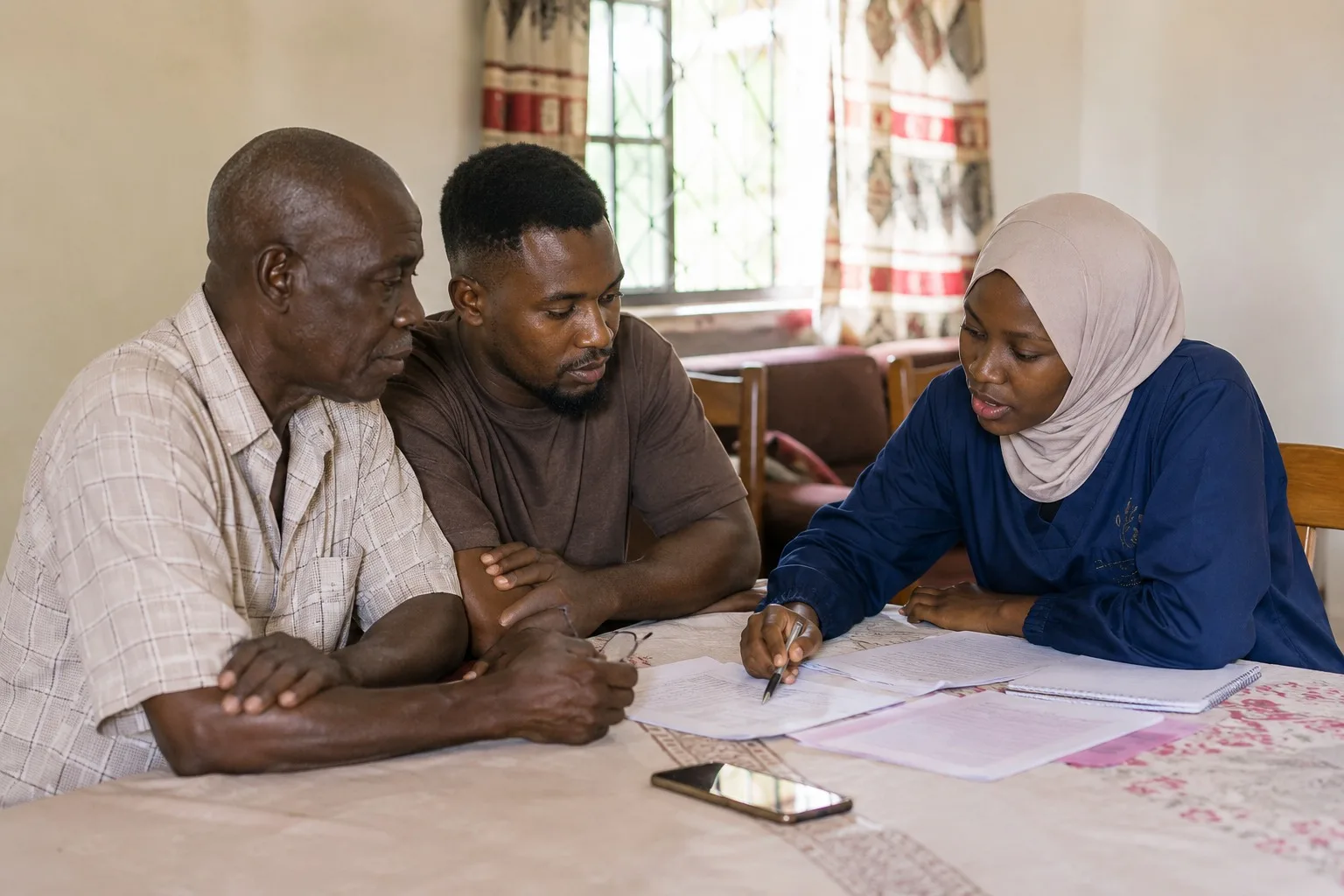
Home Care Services in Uganda: A Complete Guide to Care at Home
Finding the right care for a parent, relative, child, person with a disability or another family member can be difficult, especially when the family is trying to understand what type of support is actually needed.
For many families, the first question is simple:
Where can I find reliable home care services in Uganda?
Home care can include a range of practical, personal, family and healthcare-related support depending on the person's circumstances. It may involve elderly care, disability support, assistance with daily routines, companionship, appointment coordination, post-hospital support, childcare, household assistance or coordination with qualified healthcare professionals.
Aethla Care Uganda provides a starting point for families who need help understanding and coordinating these different care needs. Aethla describes itself as a Uganda-first integrated care and family-support platform rather than simply a nursing company, clinic, domestic-work agency or travel operator. The platform's approach is to understand the person's situation first, clarify the appropriate route, and make clear whether Aethla operates, coordinates, partners in or provides information about that route.
This guide explains what home care means in Uganda, who may benefit from it, what services may be involved, how families can choose an appropriate care route, and how families living outside Uganda can coordinate support for relatives at home.
What Is Home Care in Uganda?
Home care is support provided to a person in or around their home so that they can manage daily life with an appropriate level of assistance.
The term home care can mean different things depending on the person's needs.
For one family, home care may mean practical help for an older parent who is finding everyday tasks more difficult.
For another family, it may mean support around disability, mobility or appointments.
For another, it may involve organising childcare or household assistance.
In some situations, healthcare professionals may also provide clinical services at home. However, medical care should be provided by appropriately qualified professionals within their professional scope.
This distinction is important.
A caregiver, domestic worker, nurse, doctor, physiotherapist and care coordinator do not necessarily perform the same role.
A responsible care organisation should therefore explain **who is doing what, what qualifications are required, and who is responsible for each part of the care journey**.
That principle is central to Aethla Care's current model. The organisation explicitly distinguishes between services that are Aethla-operated, Aethla-coordinated, partner-delivered and information-only.
Why Is Home Care Becoming an Important Topic in Uganda?
Families in Uganda can have complex care responsibilities.
An older parent may need additional support while their children are working.
A person with a disability may need help with mobility or accessing appointments.
A family may have a newborn and need practical support while a parent returns to work.
A relative may have recently left hospital and need help organising the next stage of daily life.
At the same time, family members may live in different cities or even different countries.
Uganda's 2024 National Population and Housing Census provides an important current evidence base for understanding the country's population and household landscape. UBOS reports a national population of **45,905,417 people and 10,698,913 households** from the 2024 census.
The country's health system is also working toward broader universal health coverage and strengthening health services, workforce development, health financing and disease prevention under the Uganda National Health Compact 2025–2030.
For families, however, healthcare is not only about what happens inside a hospital or health facility.
There are also practical questions:
- Who helps an older person at home? - Who accompanies a relative to an appointment? - Who helps a family organise different responsibilities? - Who can help coordinate support after hospital discharge? - How can a family member overseas remain involved? - How can someone with mobility difficulties get to an appointment? - What happens when a household needs childcare or practical support?
These are part of the wider care journey.
Who May Benefit From Home Care?
Home care may be appropriate for many different situations.
It is not exclusively for people who are seriously ill.
Depending on the service and individual circumstances, home-based support may benefit:
Older adults
An older person may want to remain at home while receiving additional assistance with everyday activities.
People living with disabilities
Support may help with daily routines, mobility, appointments, transport, communication or participation in community life.
People recovering after hospitalisation
A family may need help organising practical support after someone returns home.
People who need additional day-to-day assistance
Some individuals may be independent in many areas but need help with specific tasks.
Families caring for relatives
A family caregiver may need additional support, coordination or respite from some practical responsibilities.
Families living outside Uganda
A relative in Australia, the United Kingdom, United States, Canada, United Arab Emirates, South Africa or another country may need a reliable local point of contact for a parent or family member in Uganda.
Aethla's diaspora-care pathway specifically addresses families coordinating support for relatives in Uganda while living abroad.
What Types of Home Care Support Are Available?
There is no single definition of a "home care package" that fits every family.
The appropriate route depends on the person's situation.
Potential areas of support include:
1. Elderly Care
Elderly care may involve practical support around daily routines, companionship, mobility, appointments, family coordination and post-discharge arrangements.
Aethla's elderly-care pathway begins by understanding the older person's current routine, what has become difficult and what support is already available.
The goal is not simply to assign a generic service.
The goal is to understand:
What does this particular person need?
2. Disability Support
People living with disabilities can have very different needs.
Some may require mobility assistance.
Others may need support around communication, appointments, transport, personal routines or community participation.
Uganda's latest census-based disability evidence is particularly relevant here. The Uganda Bureau of Statistics' 2024 Disability Monograph reports that 13.2% of people aged two years and above have a disability, while the reported disability prevalence among people aged 60 and above is 46.8%. The same fact sheet identifies functional difficulties including remembering or concentrating, walking or climbing steps, seeing, hearing, self-care and communication.
These figures demonstrate why disability support should not be treated as a single generic service.
A person's actual support needs matter.
Aethla's disability-support approach therefore focuses on the person's routines, independence, goals, communication preferences and practical barriers rather than starting with a generic package.
3. Home and Family Support
Sometimes the problem is not one individual task.
The whole household may be struggling to keep everything organized.
There may be:
- Appointments to arrange - Meals to organize - Family members to coordinate - Errands to manage - Household responsibilities to divide - Care information to communicate - A family caregiver who needs additional support
Aethla's home and family support route is designed around these practical issues.
This is an important distinction.
Care is often a family system, not just an individual service.
Home Care vs Home Nursing: What Is the Difference?
This is one of the most important questions families should understand.
Home care
Home care can include practical, personal, social and household support.
Examples may include:
- Companionship - Assistance with everyday routines - Household support - Mobility assistance - Appointment support - Family coordination
Home nursing
Home nursing involves nursing care delivered by an appropriately qualified nurse.
The tasks depend on the person's clinical needs and the nurse's professional scope.
Medical care
Doctors and other qualified healthcare professionals may have different responsibilities depending on the person's medical circumstances.
Therefore, families should not assume that every home-care provider provides nursing or medical treatment.
Aethla's current website is deliberately clear that its role may vary by service and that it will explain whether it is operating, coordinating, partnering or providing information.
How Do I Know If My Relative Needs Home Care?
There is no single test that determines whether someone needs home support.
However, families may want to explore additional assistance when they notice changes such as:
- Difficulty managing everyday activities - Increased difficulty moving around - Missed appointments - Difficulty preparing meals - Increased isolation - Difficulty managing household routines - A family caregiver becoming overwhelmed - Increased dependence after an illness or hospital stay - Difficulty travelling to healthcare appointments - A need for more consistent supervision or companionship
The most important question is not:
"Does this person need a caregiver?"
A better question is:
"What is becoming difficult, and what support would make everyday life safer, more manageable and more independent?"
That change in thinking can lead to a more appropriate care plan.
How Does Home Care Work?
A good care process should begin before a caregiver or other service is assigned.
At Aethla Care, the current process is structured around four broad steps.
Step 1: Explain the situation
The family describes:
- Where the person lives - What support is needed - What is currently difficult - How the family can be contacted - Any relevant practical circumstances
Step 2: Clarify the care route
The care team considers what type of support may be appropriate.
This might involve:
- Elderly care - Disability support - Childcare - Home and family support - Specialist appointment coordination - Healthcare navigation - Travel and mobility support
Step 3: Confirm what can actually be provided
This is particularly important.
A website should never imply that a service is available everywhere simply because it is listed online.
Aethla's current approach is to confirm availability according to the request and location before a family proceeds. Its initial location focus includes Kampala, Wakiso, Entebbe and Mukono.
Step 4: Coordinate the next step
Once the appropriate route is understood, the family can decide what happens next.
This might involve Aethla directly, a qualified partner, another professional or simply information that helps the family make its own decision.
Home Care in Kampala
Kampala is Aethla Care's current starting point for care conversations and local coordination.
Families searching online may use phrases such as:
- Home care Kampala - Elderly care Kampala - Caregivers Kampala - Home support Kampala - Disability support Kampala - Elderly caregiver Kampala - Care at home Kampala - Specialist appointment Kampala
However, local SEO should not simply repeat "Kampala" throughout an article.
Useful local content should answer practical questions.
For example:
Where does the service operate?
What type of support can be discussed?
How is availability confirmed?
How can a family start a care request?
What happens if the required support is outside the current service area?
Aethla's current location page explains that Kampala is its starting point, while Wakiso, Entebbe and Mukono are also part of its early coordination footprint. Families outside those areas can submit their location and care need for clarification.
Home Care in Wakiso
Wakiso is particularly relevant to families searching for care around the Kampala metropolitan area.
People may search for:
- Home care Wakiso - Elderly care Wakiso - Caregivers in Wakiso - Disability support Wakiso - Family support Wakiso
Home Care in Entebbe
Entebbe is another early Aethla Care location.
Families may be searching for care or mobility assistance for:
- Older relatives - People with disabilities - Patients attending appointments - Families travelling through the area - People requiring practical support
Aethla specifically identifies Entebbe within its early location footprint and notes that families can ask about care routes and travel or mobility support.
Home Care in Mukono
Mukono is also included in Aethla's early coordination planning.
Families should not have to guess whether support is available.
The better approach is to provide the location, describe the need and allow the care team to confirm the appropriate route.
This is especially important because different services may have different geographic availability.
Can I Arrange Home Care for My Parents From Another Country?
Yes, a family member does not necessarily need to be physically present in Uganda to begin discussing care for a relative.
This is particularly relevant for the Ugandan diaspora.
A person living overseas may be concerned about:
- An ageing parent - A relative living alone - A family member returning from hospital - A disabled relative - A relative who needs help attending appointments - Household support - Travel assistance
The first step is to provide accurate information about the person and their location.
Aethla's diaspora-care service is specifically designed to give people abroad a starting point for discussing care coordination in Uganda.
Importantly, care coordination does not mean that a coordinator makes medical decisions for the client.
Clinical decisions should remain with appropriately qualified healthcare professionals and the person receiving care, together with their authorized family or representatives where applicable.
What Should You Look for in a Home Care Provider?
Choosing a care provider involves more than searching for the cheapest option.
Families should consider several factors.
1. Clear responsibilities
Does the organisation clearly explain what it does?
2. Qualifications
If clinical care is involved, are appropriately qualified professionals responsible for the relevant clinical work?
3. Communication
How will the family receive updates?
4. Availability
Is the service genuinely available in the person's location?
5. Transparency
Does the organisation explain whether it provides, coordinates or refers the service?
6. Privacy
How will personal information be handled?
7. Family involvement
Can appropriate family members remain informed?
8. Flexibility
Can the care arrangement adapt when circumstances change?
These questions can help families distinguish between a simple online listing and a more structured care-coordination process.
Why Care Coordination Matters
A family may need several services at the same time.
For example:
An older person may need help at home.
They may also need a specialist appointment.
They may need transport.
A family member overseas may need updates.
The household may need additional practical support.
If the family has to find five unrelated providers, the process can become complicated.
A care coordination model attempts to make the journey easier by giving the family one starting point.
Home Care Should Be Person-Centred
A good care plan should begin with the person.
Consider an older adult who needs help walking.
The family might immediately search for "elderly caregiver."
But the actual problem might be:
- Difficulty getting to appointments - Difficulty preparing meals - Fear of falling - Loneliness - Difficulty managing household tasks - Difficulty travelling - A family member living overseas
The solution may therefore involve more than simply assigning a caregiver.
This is why Aethla's approach starts with understanding the situation before proposing a route.
Home Care and Independence
Home care should not automatically mean taking control away from the person receiving support.
For many people, the purpose of support is to help them maintain independence.
For example, a caregiver might support a person with a task they cannot safely complete alone while allowing them to continue making their own choices wherever appropriate.
Families should therefore ask:
What can the person still do independently?
What do they want to continue doing?
Where is support genuinely needed?
How can care preserve dignity and choice?
Aethla explicitly identifies dignity, choice and independence among its guiding principles.
Home Care and Families Living Abroad
Distance can make family caregiving more complicated.
A son or daughter may live overseas.
A sibling may live in another Ugandan city.
Another family member may provide most of the daily support.
Without clear communication, everyone may assume someone else is handling an important task.
A coordinated care pathway can help establish:
- Who is responsible - What support is required - What has been arranged - What still needs to happen - Who should receive updates
This is particularly relevant to Uganda's diaspora community.
Aethla's diaspora service specifically recognises families coordinating care from countries including the UK, USA, Canada, Australia, UAE and South Africa.
How Much Does Home Care Cost in Uganda?
There is no single price for home care in Uganda.
The cost can vary according to:
- Type of service - Number of hours - Frequency - Location - Level of support required - Whether qualified clinical professionals are required - Travel requirements - Complexity of the care situation - Whether additional services are involved
A responsible provider should assess the actual request before giving a specific quotation.
Families should be cautious about websites that present one universal price as though every care situation is identical.
What Questions Should I Ask Before Arranging Care?
Before proceeding, ask:
1. What exactly does the service include? 2. Who will provide the service? 3. What qualifications are required? 4. Is the service available in my location? 5. Is Aethla providing, coordinating or referring the service? 6. How will family members receive updates? 7. What happens if the person's needs change? 8. Who should be contacted with concerns? 9. What information does the provider need? 10. What are the costs? 11. Are transport or travel expenses separate? 12. How is privacy handled? 13. What happens if a scheduled support person becomes unavailable? 14. Is a professional assessment required?
These questions can make the care process clearer before a family commits.
What If I Don't Know What Type of Care My Relative Needs?
This is a common problem.
Families often know that **something needs to change, but they don't know which service to request.
For example:
"My mother is 78. She lives alone in Kampala. She can still manage many things herself, but she recently came home from hospital, and we're worried about her appointments and daily routine. I live in Australia. What kind of support should I arrange?"
That is not necessarily a "caregiver" question.
It is a care-navigation question.
The appropriate next step may involve understanding:
- Her current health situation - What she can do independently - What support she already has - What her doctor has recommended - Whether she needs clinical care - Whether she needs practical assistance - Whether transport is required - How the overseas family should stay involved
Aethla's model is designed around this type of starting conversation rather than requiring families to know the correct service label before contacting the organisation.
Frequently Asked Questions About Home Care in Uganda
What is home care in Uganda?
Home care is support provided to an individual in or around their home. Depending on the person's needs, it may include practical assistance, elderly support, disability support, companionship, household assistance, appointment coordination or appropriately qualified healthcare services.
How do I find home care services in Uganda?
Start by identifying the person's location and the type of support they need. If you are unsure which service is appropriate, a care coordination service can help clarify the possible route.
Does Aethla Care provide home care in Uganda?
Aethla Care provides a care-coordination pathway for families seeking support in Uganda. The organization explains whether a particular service is operated by Aethla, coordinated by Aethla, delivered by a partner or provided as information, and availability is confirmed according to the request and location.
Does Aethla Care provide elderly care?
Aethla Care has an elderly-care pathway focused on understanding an older person's routines, support needs, family responsibilities, mobility and appointment requirements before identifying the appropriate route.
Can I arrange care for my parents in Uganda while living abroad?
Yes. Aethla has a dedicated diaspora-care pathway for people living outside Uganda who need to discuss care coordination for family members in Uganda.
Does home care mean nursing?
No. Home care and home nursing are not automatically the same. Nursing involves professional clinical care provided by appropriately qualified nurses, while home care can involve practical, personal, social or household support.
Can people with disabilities receive home support?
Yes. Support can be considered around individual needs such as daily routines, mobility, access, appointments, transport and independence. Uganda's 2024 census-based disability data shows significant levels of disability and functional difficulty, particularly among older people.
Where does Aethla Care currently operate?
Aethla's current early location focus includes Kampala, Wakiso, Entebbe and Mukono. Families outside those areas can provide their location and care requirement so availability can be clarified.
Can Aethla Care help with specialist appointments?
Specialist appointments and healthcare navigation are among Aethla's listed care pathways. The exact role and availability should be confirmed for the individual request.
Can Aethla Care help with travel or mobility support?
Travel and mobility support is one of Aethla's listed care pathways. The specific support available depends on the client's situation and location and should be confirmed before proceeding.
How do I start?
Families can begin by describing the person's situation, location and support requirement through Aethla Care's care-request process. A coordinator then clarifies the appropriate route and next practical step.
Home Care in Uganda: The Bottom Line
Home care is not one service.
It is a broad category of support that can help individuals and families manage everyday care needs more effectively.
For one person, the right route may be elderly support.
For another, disability assistance.
For another, childcare or family support.
For another, healthcare navigation or specialist appointment coordination.
And sometimes the family does not know what service is required at all.
That is where care coordination can be useful.
Aethla Care's approach is to start with the person's situation, clarify the available route and make the responsibilities clear before the family takes the next step.
For families in **Kampala, Wakiso, Entebbe, Mukono and other parts of Uganda**, the practical starting point is to explain what is happening, where support is needed and what type of help the family is looking for.
Need Help Finding the Right Care Route in Uganda?
If you are looking for elderly care, disability support, childcare, home and family support, specialist appointment coordination, healthcare navigation or travel and mobility support, Aethla Care can help you understand the next practical route.
Tell Aethla Care what your family needs, where support is required and how you would like to be contacted.
A care advisor can then help clarify the appropriate next step.
Aethla Care Uganda — care made easier to navigate.
Sources and Further Reading
The Uganda Bureau of Statistics' National Population and Housing Census 2024 provides the latest national census framework and population data.
The UBOS 2024 Disability Monograph provides current census-based evidence on disability and functional difficulties in Uganda.
Uganda's Ministry of Health National Health Compact 2025–2030 outlines national priorities around health-system strengthening and universal health coverage.
Aethla Care's current service and location pages provide the organization's current descriptions of its care pathways and launch footprint.