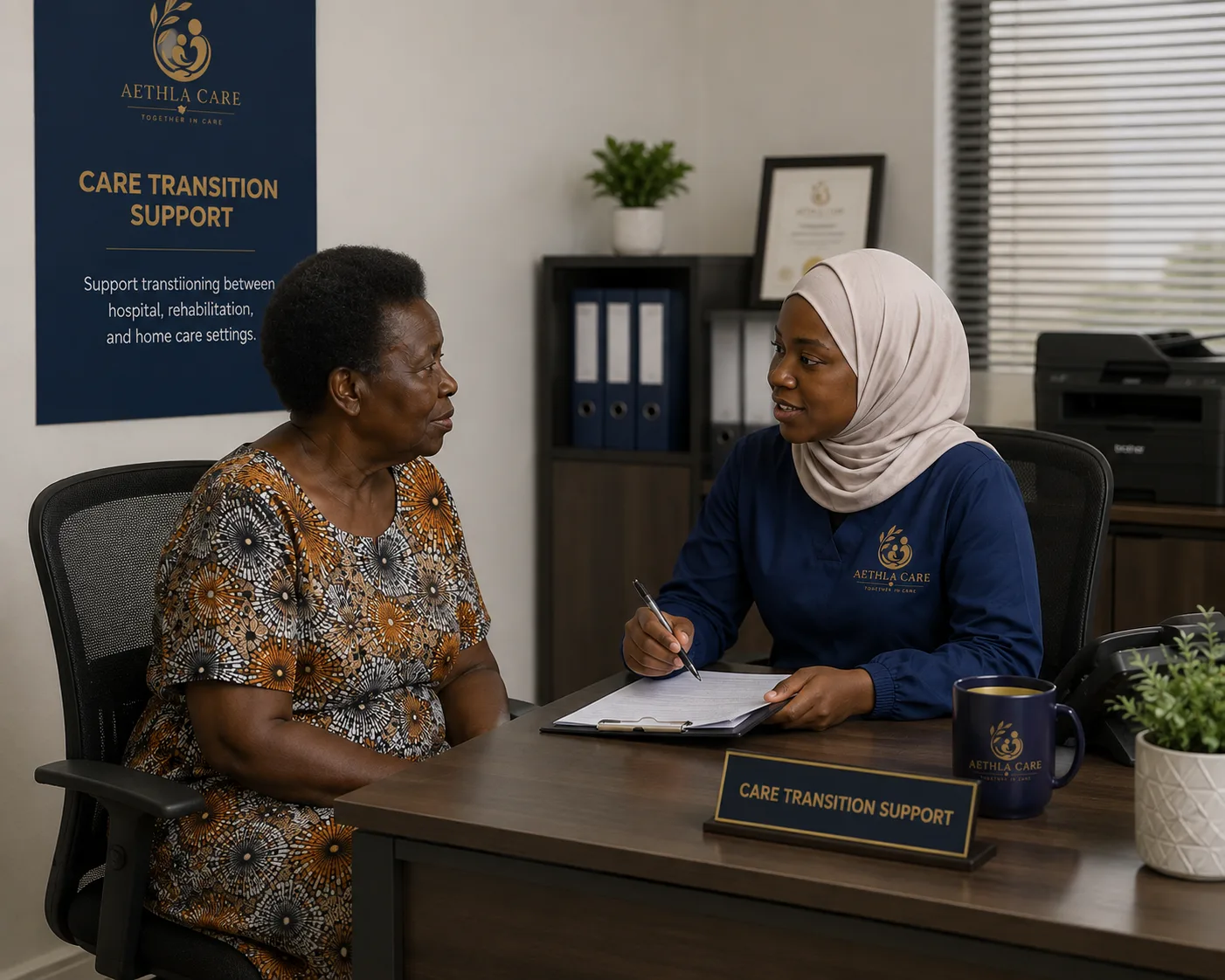
Healthcare Navigation in Uganda: Making Complex Health Journeys Easier to Follow
Finding the right healthcare professional can sometimes feel like a separate problem from actually receiving healthcare.
A family may know that someone needs to see a specialist but not know:
- Which type of specialist? - Which hospital or clinic? - Whether a referral is needed? - What documents should be taken? - How should the appointment be organized? - Who will accompany the patient? - How will transport be arranged? - How will relatives receive updates? - What happens after the appointment?
These questions can become particularly complicated when several family members are involved or when the person coordinating care lives outside Uganda.
Uganda has a tiered health-service and referral structure. The Ministry of Health describes a system ranging from community and lower-level health facilities through health centers, general hospitals, regional referral hospitals and national referral hospitals, with higher levels providing progressively more specialized services.
For families, however, understanding the system is not always the same as knowing what to do next.
This is where healthcare navigation can be useful.
Aethla Care Uganda positions healthcare navigation as a coordination service that helps families understand practical next steps, identify appropriate specialist routes, organize appointments or referrals where available, and coordinate communication without presenting itself as the healthcare provider making clinical decisions.
What Is Healthcare Navigation?
Healthcare navigation is the process of helping a person or family understand and coordinate the practical journey through healthcare.
It can involve:
- Understanding what type of healthcare professional may be appropriate - Organizing questions before an appointment - Exploring specialist options - Coordinating appointment requests - Understanding referral requirements - Organizing hospital or clinic visits - Coordinating transport - Keeping family members informed - Organizing relevant records - Exploring diagnostic or second-opinion routes - Understanding practical next steps after an appointment
Healthcare navigation is not the same as medical diagnosis or treatment.
A navigator should not replace a doctor, nurse, specialist or other qualified healthcare professional.
Instead, navigation helps the family organize the journey around clinical care.
Why Healthcare Navigation Matters in Uganda
Healthcare can involve multiple levels of care and different types of healthcare professionals.
The Ministry of Health describes Uganda's referral system as tiered, including Health Centre I through IV, district hospitals, regional referral hospitals and national referral hospitals.
A family may therefore move through more than one part of the health system depending on the person's needs.
For example, a person might begin with a local healthcare provider and subsequently need:
- A specialist consultation - Diagnostic investigations - Hospital assessment - Physiotherapy - Rehabilitation - A second opinion - Follow-up care
The challenge for families is often not simply locating a name.
It is understanding what the next practical step should be.
What Is a Specialist Doctor?
A specialist is a healthcare professional with advanced training in a particular area of medicine or healthcare.
Examples can include:
- Cardiologists - Paediatricians - Geriatricians - Neurologists - Orthopaedic specialists - Ophthalmologists - Ear, nose and throat specialists - Psychiatrists - Dermatologists - Surgeons - Obstetricians and gynaecologists - Physiotherapists - Rehabilitation professionals
The appropriate specialist depends on the person's clinical situation.
A family should not choose a specialist simply because the title sounds relevant.
Where there is uncertainty, an appropriate qualified healthcare professional can help determine what type of assessment or referral is required.
How the Healthcare Referral System Works in Uganda
Uganda's health system uses a referral structure.
The Ministry of Health describes a progression that includes:
Health Centre I
Community-level services involving Village Health Teams.
Health Centre II
Basic outpatient services and community-oriented care.
Health Centre III
More developed outpatient, maternity, inpatient and laboratory services.
Health Centre IV
Broader services including inpatient care, emergency services and laboratory capacity.
District Hospitals
General hospital services.
Regional Referral Hospitals
More advanced and specialized services.
National Referral Hospitals
Comprehensive specialist services, together with teaching and research functions.
The exact route for an individual patient depends on their circumstances and the clinical advice they receive.
This is why healthcare navigation should support, rather than replace, professional medical decision-making.
How Do I Find a Specialist Doctor in Uganda?
The first step is to understand the healthcare need.
A person searching for a specialist might start with a symptom, diagnosis, test result or existing referral.
However, the family may not always know which specialist is appropriate.
A practical navigation process can involve:
Step 1: Understand the Situation
Gather the information already available.
This may include:
- Existing diagnosis - Referral information - Previous medical reports - Test results - Current treatment information - Previous specialist opinions - Questions the family wants answered
Step 2: Identify the Appropriate Route
The family can determine what type of professional or facility may be relevant.
Step 3: Check Practical Requirements
This can include:
- Referral requirements - Appointment process - Location - Availability - Documents - Transport
Step 4: Request the Appointment
An appointment request can then be made through the appropriate provider or coordination route.
Step 5: Prepare for the Appointment
The family can organize questions, documents and practical arrangements.
How to Book a Specialist Appointment in Uganda
Appointment processes vary by provider and facility.
Some appointments may require:
- A referral - Previous medical records - Identification - A specific clinic - A prior consultation - Diagnostic results
Families should confirm requirements directly with the relevant healthcare provider.
Aethla Care currently allows families to request specialist appointments through its platform, but it does not present unconnected live availability as though it were confirmed.
Where an appointment request is made, a coordinator confirms the relevant provider or partner route before the family proceeds.
This distinction is important.
An online request is not automatically the same thing as a confirmed appointment. What Should I Take to a Specialist Appointment?
The exact requirements depend on the appointment.
Families may want to organise:
- Identification - Referral letters - Previous medical reports - Test results - Imaging reports - Medication information - Previous prescriptions - Relevant discharge summaries - Questions for the specialist - Contact details for other healthcare professionals involved
The patient or their healthcare professional should determine what information is clinically relevant.
From a practical perspective, keeping records organized can make communication easier.
Preparing Questions for a Specialist
Appointments can sometimes feel rushed.
Preparing questions beforehand can help families make better use of the available time.
Examples include:
- What is the purpose of this appointment? - What information should we understand from the assessment? - Are further tests recommended? - What are the next steps? - Who should we contact if circumstances change? - Is follow-up required? - What information should be shared with other members of the care team?
Patients should direct medical questions to the relevant healthcare professional.
Aethla's healthcare-navigation role can help families organize the practical questions and information surrounding an appointment without answering clinical questions itself.
Healthcare Navigation for Elderly People
Older adults may have several healthcare needs at the same time.
A family may be coordinating:
- General healthcare - Specialist appointments - Medication-related follow-up - Mobility - Hospital visits - Physiotherapy - Rehabilitation - Family communication
The challenge can become greater when adult children live in different cities or countries.
A healthcare-navigation approach can help families understand:
- Which appointments are pending - Who is attending - What documents are needed - How transport will work - Who should receive updates - What the next practical step is
Aethla Care's elderly-care and healthcare-navigation services can be considered together when a family has overlapping care and appointment needs.
Healthcare Navigation for People with Disabilities
People living with disabilities may encounter additional practical considerations when accessing healthcare.
Depending on the individual, these can involve:
- Mobility - Transport - Communication - Accessibility - Appointment coordination - Family involvement - Rehabilitation - Specialist care
The person's own preferences should remain central to the process.
Aethla Care's disability-support approach focuses on the person, their routines, goals, communication preferences and practical access needs rather than reducing the person to a diagnosis.
Healthcare navigation can then help organize the appointment-related side of that journey.
Paediatric Specialist Appointments in Uganda
Parents may need to coordinate specialist care for children for a variety of reasons.
A family may be referred to a:
- Paediatrician - Paediatric surgeon - Physiotherapist - Rehabilitation professional - Ophthalmologist - ENT specialist - Other relevant professional
Parents should follow the advice of the child's healthcare professional when determining which specialist is appropriate.
Practical support can then focus on:
- Appointment scheduling - Transport - Documents - Family communication - Follow-up coordination
Childcare and newborn support can also become relevant when other children or newborns are involved in the household.
Specialist Appointments for Families Living Abroad
Healthcare coordination can be particularly difficult when the person organizing care is outside Uganda.
A daughter in Australia may be helping her mother in Kampala.
A son in the United Kingdom may be coordinating an appointment for his father.
A relative in Canada may be trying to understand what is happening with a family member's healthcare journey.
The person abroad may need:
- Appointment information - Updates - Practical coordination - Transport assistance - Hospital-visit support - Family communication - Help understanding the next practical step
Aethla Care's diaspora-care service specifically describes support for people coordinating care for relatives in Uganda from countries including Australia, the UK, USA, Canada, UAE and South Africa.
Aethla does not make medical decisions on behalf of families.
Clinical decisions remain with qualified professionals and the family.
Hospital Coordination in Uganda
A hospital visit can involve more than the clinical consultation.
Families may also need to consider:
- Appointment time - Transport - Who accompanies the patient - Documents - Previous medical information - Family communication - Follow-up arrangements
Hospital coordination therefore means helping the family understand the practical side of the journey.
It does not mean taking over the hospital's clinical responsibilities.
Aethla Care describes its healthcare-navigation route as helping families understand which facility may be appropriate, what documents or referrals may be required and how practical coordination can work.
Diagnostic Tests and Second Opinions
Families sometimes need to coordinate diagnostic investigations or seek another professional opinion.
These situations require particular care.
A second opinion is not automatically an indication that the first healthcare professional was wrong.
Rather, a family may want another qualified professional to review a situation or provide additional clinical perspective.
Where a verified partner route exists, Aethla Care states that it can help coordinate diagnostic or second-opinion conversations.
The clinical interpretation remains with qualified healthcare professionals.
Families should also make sure that relevant medical records and reports are available to the professional providing the second opinion.
Medical Records and Family Communication
Medical information can become fragmented when several people are involved.
A patient may have:
- Hospital records - Laboratory reports - Imaging - Prescriptions - Referral letters - Specialist reports - Discharge information
Families may also have multiple people who need updates.
A practical coordination process can help clarify:
- Who has which information - Who needs to be informed - What can be shared - Who has authority to make decisions - How updates should be communicated
Consent and privacy should remain central.
Not every family member automatically needs access to every piece of medical information.
Aethla Care's healthcare-navigation model explicitly considers which family members should be involved in updates and how consent and privacy should be handled.
Understood. We stopped at:
**# Medical Records and Family Communication**
I will continue from the next section and send larger blocks instead of one section at a time.
Healthcare Navigation and Patient Privacy
Healthcare information is sensitive.
Families should be careful when sharing:
- Medical reports - Diagnoses - Prescriptions - Test results - Identification documents - Contact information
A practical coordinator should make clear:
- Why information is required - Who will receive it - How it will be used - Which family members should receive updates - What consent is required
Aethla Care states that consent and privacy-aware communication are intended to remain central as its care-coordination workflows develop.
Families should still ask questions whenever they are unsure how their information will be handled.
What Healthcare Navigation Does Not Do
Healthcare navigation should not be confused with:
- Diagnosis - Prescribing medication - Clinical treatment - Emergency medical care - Replacing a doctor - Replacing a nurse - Replacing a hospital - Making medical decisions for a patient
The purpose is to help the family navigate the surrounding process.
This distinction should be clearly communicated by any organization providing navigation services.
When Healthcare Navigation Can Be Useful
Healthcare navigation may be especially useful when:
The Route Is Unclear
The family knows something needs to happen but does not know where to start.
There Are Multiple Appointments
Several providers or appointments need to be organized.
Family Members Live in Different Places
Relatives need a clearer way to stay connected.
A Specialist Is Needed
The family needs to explore the appropriate specialist route.
A Person Has Mobility Challenges
Transport and appointment logistics require additional planning.
A Second Opinion Is Being Considered
The family needs to organize records and the practical appointment route.
A Family Member Lives Abroad
Someone overseas needs a local coordination point.
Healthcare Navigation in Kampala, Wakiso, Entebbe and Mukono
Aethla Care's current early service footprint includes:
- Kampala - Wakiso - Entebbe - Mukono
The organization states that availability depends on the type of support and is confirmed before a family proceeds.
This is particularly important for specialist appointments.
A website may describe a service, but actual appointment availability can change.
Families should therefore confirm:
- Provider - Location - Appointment date - Appointment time - Referral requirements - Any necessary documents - Aethla's role - What happens next
For families outside these areas, Aethla asks people to provide their location and care need so that an appropriate route can be assessed.
Specialist Appointments in Kampala
Kampala is an important location for specialist healthcare and healthcare coordination.
People searching online may use terms such as:
- Specialist doctor Kampala - Specialist appointment Kampala - Medical specialist Kampala - Hospital appointment Kampala - Paediatrician Kampala - Cardiologist Kampala - Physiotherapist Kampala - Rehabilitation Kampala - Specialist consultation Kampala
However, families should not choose a provider based only on search ranking.
They should consider:
- Appropriate specialty - Professional qualifications - Facility - Referral requirements - Appointment availability - Location - Accessibility - Follow-up arrangements
The healthcare professional remains responsible for clinical assessment and treatment.
Healthcare Navigation in Wakiso, Entebbe and Mukono
Families outside central Kampala may also need specialist coordination.
Searches can include:
- Specialist appointments Wakiso - Healthcare navigation Wakiso - Specialist doctor Entebbe - Hospital appointment Entebbe - Healthcare support Mukono - Specialist consultation Mukono
Aethla Care includes Wakiso, Entebbe and Mukono within its early service footprint, but individual availability is confirmed according to the actual care requirement.
This distinction should remain consistent across all location pages and marketing content.
How Much Does a Specialist Appointment Cost in Uganda?
There is no single price for specialist healthcare in Uganda.
Costs can vary depending on:
- Specialist - Facility - Type of consultation - Diagnostic tests - Follow-up appointments - Procedures - Location - Whether additional services are required
A healthcare-navigation service and a clinical appointment are also different things.
Families should therefore confirm the relevant charges directly with the provider or through the confirmed coordination route.
Aethla should not publish invented universal specialist prices simply to rank for "specialist doctor cost Uganda."
Useful information is more valuable than unsupported numbers.
How Aethla Care Helps with Healthcare Navigation
Aethla Care's current healthcare-navigation model is built around a simple principle:
Start with the situation, not just a service label.
A family can explain what is happening.
A coordinator can then help identify:
1. What practical questions need answering. 2. What type of route may be appropriate. 3. Whether a specialist or provider needs to be involved. 4. What information or referral may be required. 5. What Aethla's role will be. 6. What availability needs to be confirmed. 7. What the next practical step is.
Aethla explicitly states that it is a coordination platform rather than a hospital or clinic, with clinical care provided by licensed professionals or partner facilities where applicable.
This transparent distinction should remain a central part of Aethla's healthcare SEO strategy.
The Aethla Care Healthcare Navigation Process
1. Tell Aethla What Is Happening
The family explains:
- Location - Healthcare need - Current situation - Type of appointment or support being considered - Best way to communicate
2. Clarify the Route
Aethla helps determine what practical pathway may be relevant.
3. Confirm the Provider or Partner
Where a provider or partner is involved, the relevant details and availability are confirmed.
4. Prepare for the Appointment
The family can organize:
- Documents - Questions - Transport - Family communication
5. Attend the Appointment
The qualified healthcare professional provides the clinical assessment or service.
6. Understand the Next Practical Step
The family can then determine what needs to happen next.
This approach keeps ownership clear.
How to Prepare for a Specialist Appointment
A simple checklist can help.
Before the Appointment
☐ Confirm the date and time.
☐ Confirm the location.
☐ Check whether a referral is required.
☐ Gather relevant medical records.
☐ Gather test results.
☐ List current medications if relevant.
☐ Write down important questions.
☐ Confirm transport.
☐ Decide who will accompany the patient.
☐ Confirm which family members should receive updates.
After the Appointment
☐ Record the next appointment.
☐ Keep reports and instructions together.
☐ Clarify which healthcare professional is responsible for follow-up.
☐ Arrange additional tests if instructed by the healthcare professional.
☐ Confirm transport if another visit is required.
☐ Update relevant family members in accordance with the patient's preferences and consent.
Questions to Ask Before Using a Healthcare Navigation Service
Families should ask:
Who Is Providing the Clinical Care?
The answer should be clear.
Understand which healthcare professional, hospital or facility is responsible for the medical assessment and treatment.
Is the Appointment Actually Confirmed?
A request is not necessarily a confirmed appointment.
Families should confirm:
- Provider - Date - Time - Location - Required documents
Does the Patient Need a Referral?
Referral requirements depend on the healthcare provider and type of service.
Families should confirm this before proceeding.
What Does the Coordinator Actually Do?
Understand the boundaries of the service.
A healthcare coordinator may help with practical organization, but clinical decisions remain with qualified healthcare professionals.
What Information Needs to Be Shared?
Only provide appropriate information.
Families should understand:
- Why information is needed - Who will receive it - How it will be used
Who Receives Updates?
Establish communication preferences and consent.
The patient should have a say in who receives personal healthcare information.
What Happens If Availability Changes?
There should be a clear next step if an appointment, provider or arrangement changes.
Is This Emergency Care?
If the situation is urgent, families should use appropriate emergency healthcare channels rather than waiting for a routine coordination process.
Healthcare Navigation for Employers
Healthcare navigation can also have relevance beyond individual families.
Employers may have staff members who need to coordinate care for:
- Children - Parents - Disabled relatives - Elderly family members - Pregnant partners - Other dependants
Family-care responsibilities can affect employees' ability to manage work and home responsibilities.
Aethla Care's corporate-care offering currently describes employer support around healthcare navigation, family care, eldercare, maternity support and travel assistance.
This creates a potential B2B content cluster alongside consumer healthcare-navigation content.
Healthcare Navigation for Diaspora Ugandans
Diaspora healthcare coordination is a particularly important use case.
A person abroad may not be able to:
- Attend a hospital - Drive a relative to an appointment - Collect information in person - Speak with every provider - Coordinate every practical detail
But they may still want to remain involved.
A coordination route can help establish:
Who → What → Where → When → How → What happens next
For example:
Who: The family member requiring care
What: Specialist consultation
Where: Confirmed healthcare provider
When: Confirmed appointment
How: Transport and accompanying arrangements
Next: Follow-up information and family communication
This is the kind of practical clarity that can make remote family support easier to manage.
Healthcare Navigation FAQ
What is healthcare navigation in Uganda?
Healthcare navigation is practical assistance that helps individuals and families understand and coordinate their healthcare journey, including specialist routes, appointments, referrals, hospital visits, records and family communication.
Can Aethla Care find a specialist doctor in Uganda?
Aethla Care allows families to request specialist coordination and can help explore an appropriate provider or partner route where available. The provider and availability are confirmed before proceeding.
Can Aethla Care book a specialist appointment?
Families can request a specialist appointment through Aethla. Aethla states that it does not display live availability unless connected to a live scheduling system. A coordinator confirms the request with the relevant provider or partner.
Can I arrange an appointment for someone else?
Families can request support coordinating appointments for relatives, subject to the relevant provider's requirements and appropriate consent.
Can I arrange healthcare for a relative from abroad?
Yes. Aethla's diaspora-care pathway is designed to help people living outside Uganda coordinate practical support for relatives in Uganda.
Does Aethla Care provide medical advice?
Aethla's healthcare-navigation service is not medical advice, diagnosis or treatment. Clinical questions should be directed to qualified healthcare professionals.
Is Aethla Care a hospital?
No. Aethla Care describes itself as a care coordination and family-support platform rather than a hospital or clinic. Clinical care is provided by licensed professionals or partner facilities where applicable.
Can Aethla Care help with hospital visits?
Aethla can help families explore hospital and clinic coordination, including practical questions about the appropriate facility, documents, referrals and family communication where an appropriate route exists.
Can Aethla Care coordinate a second opinion?
Where a verified partner route exists, Aethla says it can help coordinate a second-opinion conversation. The clinical opinion remains that of the qualified professional.
Can Aethla Care coordinate diagnostic tests?
Where a verified partner route exists, diagnostic coordination may be explored. The actual testing and clinical interpretation are provided by the appropriate healthcare professionals or facilities.
What documents should I take to a specialist?
Requirements vary, but families may need identification, referrals, previous medical reports, test results, imaging reports, medication information and other relevant healthcare records.
Do I always need a referral to see a specialist?
Not necessarily. Requirements depend on the healthcare provider and type of service. Families should confirm directly with the relevant facility or provider.
How much does a specialist appointment cost in Uganda?
There is no single nationwide price. Fees vary by specialist, facility, consultation type and any additional investigations or services required.
Where does Aethla Care provide healthcare navigation?
Aethla's current early service footprint focuses on Kampala, Wakiso, Entebbe and Mukono, with availability depending on the specific support required. Requests outside these areas can be submitted for assessment.
Can Aethla help families living outside Uganda?
Yes. Aethla has a dedicated diaspora-care pathway for families coordinating support for relatives in Uganda from abroad.
Healthcare Navigation Is About Making the Next Step Clear
Healthcare can become difficult to navigate when a family is dealing with multiple providers, appointments, referrals, records and relatives.
The answer is not necessarily another medical website.
Sometimes what the family needs first is a clearer practical route.
That means understanding:
- What is happening? - What does the family already know? - What still needs clarification? - Which healthcare professional may be involved? - What appointment is required? - What documents are needed? - How will the patient get there? - Who needs to be informed? - What happens next?
Aethla Care's role is to help families work through these practical questions while leaving clinical decisions with qualified healthcare professionals.
That distinction is central to trustworthy healthcare navigation.
Need Help Navigating Healthcare in Uganda?
If you or a relative needs help understanding a specialist appointment, referral, hospital visit or healthcare-support route, start by explaining the situation.
Useful information includes:
- The patient's location - The type of healthcare need - Whether a referral already exists - Whether a specialist has already been identified - Preferred appointment timing - Transport requirements - Whether a family member is coordinating from abroad - The best way to communicate
Aethla Care can then clarify the practical route and explain how it can be involved.
Aethla Care Uganda
Phone: +256 795896044 WhatsApp/Text: +256 754319227 Email: support@aethlacare.org Office: 4th Floor, AHA Towers, 7 Lourdel Rd, Kampala, Uganda
Start with the situation. Clarify the route. Coordinate the next step.
- Maternity & Family Support in Uganda Anchor text: maternity support in Uganda
- Childcare & Newborn Support in Uganda Anchor text: newborn support in Uganda
- Elderly Care in Uganda Anchor text: elderly care support in Uganda
- Disability Support in Uganda Anchor text: disability support in Uganda
- Travel & Mobility Support Anchor text: transport and mobility support
- Home & Family Support Anchor text: home and family support
- Diaspora Care Anchor text: supporting relatives in Uganda from abroad
Get Care Anchor text: request care support
- Healthcare Navigation - Specialist Appointments - Healthcare Support Uganda - Medical Coordination - Hospital Support - Specialist Doctor Uganda - Family Healthcare - Diaspora Healthcare - Patient Support - Healthcare Assistance