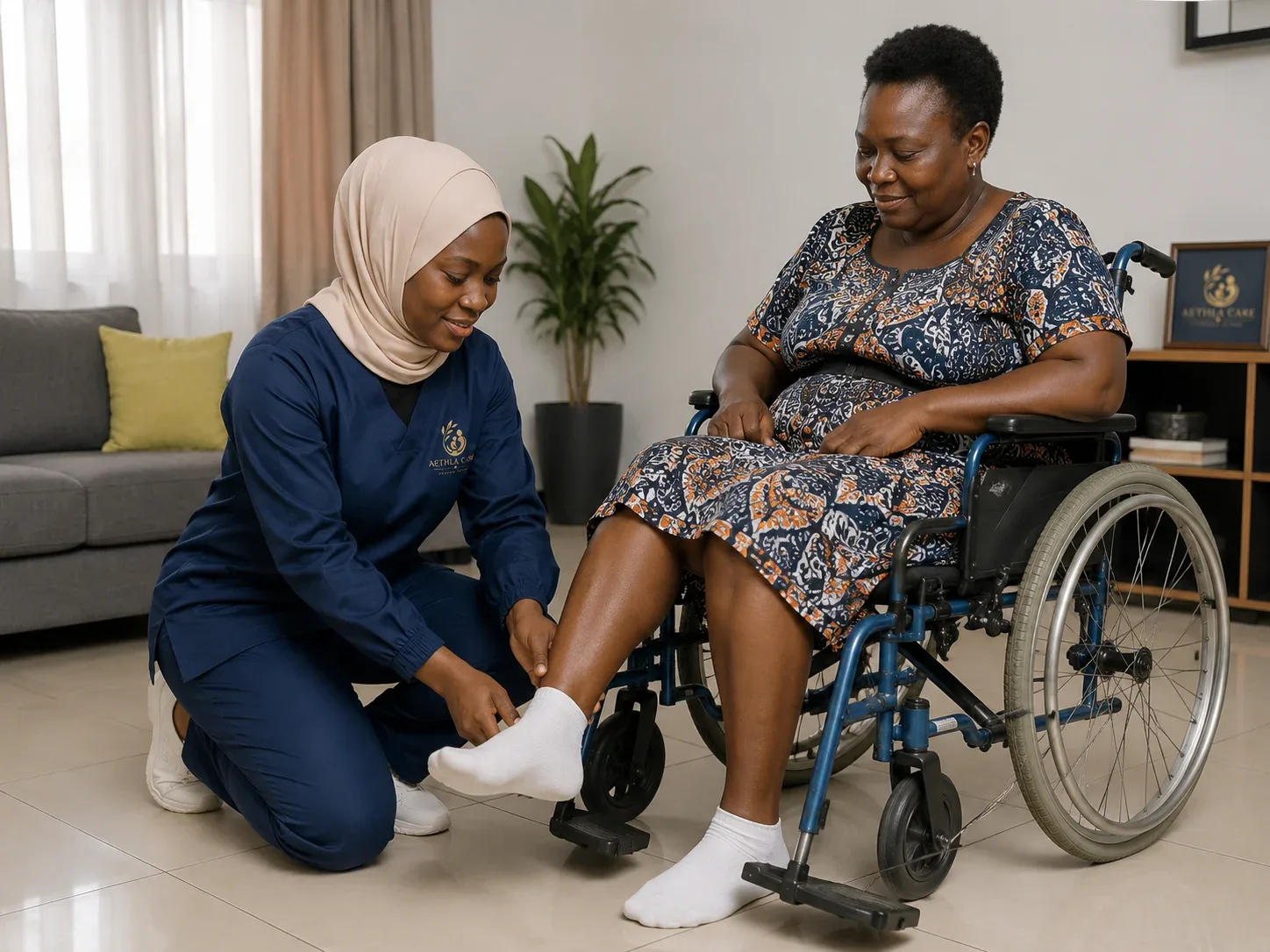
# Disability Support Services in Uganda: A Complete Guide to Disability Care, Mobility, Rehabilitation and Family Support
**Primary Keyword:** disability support services Uganda
**Secondary Keywords:** disability care Uganda, disability support Uganda, disability services Kampala, home care for disabled people Uganda, disability caregiver Uganda, disability support services Kampala, mobility support Uganda, accessible transport Uganda, rehabilitation Uganda, assistive technology Uganda, caregiver for disabled person Uganda, disability home care, disability family support Uganda, special needs support Uganda, disability care provider Uganda, disabled elderly care Uganda, disability healthcare Uganda, disability navigation Uganda
**Search Intent:** Informational + service discovery + commercial investigation
---
# Quick Answer: What Are Disability Support Services in Uganda?
**Disability support services in Uganda are practical, social, healthcare-navigation, rehabilitation, mobility, home-support and caregiving services that help people with disabilities participate in daily life and access the support they need.**
The appropriate support depends on the individual.
It may include:
- Personal assistance - Home support - Caregiver services - Mobility assistance - Accessible transport - Healthcare navigation - Specialist appointments - Rehabilitation pathways - Assistive-technology navigation - Appointment accompaniment - Household assistance - Family coordination - Disability-inclusive travel support - Support for children with disabilities - Support for adults with disabilities - Support for older people living with disabilities
Disability does not mean the same thing for every person.
One person may need occasional transport assistance.
Another may require daily personal support.
Another may need rehabilitation.
Another may need assistive technology.
Another may live independently but face barriers when accessing healthcare, transport, education, employment or public services.
The starting point should therefore be:
> **What does this person need to live safely, participate in daily life and access appropriate services?**
rather than simply:
> "What disability does this person have?"
---
# Understanding Disability Support in Uganda
Disability is broader than a medical diagnosis.
WHO describes disability as resulting from the interaction between health conditions and personal and environmental factors, including inaccessible transport, buildings, negative attitudes and limited social support.
This is important because two people with the same diagnosis may experience very different levels of difficulty.
For example:
A person may have a mobility impairment but live in an accessible home and have reliable transport.
Another person with a similar impairment may live in a house with difficult access, have no suitable transport and struggle to reach healthcare.
Their support needs will therefore be different.
Effective disability support should consider the **person, environment, family, services and barriers around them**.
---
# Uganda's Disability Policy Framework
Uganda has a national policy framework specifically addressing persons with disabilities.
The Ministry of Gender, Labour and Social Development publishes the **Revised National Policy on Persons with Disabilities, 2023**.
The policy provides an important national framework for disability inclusion and the rights and participation of persons with disabilities.
Uganda's health-sector planning also recognises disability-inclusive healthcare.
The Ministry of Health Strategic Plan II for 2025/26–2029/30 includes strategies relating to disability-friendly health services, physical accessibility and appropriate equipment.
This demonstrates an important principle:
**Disability support is not only a family issue. It is also connected to health, rehabilitation, accessibility, social participation and inclusion.**
---
# Disability Support Is More Than Medical Treatment
A common misunderstanding is that disability support means medical treatment.
Medical treatment can be important, but disability support may involve much more.
A person may need:
- A wheelchair or other assistive product - Accessible transport - Help attending appointments - Home modifications - Personal assistance - Rehabilitation - Communication support - Family assistance - Education support - Employment support - Social participation - Caregiver support
Some of these are healthcare-related.
Others are practical or social.
This is why families may benefit from a coordinated approach.
---
# Types of Disability Support Services in Uganda
## 1. Home Disability Support
Home support can help a person manage everyday activities in their own environment.
Depending on the person's needs and the provider's role, support may include:
- Personal assistance - Household routines - Meal-related practical support - Mobility assistance - Companionship - Appointment preparation - Appointment accompaniment - Family communication
The objective should be to support the person while respecting their independence and preferences.
---
# 2. Disability Caregivers
A caregiver can provide practical assistance to a person living with disability.
The role depends on the person's needs.
For example, a caregiver may assist with:
- Getting around the home - Everyday routines - Personal assistance - Meals - Household tasks - Accompanying the person outside the home - Appointments - Family communication
A caregiver should not automatically be treated as a nurse or rehabilitation professional.
Where clinical care is required, appropriately qualified professionals should remain involved.
---
# 3. Mobility Support
Mobility can be one of the biggest practical issues for a person with a disability.
Support may involve:
- Wheelchair access - Walking assistance - Accessible vehicles - Appointment transport - Accompanying persons - Home accessibility - Mobility equipment - Rehabilitation
WHO identifies inaccessible and unaffordable transportation as a major barrier for persons with disabilities and reports that people with disabilities can find such transport 15 times more difficult than people without disabilities.
This highlights why transportation should not be treated as a minor logistical detail.
For some people, transport determines whether they can actually reach healthcare, work, education or community activities.
---
# 4. Accessible Transport in Uganda
Families arranging transport for someone with a disability should ask:
- Can the vehicle accommodate the person's mobility needs? - Does the person use a wheelchair? - Can they transfer independently? - Do they need assistance? - Is an accompanying person required? - How long will the journey take? - Does the provider understand the destination? - What happens if the appointment is delayed? - Is the journey routine or medically urgent?
A standard taxi may not be suitable for every person.
Transport should therefore be matched to the individual's actual mobility requirements.
---
# 5. Rehabilitation Support
Rehabilitation can help people optimise functioning and independence following illness, injury, disability or other health conditions.
Depending on the situation, rehabilitation can involve professionals such as:
- Physiotherapists - Occupational therapists - Speech and language professionals - Rehabilitation physicians - Other appropriately qualified specialists
A family should not assume that a caregiver can perform rehabilitation simply because they assist someone with daily activities.
A caregiver and a rehabilitation professional have different roles.
---
# Uganda's Focus on Rehabilitation and Assistive Technology
Uganda has been strengthening its approach to rehabilitation and assistive technology.
The Ministry of Health's rapid assistive-technology assessment identified rehabilitation and assistive technology as important components of achieving universal health coverage and the principle of leaving no one behind.
The assessment was part of work toward developing Uganda's national rehabilitation and assistive-technology strategic direction.
The Ministry's broader current health strategy also includes disability-friendly health services, physical accessibility and appropriate equipment.
For families, the practical lesson is:
**If a person needs rehabilitation or assistive technology, do not treat the issue as simply a caregiver problem.**
The family may need an appropriate professional assessment.
---
# What Is Assistive Technology?
Assistive technology includes products or systems that help people maintain or improve functioning and independence.
Examples can include:
- Wheelchairs - Walking aids - Hearing devices - Communication devices - Prosthetic or orthotic products - Visual aids - Adaptive equipment
The appropriate product depends on the person's needs.
Families should avoid buying equipment simply because it looks suitable.
An inappropriate assistive product can be uncomfortable, ineffective or unsafe.
Where appropriate, families should seek assessment from qualified professionals.
---
# Disability and Healthcare Access
A person with a disability may face barriers before reaching the healthcare professional.
Barriers can include:
- Transport - Physical accessibility - Communication - Long waiting processes - Lack of accessible information - Difficulty navigating facilities - Financial constraints - Need for an accompanying person
WHO guidance on disability-inclusive health services highlights the importance of accessible facilities, accessible information, transportation and appropriate pathways to specialised healthcare and assistive devices.
Therefore, healthcare navigation can be an important component of disability support.
---
# Healthcare Navigation for People With Disabilities
A family may need help answering:
> "Where should we start?"
For example:
A person needs a mobility assessment.
The family may need to identify:
1. The appropriate type of healthcare professional. 2. A suitable facility. 3. Whether a referral is required. 4. How to arrange the appointment. 5. How to get the person there. 6. What documents to carry. 7. Whether an accompanying person is required. 8. What happens after the appointment.
A care coordinator can help with the practical pathway.
The coordinator should not make clinical decisions.
---
# Specialist Appointments and Disability
People with disabilities may require different specialists depending on their health needs.
Possible areas can include:
- Orthopaedics - Neurology - Paediatrics - Rehabilitation - Physiotherapy - Occupational therapy - Ophthalmology - ENT - Other relevant specialties
The correct specialist depends on the person's circumstances and clinical assessment.
A care platform can help coordinate an appointment request where an appropriate provider route exists.
Appointment availability should always be confirmed with the relevant provider.
---
# Disability Support for Children in Uganda
Children with disabilities may have needs that differ substantially from adults.
Support may involve:
- Healthcare - Rehabilitation - Assistive technology - Childcare - Education - Family support - Transportation - Communication - Developmental support
Parents may also need help understanding which service should come first.
A child may need several professionals working together rather than one person attempting to provide everything.
---
# Developmental Delays and Disability
A developmental concern should not automatically be treated as a diagnosis.
Parents may notice differences in:
- Communication - Movement - Learning - Behaviour - Social interaction - Developmental milestones
The appropriate response is to seek assessment from qualified professionals.
WHO's recent guidance on nurturing care for children with developmental delays and disabilities emphasises coordinated, family-centred support and strengthening caregiver capabilities.
For families, this means support should consider both the child and the people caring for them.
---
# Family Support for Parents of Children With Disabilities
Parents may need practical assistance with:
- Appointments - Transport - Childcare - Household tasks - School logistics - Family communication - Finding appropriate services
Care coordination can reduce the burden of having to contact multiple organisations separately.
However, the family should remain involved in decisions concerning the child's healthcare, education and welfare.
---
# Disability Support for Adults
Adults with disabilities may have very different goals.
One person may prioritise employment.
Another may prioritise independent living.
Another may need regular home assistance.
Another may need accessible transport.
Another may need rehabilitation after an injury.
Support should therefore be based on the person's goals.
The question should not simply be:
> "What can we do for this person?"
It should also be:
> **"What does this person want to be able to do?"**
---
# Supporting Independence
Good disability support should not automatically create dependence.
Where safe and appropriate, support can help a person:
- Make choices - Participate in household activities - Travel - Attend appointments - Work - Study - Socialise - Maintain relationships - Participate in community life
A caregiver should assist where assistance is required while respecting the person's autonomy.
---
# Disability Support for Older Adults
Older adults may experience disability alongside age-related changes.
An older person may have:
- Reduced mobility - Vision impairment - Hearing impairment - Stroke-related disability - Arthritis - Neurological conditions - Other limitations
The support plan should consider both ageing and disability.
For example, an older adult may require:
**Caregiver + mobility support + transport + healthcare navigation.**
This is where integrated care coordination can be particularly useful.
---
# Disability and Home Accessibility
The physical home environment can either support or restrict independence.
Families can consider:
- Entry accessibility - Stairs - Bathroom safety - Bedroom access - Lighting - Floor surfaces - Door widths - Handrails - Seating - Mobility-device storage
Changes should be appropriate to the person's needs.
A professional assessment may be useful when significant modifications are being considered.
Uganda's health planning explicitly identifies physical accessibility and disability-friendly health services as areas requiring attention.
---
# Disability and Transport to Medical Appointments
Before arranging a journey, families should describe the person's needs accurately.
For example:
**"She uses a wheelchair and cannot transfer without assistance."**
is much more useful than:
**"She needs disability transport."**
Similarly:
**"He can walk short distances but needs support getting into a vehicle."**
provides useful information.
Transport providers need enough detail to determine whether they can safely provide the journey.
---
# Non-Emergency Mobility Support vs Emergency Medical Transport
These should not be confused.
## Non-emergency mobility support
May include:
- Hospital appointments - Specialist consultations - Rehabilitation sessions - Routine activities - Essential journeys
## Emergency medical transport
Concerns urgent medical situations requiring an appropriate emergency response.
A caregiver, transport provider or care coordinator should not be treated as an emergency medical service unless specifically authorised and equipped to provide that service.
If someone is experiencing a medical emergency, seek appropriate emergency medical assistance.
---
# Disability Support and the Family Caregiver
Family members often provide significant unpaid support.
A parent may care for a child.
A spouse may support a partner.
An adult child may support an ageing parent.
A sibling may help a brother or sister.
Family caregiving can be rewarding but demanding.
Families may therefore need:
- Respite support - Information - Transport assistance - Appointment coordination - Home support - Professional referrals - Emotional support - Practical assistance
A family caregiver should not be expected to become a healthcare professional without appropriate training.
---
# Respite Support for Families
Respite care can provide temporary support to give family caregivers a break.
For example:
A daughter normally supports her disabled mother during the day.
She has to travel for three days.
A temporary caregiver arrangement may allow another person to assist during that period.
The family should clearly define:
- Dates - Hours - Responsibilities - Emergency contacts - Communication - Handover information
Temporary care can be particularly valuable when family caregivers have employment or other responsibilities.
---
# Disability Support for Diaspora Families
A growing practical issue for Ugandan families is geographical separation.
A family member may live in:
- Australia - United Kingdom - United States - Canada - UAE - South Africa - Another country
while a relative with a disability remains in Uganda.
The overseas family member may need to coordinate:
- Home assistance - Appointments - Transport - Rehabilitation visits - Family communication - Assistive-technology pathways
This can be difficult without a trusted local coordination point.
The objective is not to replace the family.
It is to make remote participation more practical.
---
# How to Arrange Disability Support From Abroad
Start with a clear description.
### Who?
Who needs support?
### Where?
Where do they live?
### What?
What are the practical difficulties?
### When?
When is assistance needed?
### Existing professionals?
Is a doctor, therapist or rehabilitation professional already involved?
### Mobility?
How does the person move around?
### Communication?
How does the person communicate?
### Family?
Who is locally available?
### Urgency?
Is there an immediate safety or medical issue?
This information helps identify the appropriate support pathway.
---
# Disability Support in Kampala, Wakiso, Entebbe and Mukono
Aethla Care's current early service footprint includes:
- Kampala - Wakiso - Entebbe - Mukono
Disability support requirements can vary substantially by location.
A family should not assume that a service available in central Kampala is automatically available elsewhere.
When requesting support, provide:
- District - Town - Specific area - Type of support - Frequency - Timing
Aethla can then determine whether an appropriate service or partner route is available.
---
# Disability Support in Rural and Other Parts of Uganda
Uganda-wide disability support requires an understanding that service availability is not uniform.
Families outside Aethla's current early service footprint may still ask about support.
The appropriate response is to assess:
- Location - Service type - Provider availability - Transport requirements - Frequency - Whether a partner route exists
This is preferable to claiming nationwide operational coverage without confirming the actual service.
---
# Choosing a Disability Support Provider
Families should ask:
### What exactly do you provide?
Avoid vague descriptions.
### Who provides the service?
Understand whether the provider is direct or a partner.
### What qualifications are relevant?
Ask where specialised skills are required.
### How are caregivers screened?
This matters for vulnerable people.
### How do you handle emergencies?
Know the escalation pathway.
### How are appointments coordinated?
Understand what is requested versus confirmed.
### How is transport arranged?
Ask about accessibility.
### How are families updated?
Especially important for diaspora families.
### How are complaints handled?
There should be a defined process.
---
# Questions to Ask Before Hiring a Disability Caregiver
Before a caregiver begins, ask:
1. What experience do you have supporting people with disabilities? 2. Have you worked with similar mobility needs? 3. Can you assist with transfers? 4. What training do you have? 5. What tasks are you comfortable performing? 6. What tasks are outside your role? 7. How would you respond to a fall? 8. Who would you call in an emergency? 9. Can you accompany the person to appointments? 10. Can you follow a family communication plan? 11. Can you provide references? 12. What are your available working hours?
The answers should be verified where appropriate.
---
# Disability Support and Safeguarding
People with disabilities can be vulnerable to neglect, abuse, exploitation and discrimination.
Families and providers should therefore consider safeguarding carefully.
Warning signs can include:
- Unexplained injuries - Sudden withdrawal - Missing money or possessions - Fear of a caregiver - Unexplained changes in behaviour - Poor hygiene without explanation - Unusual restrictions on communication - A caregiver preventing family contact
If a family has concerns about abuse or immediate danger, it should seek appropriate protection and professional assistance.
A caregiver should never use intimidation, violence or degrading treatment.
---
# Dignity in Disability Care
Good care is not simply about completing tasks.
It is also about how the person is treated.
Families should expect:
- Respect - Privacy - Patience - Choice - Appropriate communication - Cultural sensitivity - Personal dignity
The person receiving support should be treated as a participant in their care, not merely as a task list.
---
# Communication With a Person With a Disability
Communication should be adapted to the individual.
Depending on the person, this might mean:
- Speaking clearly - Allowing extra time - Using accessible communication - Including a trusted communication partner - Using visual information - Confirming understanding - Asking the person directly rather than speaking only to relatives
Do not assume that a physical disability means a person has a cognitive disability.
Do not assume that a communication difficulty means a person cannot make decisions.
Support should be individualised.
---
# Disability and Healthcare Navigation: A Practical Example
Imagine a 35-year-old man in Kampala who uses a wheelchair.
He needs a specialist appointment.
The family must consider:
1. Which specialist? 2. Which facility? 3. Is a referral required? 4. Is the facility accessible? 5. How will he get there? 6. Can his wheelchair be transported? 7. Does he need an accompanying person? 8. What documents are required? 9. What happens after the appointment?
The healthcare appointment is only one part of the problem.
The rest is coordination.
This is where a family-support platform can potentially help.
---
# Disability and Post-Hospital Support
A person may return home after:
- Stroke - Injury - Surgery - Accident - Neurological treatment - Orthopaedic treatment
The family may suddenly need additional assistance.
Potential needs include:
- Home support - Mobility assistance - Transport - Rehabilitation appointments - Household assistance - Family coordination
Clinical rehabilitation plans should come from qualified professionals.
Caregivers can support the practical implementation of agreed routines where that falls within their role.
---
# How Aethla Care Can Help
Aethla Care approaches disability support through the broader concept of **care coordination**.
A family can explain:
> "My father has limited mobility and lives in Kampala. He needs help at home and transport to appointments."
A coordinator can then clarify:
- What type of support is needed - Whether healthcare professionals are already involved - Whether transport is required - Whether home assistance is needed - Who needs to receive updates - What service route is available
This avoids assuming that every disability request requires exactly the same solution.
---
# Aethla Care's Disability-Support Routes
Depending on the individual request and confirmed availability, Aethla may help families explore:
### Home support
Practical assistance in the home.
### Caregiver coordination
Finding or coordinating appropriate caregiver support.
### Healthcare navigation
Helping families understand practical healthcare pathways.
### Specialist appointments
Coordinating appointment requests where an appropriate provider route exists.
### Mobility support
Exploring suitable transport or accompanying-person requirements.
### Rehabilitation navigation
Helping families understand the practical pathway to appropriate rehabilitation services.
### Family coordination
Keeping agreed family members informed about practical care arrangements.
### Diaspora support
Helping relatives abroad coordinate practical support in Uganda.
---
# What Aethla Care Does Not Do
Aethla Care should not be presented as a substitute for:
- Doctors - Nurses - Physiotherapists - Occupational therapists - Psychologists - Hospitals - Emergency services - Other qualified healthcare professionals
Where clinical assessment or treatment is required, the appropriate professional should remain responsible.
Aethla's role depends on the specific request.
It may provide support directly, coordinate a service, work with a partner or help navigate the appropriate pathway.
---
# Creating a Disability Support Plan
Families can create a simple plan.
## Person
Who needs support?
## Goals
What does the person want to achieve?
## Daily activities
What can they do independently?
## Assistance
What tasks require help?
## Mobility
What mobility equipment or support is required?
## Healthcare
Which professionals are involved?
## Transport
What travel arrangements are needed?
## Home
Are there accessibility issues?
## Family
Who coordinates care?
## Communication
Who receives updates?
## Emergency
What should happen if the person's condition changes?
This can provide a much clearer foundation for care coordination.
---
# Disability Support Checklist for Families
Before arranging support:
- [ ] Identify the person's needs. - [ ] Ask the person about their preferences. - [ ] Identify mobility requirements. - [ ] Identify communication needs. - [ ] Identify healthcare professionals involved. - [ ] Determine whether rehabilitation is required. - [ ] Determine whether assistive technology is needed. - [ ] Assess transport requirements. - [ ] Consider home accessibility. - [ ] Identify the family coordinator. - [ ] Establish emergency contacts. - [ ] Verify caregivers and providers. - [ ] Agree responsibilities. - [ ] Establish communication arrangements. - [ ] Review the plan regularly.
---
# Frequently Asked Questions
## What disability support services are available in Uganda?
Disability support can include home care, caregiving, mobility support, accessible transport, rehabilitation, assistive-technology pathways, healthcare navigation, specialist appointments and family coordination. Availability varies by location and provider.
## Where can I find disability support in Kampala?
Families can approach disability-focused organisations, healthcare and rehabilitation providers, care organisations and care-coordination services. Aethla Care can assess individual requests in its current early service areas, including Kampala.
## Can a caregiver support someone with a disability?
Yes, where the caregiver's skills and agreed role match the person's needs. Clinical and specialised rehabilitation services should involve appropriately qualified professionals.
## Can Aethla Care arrange disability support?
Aethla can assess disability-related care requests and coordinate appropriate support routes depending on the person's needs, location and confirmed service availability.
## Can Aethla arrange transport for a person with a disability?
Aethla can help explore mobility and transport requirements where an appropriate provider route exists. The person's mobility needs should be described accurately before transport is confirmed.
## Does disability always require a caregiver?
No. Some people with disabilities live independently and may only require specific services or environmental adaptations.
## Can disabled children receive support at home?
Potentially. Home support, childcare, rehabilitation, healthcare navigation and family assistance may form part of an individual support plan, depending on the child's needs and available providers.
## What is assistive technology?
Assistive technology includes products and systems designed to maintain or improve functioning and independence, such as wheelchairs, hearing devices, communication aids and mobility products.
## Does Aethla provide rehabilitation?
Aethla's role should not be confused with providing clinical rehabilitation unless a specific qualified provider route has been confirmed. Aethla can help families navigate or coordinate appropriate rehabilitation-related pathways where available.
## Can I arrange disability care for a parent from overseas?
Yes. Families living abroad can request support for relatives in Uganda, subject to location, service type and confirmed availability.
## Can disability support include specialist appointments?
Yes, where an appropriate provider route exists. Aethla can support specialist appointment requests and practical coordination, while clinical decisions remain with qualified professionals.
## Can disability support include home care?
Yes. Depending on the person's needs, home support may include practical assistance, companionship, household routines, mobility support and appointment-related assistance.
## How much does disability care cost in Uganda?
There is no single price for disability care. Cost depends on the person's needs, hours, location, caregiver requirements, transport, professional services and other factors. Families should obtain a specific quotation based on the actual support requirement.
## What should I do if a person with a disability has a medical emergency?
Seek appropriate emergency medical assistance. A general caregiver or care coordinator should not be treated as a substitute for emergency medical services.
## Is disability support available outside Kampala?
It may be, depending on the service and provider. Aethla's current early footprint includes Kampala, Wakiso, Entebbe and Mukono, while requests elsewhere require individual confirmation.
---
# Final Thoughts: Disability Support Should Start With the Person
Disability support in Uganda is not one service.
It is not simply:
**"Find a caregiver."**
It may involve a combination of:
- Home support - Personal assistance - Mobility - Transport - Rehabilitation - Assistive technology - Healthcare - Specialist appointments - Family coordination - Childcare - Education - Employment - Social participation
The right combination depends on the person.
That is why families should begin by asking:
> **What does this person need to live safely, participate in everyday life and achieve as much independence as possible?**
From there, the appropriate pathway can be identified.
Uganda's current policy and health-system direction increasingly recognises the importance of disability-inclusive healthcare, physical accessibility, rehabilitation and assistive technology.
For families, the challenge is often turning these broad systems into practical next steps.
That is where care coordination can help.
Aethla Care's approach is:
**Tell us what you need → clarify the care route → coordinate support → keep the family informed.**
Depending on the situation, this may connect a family with home support, caregivers, healthcare navigation, specialist appointments, mobility assistance, rehabilitation pathways, diaspora coordination or other appropriate services.
The objective is not to make one organisation responsible for every aspect of disability.
It is to help the family understand **who needs to do what, when, where and why**.
For families in Uganda—or relatives abroad coordinating care for someone in Uganda—that clarity can make a complicated situation easier to manage.
**Aethla Care can help families explore disability-related support based on the person's needs, location and available care route.**
---
# Factual References
### Uganda Ministry of Gender, Labour and Social Development — Revised National Policy on Persons With Disabilities, 2023
Uganda's Revised National Policy on Persons with Disabilities provides a national framework addressing disability inclusion and the participation and rights of persons with disabilities.
### Uganda Ministry of Health — Strategic Plan II 2025/26–2029/30
Uganda's current Ministry of Health strategic plan includes measures relating to accessible, equitable and quality healthcare and specifically identifies disability-friendly health services, physical accessibility and appropriate equipment among its strategic interventions.
### Uganda Ministry of Health — Rapid Assistive Technology Assessment
Uganda's Ministry of Health, with WHO technical support and USAID/ReLAB-HS support, conducted a rapid assistive-technology assessment to inform development of national rehabilitation and assistive-technology strategies. The Ministry describes rehabilitation and assistive technology as important to achieving universal health coverage and leaving no one behind.
### Uganda National Health Compact 2025–2030
Uganda's National Health Compact sets out strategies for strengthening the country's health system, including healthcare services, workforce development, financing and disease prevention.
### World Health Organization — Disability and Health
WHO estimates that around 1.3 billion people experience significant disability globally and identifies environmental barriers—including inaccessible transportation—as important contributors to disability-related inequity.
### World Health Organization — Disability
WHO explains that disability results from interactions between health conditions and environmental and personal factors, including inaccessible transport and buildings, negative attitudes and limited social support.
### World Health Organization — Disability-Inclusive Health Services
WHO guidance recommends improving accessibility of healthcare facilities and information, facilitating transportation and improving access to specialised services and assistive devices for people with disabilities.
---
## Important Information
This article provides general information about disability support services in Uganda. It is not medical, rehabilitation, legal, social-work or emergency-care advice.
Disability is highly individual. Families should obtain appropriate professional assessment where clinical, rehabilitation, assistive-technology or specialist decisions are required.
Caregivers should only undertake duties appropriate to their qualifications, training and agreed role.
Aethla Care's actual services, provider relationships, geographic coverage, availability, pricing and role in any particular disability-support request should be confirmed before arrangements are made.
**Last reviewed: September 2026**