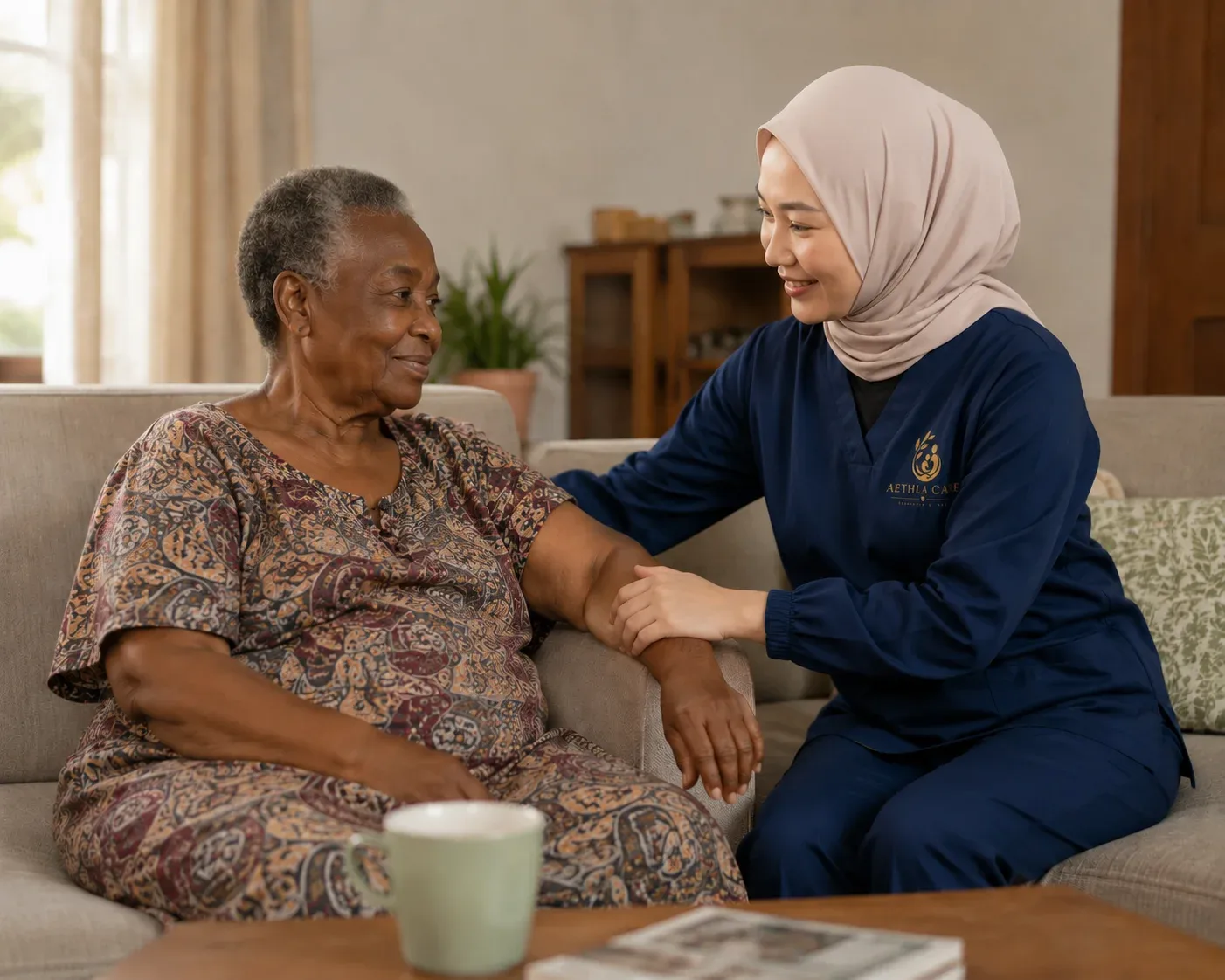
# Caregiver Services in Uganda: A Complete Guide to Finding, Choosing and Managing a Caregiver
**Primary Keyword:** caregiver services Uganda
**Secondary Keywords:** caregiver Uganda, caregivers in Uganda, home caregiver Uganda, elderly caregiver Uganda, caregiver services Kampala, professional caregiver Uganda, home care Uganda, elderly care Uganda, caregiver for elderly parent, caregiver for disabled person Uganda, family caregiver Uganda, personal care Uganda, home support Uganda, caregiver agency Uganda, caregiver hiring Uganda, live-in caregiver Uganda, part-time caregiver Uganda, care at home Uganda, caregiver support services Uganda
**Search Intent:** Informational + commercial investigation + service discovery
---
# Quick Answer: What Does a Caregiver Do in Uganda?
A **caregiver in Uganda** is a person who provides practical, personal, companionship or supportive assistance to someone who needs help with everyday activities or ongoing care.
The exact duties depend on the person's needs and the caregiver's role.
Caregiver responsibilities may include:
- Companionship - Help with everyday routines - Personal assistance - Mobility support - Meal-related assistance - Household-related support - Appointment assistance - Accompanying someone to appointments - Support after hospital discharge - Family communication - Assistance for older adults - Disability-related practical support - Childcare, where the caregiver is specifically engaged for childcare and is suitable for that role
A caregiver should **not automatically be treated as a nurse, doctor, physiotherapist or other healthcare professional**.
Where a person needs clinical assessment, diagnosis, treatment, medication decisions or specialist medical care, those responsibilities belong to appropriately qualified healthcare professionals.
The most important first step when looking for a caregiver in Uganda is therefore not simply asking:
> **"Where can I find a caregiver?"**
It is:
> **"What does this person actually need help with, and what type of caregiver or professional support is appropriate?"**
That distinction can make a major difference to safety, expectations and the success of the care arrangement.
---
# What Is a Caregiver?
The word **caregiver** covers a broad range of situations.
A caregiver may be:
- A family member - A friend - A paid home-care worker - A domestic-support worker - A professional caregiver - A childcare worker - A person providing companionship - A worker supporting someone with disability - A person assisting an older adult with daily activities
The role should be clearly defined.
For example, a family may say:
> "We need someone to look after our mother."
That could mean very different things.
Perhaps she needs companionship for four hours each day.
Perhaps she needs assistance getting around the house.
Perhaps she needs help preparing meals.
Perhaps she needs someone to accompany her to appointments.
Perhaps she needs clinical nursing.
These are not necessarily the same service.
---
# Caregiver vs Nurse: What Is the Difference?
This is one of the most important questions families should ask.
## A caregiver
May provide practical, personal and supportive assistance according to the agreed role.
Examples can include:
- Companionship - Routine assistance - Mobility assistance - Household-related help - Appointment accompaniment - Family communication
## A nurse
A nurse is a regulated healthcare professional whose clinical responsibilities depend on their training, registration, scope of practice and employment setting.
A nurse may provide clinical nursing services that a general caregiver is not qualified or authorised to provide.
Therefore:
**Do not hire a general caregiver when the person actually requires professional nursing or medical care.**
If there is uncertainty about the level of care required, families should seek appropriate professional healthcare advice.
---
# Why Families in Uganda Look for Caregivers
Caregiver needs can arise for many reasons.
## Ageing parents
An older adult may want to remain at home while receiving additional practical support.
## Recovery after hospitalisation
Someone may need assistance while returning to normal routines after discharge.
## Disability
A person may need ongoing assistance with mobility or everyday activities.
## Chronic or long-term support needs
A family member may require assistance that is not necessarily an emergency but affects everyday life.
## Family members living abroad
A Ugandan living in Australia, the UK, USA, Canada, UAE, South Africa or another country may need help organising support for parents or relatives in Uganda.
## Working families
Parents may require childcare or household assistance.
## Changing family circumstances
A caregiver may be needed temporarily while relatives reorganise their responsibilities.
The reason for hiring a caregiver should influence the type of caregiver selected.
---
# The Different Types of Caregiver Support in Uganda
There is no single caregiver model that works for every family.
## 1. Elderly Caregiver
An elderly caregiver may support an older adult with everyday activities, companionship and practical routines.
Potential responsibilities may include:
- Companionship - Assistance with routines - Mobility support - Meal-related assistance - Appointment accompaniment - Household-related support - Family communication
The exact role should be agreed in advance.
---
# 2. Home Caregiver
A home caregiver provides support in the person's home.
This may be particularly useful when a family wants someone to assist with daily routines without moving the person into residential care.
Home care can range from occasional assistance to more regular support.
Families should define:
- Days - Hours - Tasks - Location - Reporting arrangements - Emergency procedures - Whether overnight support is required
---
# 3. Part-Time Caregiver
A part-time caregiver may work for a defined number of hours.
This can suit families where relatives already provide some care.
For example:
**Family:** evenings and weekends
**Caregiver:** weekday daytime support
This can create a shared-care arrangement.
---
# 4. Live-In Caregiver
A live-in arrangement involves a caregiver residing in or around the household as part of the agreed employment or service arrangement.
This is significantly more complex than simply hiring someone for a few hours.
Families should establish:
- Accommodation - Working hours - Rest periods - Duties - Privacy - Days off - Compensation - Food arrangements - Leave - Boundaries - Emergency expectations
Employment arrangements should be documented appropriately.
Uganda's Employment Act contains provisions concerning employment relationships and specifically recognises domestic work and domestic workers in its current consolidated framework. The Act also provides for regulations concerning special categories including domestic workers.
Families should obtain appropriate employment or legal advice when necessary.
---
# 5. Respite Care
Respite support can give a family caregiver temporary assistance.
For example, an adult daughter may normally care for her mother but need someone to assist during:
- Working hours - Travel - Family commitments - Appointments - Short periods away
The purpose is not necessarily to replace the family caregiver permanently.
It can provide additional capacity.
WHO has identified caregiver support as part of the broader evidence base surrounding integrated care for older people.
---
# 6. Disability Support
A person living with disability may require practical assistance depending on their individual situation.
Support could involve:
- Mobility assistance - Personal routines - Transport accompaniment - Appointment support - Household assistance - Communication with family
The caregiver should understand the person's needs and limitations.
Where rehabilitation, physiotherapy, occupational therapy, clinical treatment or other professional intervention is required, the appropriate professional should remain involved.
---
# 7. Childcare and Babysitting
Childcare is a distinct area of caregiving.
A babysitter may be responsible for supervising children for an agreed period.
Parents should clearly define:
- Child's age - Working hours - Activities - Feeding arrangements - School responsibilities - Emergency contacts - Medication instructions, where legitimately required and clearly communicated - Transport responsibilities - Household duties - Sleeping arrangements
Childcare workers should not automatically be expected to provide healthcare.
WHO's nurturing-care framework emphasises that young children need good health, adequate nutrition, safety and security, responsive caregiving and opportunities for early learning.
---
# Caregiving Should Be Built Around the Person
A common mistake is to start with a job title.
For example:
> "We need an elderly caregiver."
A better starting point is:
> "What does this older person need help doing?"
This approach can identify the actual requirements.
For example:
### Person A
Lives independently and needs companionship.
### Person B
Has limited mobility and needs help getting to appointments.
### Person C
Has recently returned home after hospitalisation.
### Person D
Needs extensive clinical care.
All four might be described casually as needing a "caregiver."
But their support requirements are very different.
---
# Person-Centred Care and Older Adults
WHO's second-edition ICOPE guidance, published in September 2025, describes practical care pathways that include assessment, identifying social-care and support needs, developing a personalised care plan, and implementing and monitoring that plan. It also places greater emphasis on community-level involvement and support for carers.
This has an important implication for families:
**The caregiver arrangement should be based on the person's actual needs, preferences and circumstances.**
It should not simply be based on age.
Two people who are both 80 years old may require completely different levels of support.
---
# How to Know What Type of Caregiver You Need
Before contacting a caregiver provider, answer these questions.
## Question 1: Who needs support?
- Parent - Grandparent - Spouse - Child - Person with disability - Person recovering from hospitalisation - Other dependant
## Question 2: Where do they live?
For example:
- Kampala - Wakiso - Entebbe - Mukono - Another district
## Question 3: What can they do independently?
List the activities they manage without assistance.
## Question 4: What do they struggle with?
Be specific.
For example:
- Walking - Preparing meals - Shopping - Attending appointments - Household routines - Personal routines
## Question 5: How many hours are required?
For example:
- Two hours - Four hours - Eight hours - Overnight - Occasional visits
## Question 6: Is medical care involved?
If yes, identify the healthcare professional already involved.
## Question 7: Is this temporary or ongoing?
This can change the type of arrangement that makes sense.
---
# A Simple Caregiver Needs Assessment
Families can use this basic framework.
| Area | Question | |---|---| | Personal | What everyday assistance is needed? | | Mobility | Can the person move safely? | | Meals | Is assistance needed with food preparation? | | Household | What household tasks need help? | | Appointments | Does the person need accompaniment? | | Companionship | Do they need regular social interaction? | | Healthcare | Are healthcare professionals involved? | | Family | Who coordinates decisions? | | Location | Where will support take place? | | Schedule | When is support required? |
This information gives a caregiver provider a much clearer picture.
---
# What Should a Caregiver Do?
A caregiver's duties should be agreed in advance.
Depending on the arrangement, duties may include:
### Companionship
- Conversation - Reading - Social interaction - Accompanying the person on appropriate activities
### Daily routines
- Helping organise the day - Reminders for agreed routines - Assistance with ordinary household routines
### Mobility
- Assistance with agreed mobility activities - Accompanying someone when appropriate
### Household support
- Light household assistance - Errands - Meal-related practical help
### Appointments
- Accompanying the person - Helping with practical logistics - Communicating appointment details to family
### Family communication
- Reporting agreed observations or practical updates
The caregiver should understand what is inside and outside their role.
---
# What Should a General Caregiver Not Do?
A general caregiver should not be assumed to have clinical authority.
Depending on qualifications and local rules, tasks outside a general caregiver's role may include:
- Diagnosing illness - Prescribing medication - Changing medical treatment - Interpreting medical tests independently - Performing clinical procedures without appropriate qualifications - Making treatment decisions - Acting as a doctor - Replacing a nurse or therapist
If a family requires these services, it should seek appropriately qualified professionals.
---
# Medication and Caregivers
Medication is an area where families should be particularly careful.
A family may tell a caregiver:
> "Please make sure Mum takes her tablets."
That is different from asking:
> "Decide which medicine she should take."
The first may be a reminder or routine-support task, depending on the arrangement and applicable requirements.
The second is a clinical decision.
Medication instructions should come from the appropriate healthcare professional.
Caregivers should not independently change doses or treatment plans.
If there is uncertainty about medication, contact the appropriate healthcare professional or facility.
---
# How to Find a Caregiver in Uganda
There are several ways families may search.
## Family recommendations
Relatives and trusted contacts may know someone with relevant experience.
## Professional care providers
A care organisation may help identify or coordinate an appropriate caregiver.
## Community networks
Local networks can sometimes provide referrals.
## Online searches
Search engines can help identify providers, but families should verify the claims they find.
## Care platforms
A care platform can potentially provide a more structured starting point by understanding the family's needs before proposing a route.
Whatever route is used, **verification matters**.
---
# How to Choose a Caregiver
Do not choose solely because someone is available immediately.
Consider:
### Experience
Has the person worked with similar care needs?
### References
Can previous work experience be verified?
### Skills
Does the person have the skills required for the role?
### Communication
Can the caregiver communicate effectively with the person and family?
### Reliability
Can they consistently attend as agreed?
### Personality
Is the person respectful and compatible with the family?
### Boundaries
Do they understand what they are and are not responsible for?
### Safeguarding
Are appropriate checks and safeguards in place?
### Emergency awareness
Do they know who to contact when something unexpected happens?
---
# Questions to Ask a Potential Caregiver
Families can ask:
1. What caregiving experience do you have? 2. Who have you cared for previously? 3. What tasks are you comfortable performing? 4. What tasks are outside your role? 5. Can you provide references? 6. What hours are you available? 7. Can you work weekends? 8. Are you comfortable accompanying someone to appointments? 9. Have you supported someone with limited mobility? 10. How would you respond if the person suddenly became unwell? 11. Who would you contact in an emergency? 12. Are you comfortable following a family communication plan? 13. Are you willing to work under a written agreement?
The answers should be considered alongside appropriate verification.
---
# References and Verification
A reference should ideally be more than a phone number.
Where appropriate, families can verify:
- Previous employer - Employment dates - General responsibilities - Reliability - Reason for leaving - Relevant experience
For roles involving children or vulnerable adults, families should consider appropriate safeguarding and background-check procedures.
A professional care provider should be able to explain its own screening and verification process.
---
# Caregiver and Family Communication
Communication is one of the most overlooked parts of home care.
Families should agree:
### Who receives updates?
For example:
- Daughter - Son - Spouse - Family representative
### How are updates sent?
For example:
- WhatsApp - Phone - Written report - Scheduled call
### What counts as an urgent update?
For example:
- Fall - Injury - Sudden deterioration - Missed appointment - Significant change in behaviour
### What is routine?
For example:
- Appointment completed - Meal prepared - Household task completed
Clear communication prevents unnecessary confusion.
---
# Caregiver Support for Diaspora Families
A caregiver can be particularly important when the family member responsible for coordination lives outside Uganda.
Imagine a daughter in Melbourne whose father lives in Kampala.
She may need to coordinate:
- Regular home support - Appointment attendance - Transport - Family updates - Household assistance
She may not need to be physically present for every task.
A local caregiver can provide practical assistance while the daughter remains involved in decision-making.
This is one of the situations where care coordination becomes especially valuable.
---
# What Should Diaspora Families Ask?
Before arranging care remotely, ask:
- Who actually visits the parent? - How often? - What are they responsible for? - How are visits documented? - Who reports back? - What happens if the caregiver cannot attend? - Who handles emergencies? - Who confirms appointments? - Who can the family contact in Uganda? - What services are direct and which are coordinated?
Distance makes clarity even more important.
---
# Caregivers and Elderly Parents
Older people should remain involved in decisions about their own care whenever possible.
A family should not automatically assume:
> "We are the children, so we decide everything."
Instead, where the person's capacity and circumstances allow, families should ask:
- What kind of help do you want? - Who do you feel comfortable with? - Do you want someone visiting every day? - What routines matter to you? - What do you want help with? - What do you prefer to continue doing yourself?
Person-centred care recognises the individual rather than reducing them to a list of tasks.
---
# Respecting Independence
A caregiver should not automatically do everything for someone.
If an older adult can safely perform a task independently, unnecessary assistance may reduce autonomy.
Support should ideally help the person remain as independent as reasonably possible.
This can mean:
- Supporting rather than taking over - Encouraging appropriate activity - Respecting routines - Listening to preferences - Allowing choices - Protecting dignity
The objective is not simply:
> "Get everything done."
It is:
> **"Provide the right level of support while respecting the person."**
---
# Caregivers Supporting People With Disabilities
Disability does not automatically mean someone requires a caregiver.
Some people may live independently.
Others may require assistance with specific activities.
The family should identify the person's actual needs.
Support could involve:
- Mobility - Personal routines - Transport - Household assistance - Appointments - Communication - Community participation
Where rehabilitation or clinical intervention is needed, qualified professionals should remain involved.
WHO's recent guidance on nurturing care for children with developmental delays and disabilities similarly emphasises diverse needs and coordinated, family-centred support rather than assuming every child requires the same intervention.
---
# Caregivers and Children
Childcare requires a different mindset from elderly care.
Children require:
- Supervision - Safety - Responsive interaction - Age-appropriate activities - Appropriate nutrition - Secure relationships - Opportunities for learning
WHO describes responsive caregiving as noticing, understanding and responding appropriately to a child's signals.
Therefore, a good childcare arrangement is not simply:
> "Someone is physically present."
The quality of interaction and supervision matters.
Parents should choose childcare providers based on the child's age, needs, family circumstances and the responsibilities assigned.
---
# Caregiver Services After Hospital Discharge
A person may return home after:
- Surgery - Injury - Illness - Treatment - Hospitalisation
The family may suddenly discover that ordinary household routines are difficult.
A caregiver may potentially help with:
- Household routines - Companionship - Mobility assistance - Transport - Appointment accompaniment - Practical support
But the caregiver should follow the instructions provided by the treating healthcare team.
If the person's condition changes or a new medical problem occurs, the family should seek appropriate medical attention.
---
# When a Family Should Seek Professional Medical Help Instead
A caregiver is not a replacement for emergency or clinical services.
Families should seek appropriate medical attention when someone has symptoms or circumstances that require urgent or professional assessment.
Examples can include:
- Severe breathing difficulty - Loss of consciousness - Serious injury - Suspected stroke - Severe chest pain - Uncontrolled bleeding - Other potentially life-threatening situations
The appropriate emergency pathway depends on the circumstances and location.
A caregiver should know that their role is to support the person and escalate appropriately—not to diagnose the emergency themselves.
---
# Caregiver Agreements: What Should Be Written Down?
A written agreement can prevent misunderstandings.
Consider documenting:
### Person receiving care
Name and basic information.
### Location
Where care takes place.
### Working hours
Days and times.
### Duties
Exactly what the caregiver is expected to do.
### Exclusions
Tasks the caregiver is not expected or qualified to perform.
### Payment
Agreed compensation and payment schedule.
### Leave and rest
Particularly important for regular or live-in arrangements.
### Communication
Who receives updates.
### Emergencies
Who should be contacted.
### Ending the arrangement
How either side can terminate the arrangement.
Where the arrangement creates an employment relationship, families should ensure the arrangement complies with applicable Ugandan employment requirements.
Uganda's current Employment Act includes provisions relating to employment contracts, domestic work and special categories of workers.
---
# Caregiver Employment vs Caregiver Service
This distinction is important.
A family may:
### Employ an individual directly
The family becomes responsible for the employment relationship.
Or:
### Engage a care provider
The provider may manage the caregiver relationship according to its business model.
Or:
### Use a coordination platform
The platform may coordinate an independently provided service.
These models can have different legal, financial and operational implications.
Families should understand which model they are entering before agreeing to services.
---
# How Aethla Care Can Help
Aethla Care is designed to begin with the family's care need rather than assuming that every family needs exactly the same caregiver service.
A family can explain:
> "My mother lives in Kampala. She needs someone to help with daily routines, accompany her to appointments and keep the family informed."
A coordinator can then clarify:
- What support is required - Where it is required - How frequently it is required - Whether healthcare professionals are involved - What type of caregiver route may be appropriate - Whether the service can be provided or coordinated - What the next practical step is
This is different from simply giving a family a generic list of names.
---
# Aethla Care's Caregiver Approach
Aethla's broader care model follows:
**Tell us what you need → clarify the care route → coordinate support → keep the family informed.**
Depending on the request, Aethla may connect families with:
- Elderly care - Home and family support - Childcare - Disability support - Healthcare navigation - Specialist appointment coordination - Travel and mobility support - Post-hospital support - Diaspora care
The exact role depends on the individual request and confirmed availability.
---
# Aethla Care's Current Service Areas
Aethla Care's early footprint includes:
- Kampala - Wakiso - Entebbe - Mukono
Care availability depends on the type of support required.
Families outside these locations can provide their location and care need so that the appropriate route can be assessed.
This is important because caregiver availability is not automatically the same across every part of Uganda.
---
# How to Prepare Before Contacting Aethla Care
To make a care request easier to assess, prepare:
### 1. Person
Who needs support?
### 2. Location
Where do they live?
### 3. Need
What do they need help with?
### 4. Schedule
When is support required?
### 5. Duration
One day, several weeks or ongoing?
### 6. Healthcare
Is a doctor, nurse, therapist or hospital already involved?
### 7. Family contact
Who should receive updates?
### 8. Mobility
Can the person walk and travel independently?
### 9. Communication
Are there communication or language considerations?
### 10. Urgency
Is this a routine care request or an emergency?
This gives the coordinator enough information to determine the appropriate next step.
---
# Caregiver Services for Ugandans Living Abroad
Aethla Care can also support the broader diaspora-care pathway.
A Ugandan living abroad may be searching for:
**"caregiver for my mother in Uganda"**
or:
**"elderly care for parents in Kampala"**
or:
**"home care for my father in Uganda from Australia."**
The family may not simply need a caregiver.
They may need:
- Care assessment - Home support - Appointment coordination - Transport - Family reporting - Healthcare navigation - Practical assistance
This is why caregiver services work particularly well as part of a broader care-coordination model.
---
# How Much Does a Caregiver Cost in Uganda?
There is **no single reliable national caregiver price** that applies to every situation.
The cost can vary depending on:
- Hours - Days per week - Live-in versus live-out - Location - Duties - Experience - Whether clinical skills are required - Transport - Overnight work - Number of people requiring support - Whether the caregiver is directly employed or provided through an organisation
Families should request a clear quotation based on the actual care requirement.
Be cautious about websites that publish a single universal price and imply it applies to every caregiver situation.
---
# Common Mistakes Families Make When Hiring Caregivers
## Mistake 1: Hiring before defining the role
If duties are unclear, conflict can develop quickly.
## Mistake 2: Assuming caregiver means nurse
It does not.
## Mistake 3: Choosing solely on price
The cheapest option may not meet the person's needs.
## Mistake 4: Ignoring the older person's preferences
The person receiving care should be involved where possible.
## Mistake 5: Failing to check references
Trust should be supported by verification.
## Mistake 6: No written agreement
Verbal arrangements can create misunderstandings.
## Mistake 7: No emergency plan
Everyone should know what to do if something goes wrong.
## Mistake 8: Giving unlimited responsibilities
Caregivers need clear boundaries.
## Mistake 9: No backup plan
What happens if the caregiver becomes unavailable?
## Mistake 10: Treating care as static
Care needs can change.
---
# Caregiver Checklist for Families
Before starting:
- [ ] Identify the person receiving care. - [ ] List the tasks required. - [ ] Identify medical needs. - [ ] Identify mobility requirements. - [ ] Determine hours required. - [ ] Decide whether support is temporary or ongoing. - [ ] Identify the family decision-maker. - [ ] Establish emergency contacts. - [ ] Verify references. - [ ] Clarify qualifications. - [ ] Agree responsibilities. - [ ] Put important terms in writing. - [ ] Establish communication procedures. - [ ] Establish payment arrangements. - [ ] Establish a review date.
---
# Questions to Ask a Caregiver Provider
Before engaging a professional care organisation, ask:
### Who provides the caregiver?
Is the person employed, contracted or independently engaged?
### How are caregivers screened?
Ask about identity, references, experience and any relevant checks.
### What qualifications are verified?
Especially where the person may be supporting complex needs.
### What happens if the caregiver is unavailable?
A backup system matters.
### Who supervises the caregiver?
Understand the management structure.
### How are complaints handled?
There should be a clear process.
### How are family updates handled?
Particularly important for diaspora families.
### What services are not included?
Clear exclusions prevent misunderstandings.
### Where do you operate?
Ask for current service areas.
### What happens in an emergency?
A responsible provider should explain the escalation route.
---
# Frequently Asked Questions
## What is a caregiver in Uganda?
A caregiver is someone who provides agreed practical, personal, companionship or supportive assistance to a person who needs help with daily life or ongoing care.
## What does an elderly caregiver do?
Depending on the person's needs, an elderly caregiver may provide companionship, routine assistance, mobility support, household-related help, appointment accompaniment and family communication.
## Is a caregiver the same as a nurse?
No. A general caregiver and a nurse have different roles and qualifications.
## Can a caregiver give medication?
This depends on the caregiver's role, qualifications, instructions and applicable requirements. Caregivers should not independently prescribe, change or make clinical decisions about medication.
## How do I find a caregiver in Kampala?
You can approach trusted personal networks, care organisations or care-coordination providers. Always verify the caregiver's suitability, experience, references and responsibilities.
## Can I hire a caregiver for my parent from overseas?
Yes. Families living abroad can arrange support for parents or relatives in Uganda, subject to provider availability and the specific care requirement.
## Can Aethla Care help find a caregiver?
Aethla Care can assess a family's care request and coordinate an appropriate route depending on the support required, location and confirmed availability.
## Does Aethla employ every caregiver it coordinates?
Not necessarily. The role of Aethla depends on the individual service arrangement and may involve direct support, coordination or partner services.
## Can caregivers support people with disabilities?
Yes, where the caregiver's role and skills are appropriate. More specialised rehabilitation or clinical needs should involve qualified professionals.
## Can caregivers provide childcare?
Childcare can be a separate caregiving role. Families should ensure that the person selected is appropriate for the child's age, needs and responsibilities.
## Can a caregiver live in my home?
Some arrangements may involve live-in support, but the employment and household terms should be clearly established in writing.
## How much does a caregiver cost in Uganda?
There is no single price applicable to every caregiver. Cost depends on hours, duties, location, experience, living arrangements and the type of care required.
## What should I ask before hiring a caregiver?
Ask about experience, references, skills, availability, responsibilities, emergency procedures, communication and whether the caregiver is appropriately qualified for the required role.
## What if my parent needs nursing rather than general caregiving?
Speak with an appropriately qualified healthcare professional or provider. A general caregiver should not be used as a substitute for clinical nursing.
## Can caregiver support be temporary?
Yes. Families may need support for a short period after hospital discharge, during travel, while another caregiver is unavailable or during a temporary change in circumstances.
## Can caregiver support be arranged outside Kampala?
Potentially. Aethla Care's current early footprint includes Kampala, Wakiso, Entebbe and Mukono. Other locations should be confirmed based on the service required and available provider route.
---
# Final Thoughts
Finding a caregiver in Uganda is not simply about finding a person who is willing to help.
It is about finding the **right type of support for the person's actual needs**.
An elderly parent may need companionship rather than clinical care.
Another may require substantial assistance with daily routines.
A person living with disability may need mobility and practical support.
A child needs safe, responsive and age-appropriate childcare.
Someone returning from hospital may need temporary home assistance while following a clinical recovery plan.
A family living abroad may need a reliable person in Uganda who can provide practical support while the family remains involved remotely.
These situations require different approaches.
The safest starting point is therefore:
**Understand the person → define the care needs → identify the right type of caregiver → verify the provider → agree responsibilities → establish communication → review the arrangement.**
Aethla Care's role is to make that process easier to navigate.
Families can explain what is happening rather than having to know exactly which service they need before making contact.
Aethla can then clarify the care route and, where an appropriate service is available, coordinate the next practical step.
For families seeking **caregiver services in Uganda**, particularly where elderly care, home support, disability, childcare, healthcare navigation or diaspora coordination overlap, a coordinated approach can help turn a complicated situation into a clearer plan.
**Tell Aethla Care what you need, where support is required and who needs care. The team can then help clarify the appropriate care route and available next step.**
---
# Factual References
### World Health Organization — Integrated Care for Older People (ICOPE), 2nd Edition
WHO's 2025 ICOPE guidance describes a person-centred care pathway that includes assessment, identification of social-care and support needs, personalised care planning, implementation and monitoring. It also places increased emphasis on community-level support and carers.
### World Health Organization — Caregiver Support
WHO's ICOPE evidence resources recognise caregiver support as an important component of community-level approaches for older people who require care.
### World Health Organization — Nurturing Care Framework
WHO and UNICEF's Nurturing Care Framework identifies five interconnected areas important for young children: good health, adequate nutrition, security and safety, responsive caregiving and opportunities for early learning.
### WHO — Nurturing Care Practice Guidance
WHO describes responsive caregiving as the ability of caregivers to notice, understand and respond appropriately to children's signals.
### WHO and UNICEF — Nurturing Care for Children With Developmental Delays and Disabilities
The 2026 thematic brief highlights the diverse needs of children with developmental delays and disabilities and recommends coordinated, family-centred support that strengthens caregiver capabilities.
### Uganda Ministry of Gender, Labour and Social Development — National Guidelines on Healthy Ageing
Uganda's Ministry of Gender, Labour and Social Development publishes National Guidelines on Healthy Ageing among its national guidance resources.
### Uganda Employment Act
Uganda's current consolidated Employment Act provides the legal framework governing employment relationships and includes provisions relevant to domestic work and domestic workers.
---
## Important Information
This article provides general information about caregiver services in Uganda. It is not medical, nursing, legal, employment, childcare or emergency-care advice.
The appropriate level of care depends on the individual.
Families should verify the qualifications, experience, references, suitability and responsibilities of any caregiver or provider they engage.
Clinical decisions, diagnosis, treatment and professional healthcare remain the responsibility of appropriately qualified healthcare professionals.
Aethla Care's exact service role, provider relationships, geographic coverage, caregiver availability and pricing should be confirmed for each individual request.
**Last reviewed: September 2026**